

The Youth Narrative as a Key to the Europeanization of the Balkans
Reflections from a regional youth panel on challenges, inclusion, and the future of EU integration in the Western Balkans.
By: Danica Sretkovska
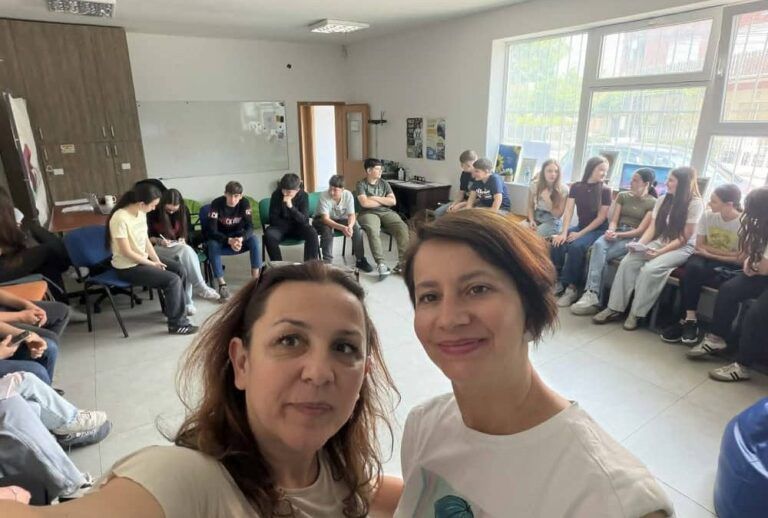
The process of Europeanization in the Western Balkans is often viewed through the lens of political decisions, institutional reforms, and diplomatic efforts. Yet increasingly, it is young people who are driving a quieter but deeply transformative shift—one taking place in media, civil society, and the everyday interactions among individuals across borders.
From my experience as a youth activist and participant in regional initiatives, I am convinced that young people are already shaping a new European narrative—not through declarations, but through concrete action, collaborative learning, and honest dialogue. These processes represent an authentic form of integration, one based on values rather than procedures.
However, access to European opportunities is far from equal. For many young people from rural or underserved communities, EU programs and funding still seem distant—not due to a lack of interest, but due to a lack of accessibility and support. Inclusion requires deliberate strategy, not just flyers and online application forms. If we want true participation, we must dismantle the perception of the EU as a “faraway idea” and bring it closer—especially to those who have historically been left out.
One of the greatest challenges remains disinformation. It spreads not only through social media but also through the absence of structured, critical education about the EU and its values. Informal education—the kind young people receive through family, online platforms, and daily interactions—can be as influential as formal education, if not more. That is why it’s crucial to invest in non-formal learning formats such as youth exchanges, trainings, and regional forums. These spaces don’t just inform—they build trust.
In this context, the notion of “enlargement fatigue” must also be acknowledged. Among youth, it does not always manifest as open resistance, but rather as quiet resignation. A feeling that, despite all the talk of the future, the present remains unchanged. Yet this apathy does not equate to complete distrust—it can be reversed, provided that young people are meaningfully included in the integration process.
Young people in the Balkans are not merely “future citizens of the EU.” We are already active agents in shaping that vision. For it to materialize, we need genuine support, cooperation, and recognition—not as a symbolic gesture, but as a political necessity.
This text was published within the framework of the project “Youth Engagement for the Europeanization of the Balkans”, implemented by the BIRC Institute from North Macedonia, NGO GLAS from Montenegro, and CFID from Kosovo, and supported by the Western Balkans Fund with co-financing from the European Union.
This text has been produced with the financial assistance of the European Union. The contents of this publication are the sole responsibility of the beneficiary and can in no way be taken to reflect the views of the European Union.
This post was originally published on this site![[Aggregator] Downloaded image for imported item #50243](https://civicamobilitas.mk/wp-content/uploads/2026/08/b7a00eda-ad42-4e3a-b5e8-2e58ee9417b9-1-768x576.webp)
![[Aggregator] Downloaded image for imported item #50225](https://civicamobilitas.mk/wp-content/uploads/2026/08/7cd56d55-05e0-4b0a-a252-685e337872dd-1-768x432.webp)
![[Aggregator] Downloaded image for imported item #50127](https://civicamobilitas.mk/wp-content/uploads/2026/08/Post-Platforma-723x1024-1.png)
![[Aggregator] Downloaded image for imported item #50119](https://civicamobilitas.mk/wp-content/uploads/2026/08/Phone-focused-Finger-Removal-Edit-819x1024-1-768x960.png)
![[Aggregator] Downloaded image for imported item #49973](https://civicamobilitas.mk/wp-content/uploads/2026/08/Enis-Shaqiri-768x389.jpg)