Screenshot

Corporate sustainability reporting as a mean for engaged private sector

Transparency of the companies’ actions and results in dealing with environmental and social issues addresses markets information asymmetries. A regulatory framework that enforces disclosure of such information ensures a level playing field while enabling informed decision-making, both by investors and consumers. The EU law requires large companies and financial institutions to disclose information on the ways they operate and manage social and environmental challenges.

The new CGC and the ESG Reporting Guidelines of the MSE are the first steps to introduce such rules for companies in North Macedonia and an effort to align with the EU and global best practices in regard to environmental social and governance reporting.
This research report presents and compares the reporting requirements in the EU and North Macedonia. The report surveys sustainability disclosure practices among Macedonian companies and presents the three best-performing companies. The analysis shows that the CGC does not reflect in full the disclosure requirements of the EU. The scope of the application has been altered to reflect the size of listed companies at the Macedonian Stock. The Code principles and provisions and the voluntary ESG Reporting guidelines allow companies to circumvent reporting requirements and may even lead to unequal treatment between companies.

Even with a lowered bar in terms of depth and breadth in the reporting requirements, only a few of the observed companies report on most of the minimum recommended disclosures. Companies disclose policies and actions they take, at least declaratively, but to a lesser extent report on the progress, outcomes, and results of those policies and actions. Further efforts in rising awareness and capacity building for companies are needed to motivate companies to practice sustainability reporting. Progressive alignment with the EU rules on this matter would not only be a necessary step for the country in the following years but would also benefit companies, particularly the ones active in European markets.

Продолжи со читање

  • Journalists Decode EU Institutions, Acquis, and Enlargement Policies

    On 16–17 October 2026, the European Policy Institute (EPI) organized the first training module under the project “Decode the EU – Communicating EU policies together” in Strumica. The two-day workshop brought together 10 journalists from diverse media outlets, aiming to strengthen analytical, evidence-based reporting on North Macedonia’s EU accession journey.The…

  • MoU with the British Business Association in North Macedonia

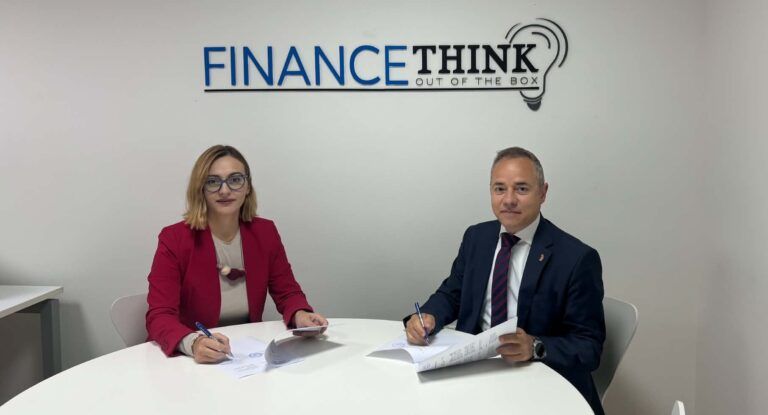
    🤝 Strong economies are built on strong partnerships. Finance Think and the British Business Association in North Macedonia signed a Memorandum of Understanding yesterday, laying the foundation for closer cooperation on issues of importance to the business community, policymakers and society. The partnership brings together the British Business Association’s extensive business network and Finance Think’s […]
    The post MoU with the British Business Association in North Macedonia first appeared on Finance Think.
    The post MoU with the British Business Association in North Macedonia appeared first on Finance Think.

  • On pension matters, participation in Bloomberg

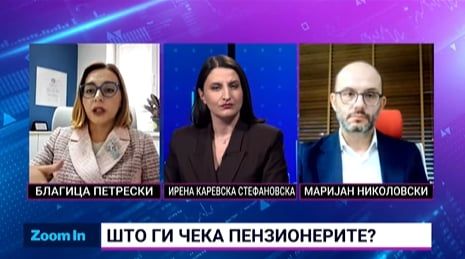
    🔴 What awaits future pensioners? 🟥 What kind of pension model do we need, and who will bear the burden of future reforms? 📌 Without measures, the deficit in the Pension and Disability Insurance Fund will continue to grow, and by the mid-2040s there will be fewer insured persons than pensioners, according to a study […]
    The post On pension matters, participation in Bloomberg first appeared on Finance Think.
    The post On pension matters, participation in Bloomberg appeared first on Finance Think.

  • Is Political Interference Addressed in the Frameworks of the Prosecutorial Councils in North Macedonia and Bosnia and Herzegovina?

    This policy brief examines the frameworks governing prosecutorial councils in North Macedonia and Bosnia and Herzegovina to assess whether their laws ensure adequate independence in line with European standards. The rule of law and an independent justice system are fundamental to the European Union’s enlargement process, particularly within the crucial Chapter 23. A cornerstone of […]
    The post Is Political Interference Addressed in the Frameworks of the Prosecutorial Councils in North Macedonia and Bosnia and Herzegovina? appeared first on EPI.

  • Raising the Bar on Integrity: Aligning North Macedonia and Bosnia and Herzegovina with the 2026 EU Anti-Corruption Directive

    This policy brief evaluates anti-corruption alignment and structural vulnerabilities in North Macedonia and Bosnia and Herzegovina against the EU’s Directive (EU) 2026/1021 on Combatting Corruption. Within the European Union’s “Fundamentals First” enlargement methodology, establishing an accountable administration, an independent judiciary, and robust anti-corruption enforcement is a primary condition for membership. Despite significant differences in their […]
    The post Raising the Bar on Integrity: Aligning North Macedonia and Bosnia and Herzegovina with the 2026 EU Anti-Corruption Directive appeared first on EPI.