
Technology Should Be a Right, rather than a Privilege
Several years ago, a student from “Open the Windows” Center for Assisted technology learned and socialized with the same ease as his fellow students in the school. Then, because of a genetically caused condition, he started to slowly lose his vision. His talent remained the same, as well as his desire to learn, but the access to knowledge became much more difficult. The teachers in the school which he attends do not have sufficient knowledge in assisted technology, and the school itself does not have a computer adjusted to his needs.
In order to continue to learn on equal grounds with the others, he needs only several things, a personal computer, a keyboard with enlarged keys and electronically adjusted tests. Seemingly simple steps. However, in his case, as well as in the case of many other children with disabilities, they do not come via the school or via the system. They only come if the family manages to provide them, or with the help of donors, without a single guarantee that the same support would continue tomorrow.
The centre has worked for 21 years already, it is attended by children and young people with disabilities, mostly at school age. The story of this student, who wants to remain anonymous for now, is shared as an example that confirms the systemic challenges revealed in the research implemented by the two organizations.
The answers to questions similar to his are sought by “Open the windows” Association for Assisted Technology and ZETA Association for Disability and Justice from Skopje with the project “Advocacy for Digital Inclusion” supported by the Swiss Government via Civica Mobilitas. Is the case of this student an exception or a rule in the daily lives of many children in the schools in Macedonia? The project is organised at three levels, a research that shows the situation in the field, workshops that strengthen the organizations of people with disabilities to represent the rights of the affected people, and a direct cooperation with institutions so that the issue does not remain on paper only.
The first step was the research, implemented with the support of the Ministry of Education and Science and the Bureau for Education Development. It included almost two thirds of the primary and secondary schools in the country, i.e. 304 of them, while the results showed that the problem of this student was not an exception, but rather a rule. The digital tools can be applied in the classrooms, but when it comes to assisted technology, i.e. those specific tools that make the difference between participation and exclusion, the situation is largely as with the boy in this text.
What do the results from the research show? First, they hep the institutions to understand that there are no precise date on the students that need support. They also show that there are no trained teachers that would work with assisted technology and thirdly, that there is not stable financing, i.e. that the current one largely relies on projects and donations. “It is these findings that have become an argument, the basis on which one can look for a permanent solution instead of looking for the same temporary solutions every year”, explain the people at “Open the Windows”. According to them, the schools recognize the principles of equality and individualized support, and the digital technologies are present in teaching, but there is a significant gap between an “equipped schools” and “accessible school”.
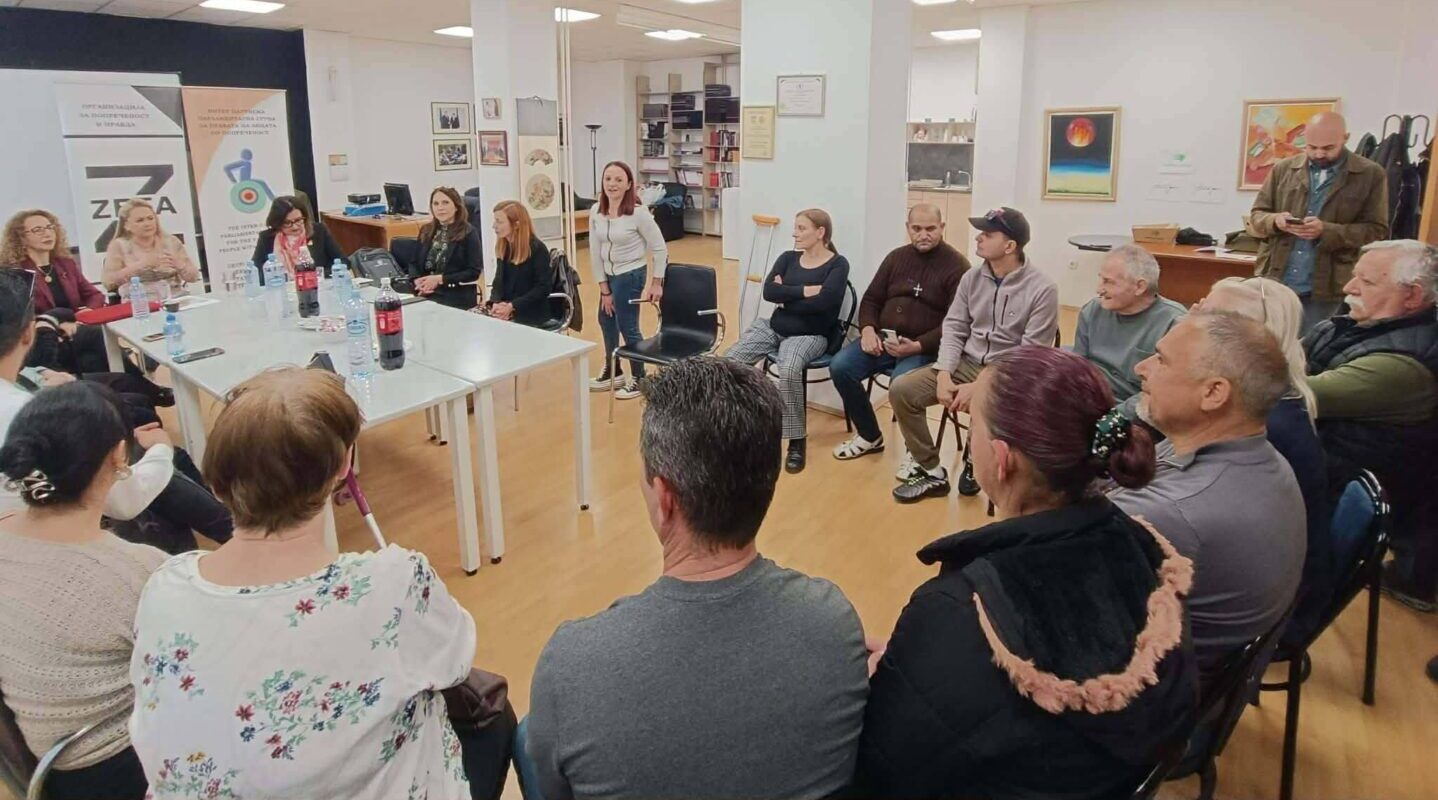
In order to verify these findings, in October there will be meetings in eight cities around the country: Skopje, Prilep, Makedonski Brod, Kumanovo, Strumica, Tetovo, Shtip and Kavadarci. At the meetings, the principals of secondary and primary schools, parents, teachers and students themselves will be able directly to verify or add to what the research has shown, so that the findings have a qualitative dimension on top of the quantitative one before they reach the institutions.
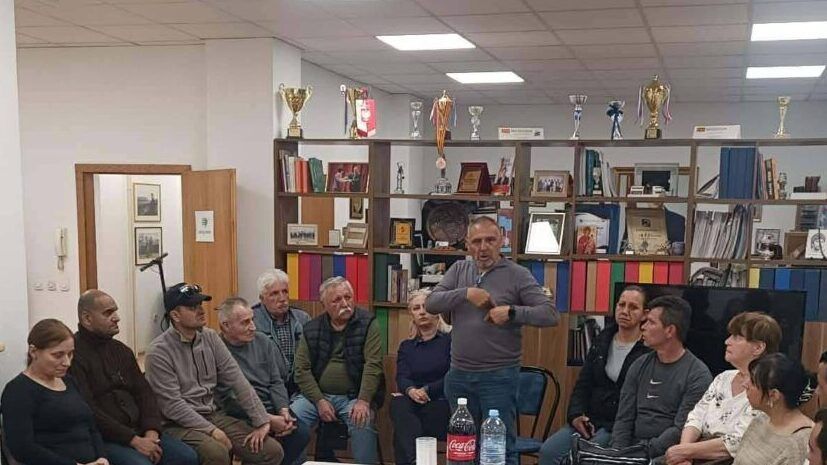
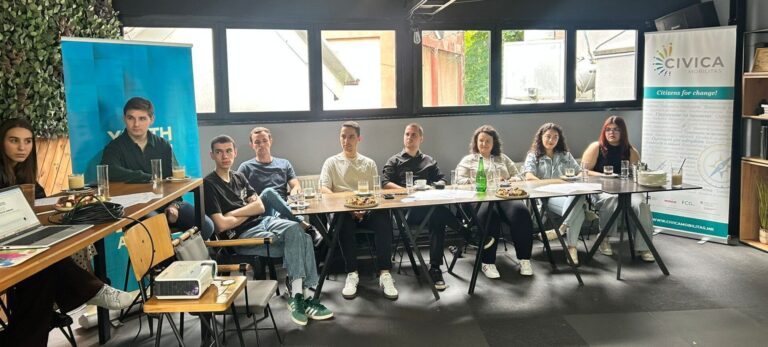
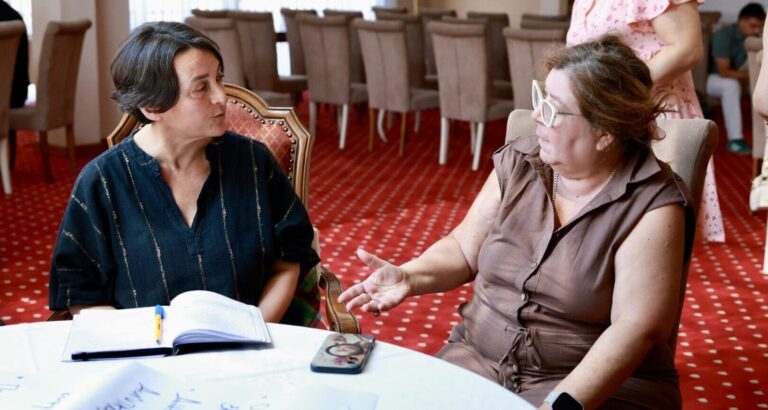
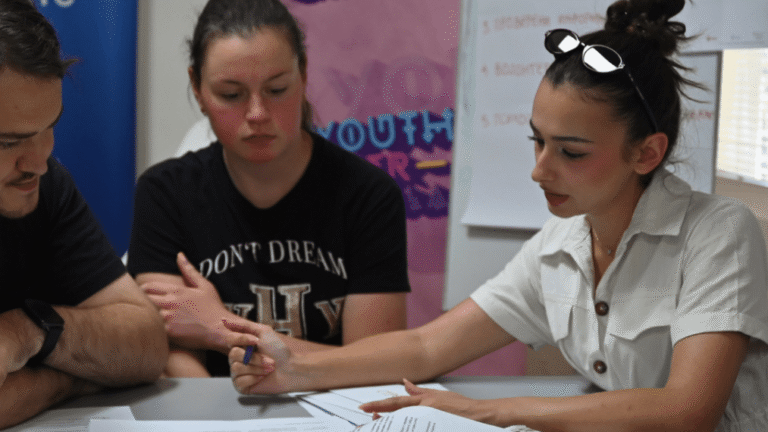
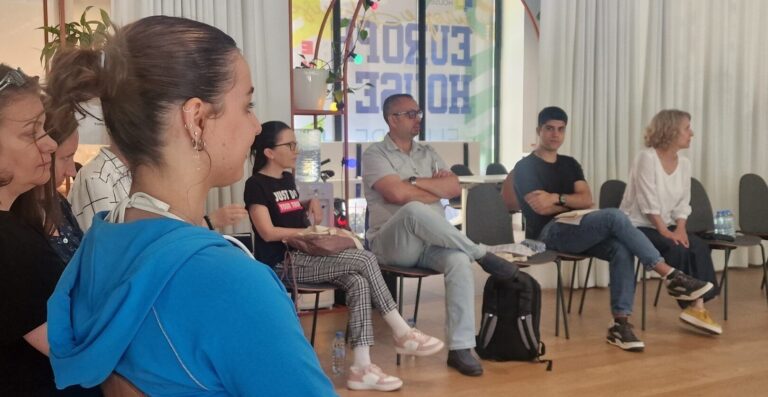
Parallelly, there was work done with the organizations of people with disabilities so that they become stronger in advocating for the rights of the affected people. Five workshops, three in Skopje and one in Strumica and Ohrid respectively gathered 110 participants, more than half of them people with disabilities themselves. The topics were chosen in consultation with the participants, they covered the topic of cultural identity of the people with disabilities via an art workshop, violence against them, access to justice and free legal aid.
Although different, the topics showed that digital inclusion has a key role in the everyday of the people with disabilities, regardless of area. Today, the digital technology is the main way to fast information and equal access to societal, social and administrative services; therefore, as they explain at “Open the Windows”, digital inclusion is a necessary precondition for full participation and right to independent life.
The workshop sin Ohrid and Strumica have clearly shown the difference between the capital and other areas of the country. One of the participants explained it like this: “If I am a member of the municipal council and I am active in the movement of disability, and I have no information on this topic, what can we expect from the other people with disabilities?”
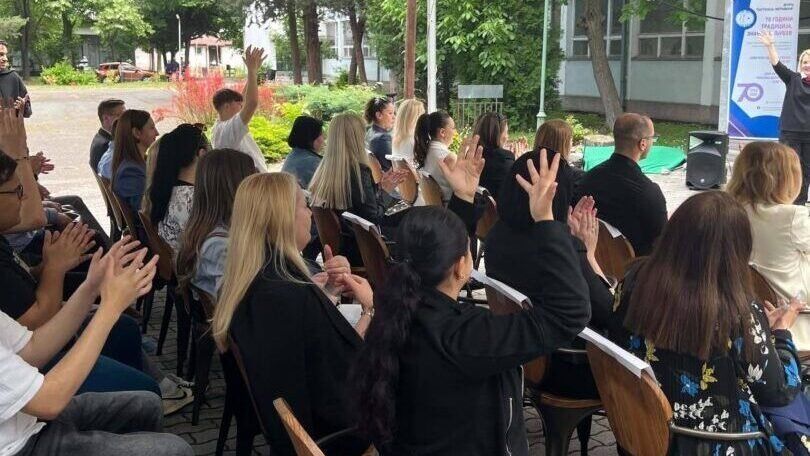
There were similar things said by another workshop participant outside Skopje: “Macedonia is not Skopje. The people with disabilities in Skopje have some kind of an access to information and services. It is far from perfect, but it is better compared to smaller places. We are completely isolated in the other towns. I will not even mention the villages in Macedonia. What digital inclusion do we speak about, when half of us here do not know what that is.”
The participants asked that their experiences remain outside the public eye, that is why their statements are given anonymously. “Nice workshop. And it is good that these issues are open, but the institutions should take them into consideration when they create the policies. Unless an NGO comes to hold such an event, we would remain forgotten”, said one of the participants. This sentence, more than any statistics, shows why the strengthening of these organization to speak for themselves is a crucial part of the project, rather than its side activity.
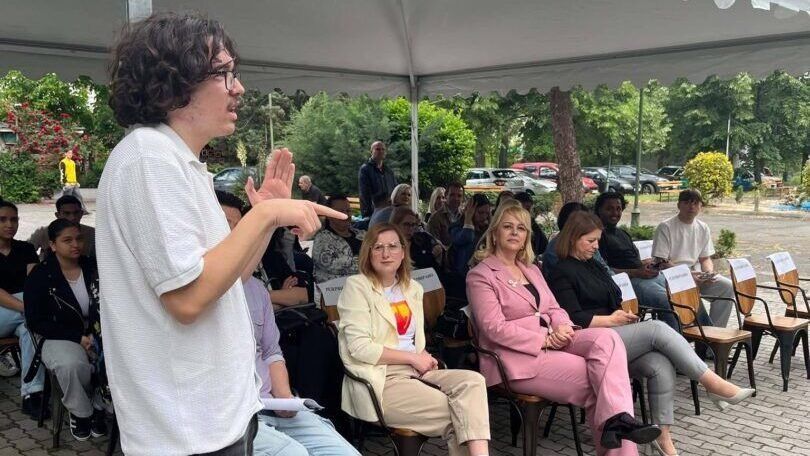
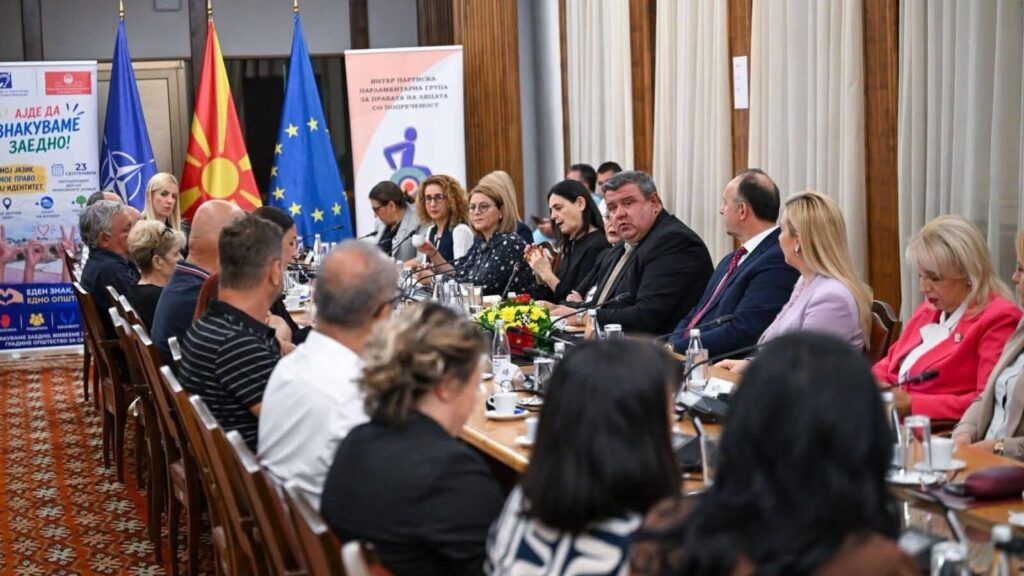
The results of this wok are already seen outside the workshop halls. The Parliament, via its Interparliamentary Group for Rights of the People with Disabilities has received four recommendations to change legal regulations, submitted together with the organizations of the people with disabilities. And in the systematization of the jobs in the Parliament there was for the first time a position for an advisor who is a sign language interpreter, a step that finally opens an easier access to the institution for the people who are deaf or have hearing impediments, a change that remains permanently, outside the timeframe of the project itself.
The interest of the young people is maybe the best part. Their inclusion in the organizations of the people with disabilities is at a concerning low level, which endangers the survival of the movement itself, while most of them are not even informed about their rights. Therefore, as the people in the project say, the most significant indicator about the success of the debate on the young people with disabilities in the digital era is the increased preparedness to give their views loudly before the MPs, the executive power representatives, local self-government and CSOs. Out of the 54 participants in the debate, 23 were people with disabilities, 14 of whom were young people. The inclusion of the young generation, according to the implementing staff, is always a start of a new wave that brings new ideas and energy in advocating for equal opportunities.
What connects all of these results, the research, workshops and advocacy before the institutions, is the same message that is contained in the story about the student at the beginning of this story. The digital and assisted technology must not depend on the fact if a family manages to provide them themselves, nor on the fact if there is a project at the moment. They should become a regular part of the educational and social system, accessible to every child, in every school in every town.
![[Aggregator] Downloaded image for imported item #48477](https://civicamobilitas.mk/wp-content/uploads/2026/06/D0A0D0B0D0B1D0BED182D0B8D0BBD0BDD0B8D186D0B0_D09ED185D180D0B8D0B4_1-768x512.jpg)