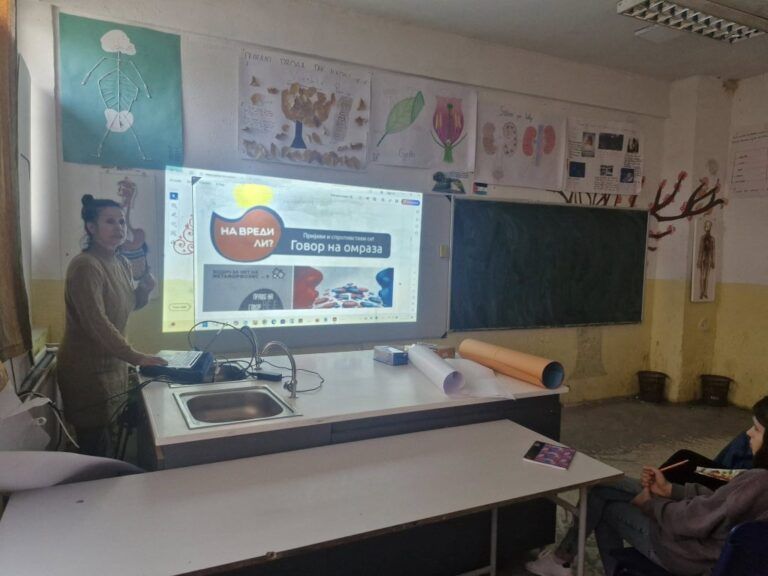
• Civil society organizations and media outlets were part of the workshop “What is the EU Digital Services Act and Why is It Important?

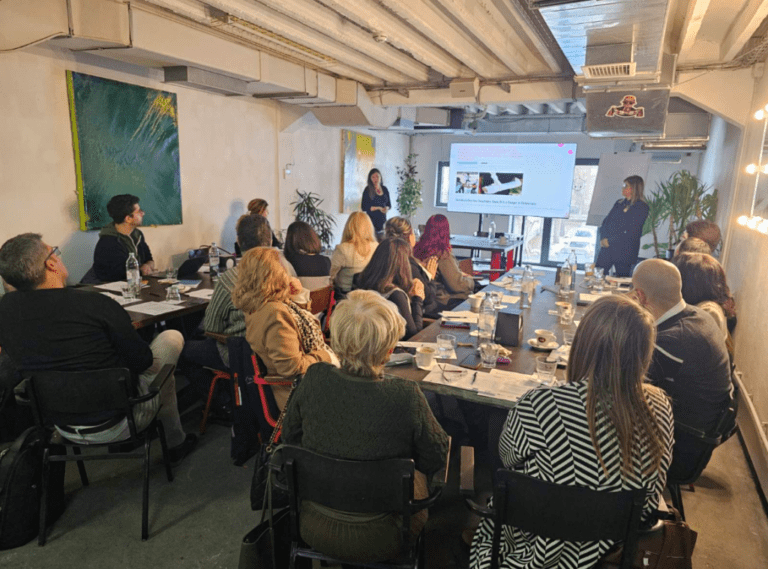
    On 16 January 2025, in Skopje, organized by the Metamorphosis Foundation for Internet and Society, the workshop “What is the EU Digital Services Act and Why is It important?” was held for civil society organizations and media outlets, as part the project “Ensuring the Integration of the Western Balkans into the Digital Single Market.”

    Photo: Meta.mk
    In the Western Balkans, aligning with the European Union’s Digital Services Act (DSA) is crucial for creating a safer online environment. Countries are already making strides toward alignment, and it is essential for governments, civil society, and technology companies to collaborate in developing a regional approach that strengthens digital rights and upholds democratic value.
    Speakers Danche Danilovska-Bajdevska, Program Director at the Metamorphosis Foundation and Despina Kovachevska, Media Monitoring Specialist, gave an overview of the European Digital Services Act, talked about its role in protecting fundamental rights and combating hate speech and disinformation, but also about the impact of the law on civil society organizations and the media.

    Photo: Meta.mk
    Photo: Meta.mk

    “It is a set of rules that protect users, foster democratic progress and strengthen trust in digital services. With this law, the European Union sets a global standard for a fair and secure internet for all. According to some politicians in Brussels, the DSA will bring order to the digital ‘Wild West.’ It is therefore crucial to understand the contents of this EU law,” the workshop speakers stressed. The event also presented the findings of the analysis on the impact of the EU Digital Services Act on the legal framework in North Macedonia.
    According to the analysis, the most important national document clarifying the alignment of national legislation with EU regulations and policies is the National Programme for Adoption of the Acquis Communautaire (NPAA).
    To comply with the DSA, however, will require coordinated work of several ministries and harmonization of several Macedonian laws, such as the laws on audio and audiovisual media services, on media, on electronic communications, on protection of personal data, on electronic commerce, on prevention and protection against discrimination and many others.
    The project “Ensuring the Integration of the Western Balkans into the Digital Single Market” aims to advance digital rights standards in the Western Balkans region and contribute to its successful integration into the Digital Single Market. This initiative represents a joint effort to address the unequal standards for digital rights in the Western Balkan countries through a multi-stakeholder approach to achieve meaningful change. This project is funded by Open Society Foundations – Western Balkans, implemented by Partners Serbia (Serbia), the Metamorphosis Foundation (North Macedonia), Why Not? (Bosnia and Herzegovina), NVO 35 mm (Montenegro), Women in Tech Kosovo (Kosovo) and Institute for Democracy and Mediation (Albania).

  • The risk to media pluralism in the country is increasing – problems in the areas of Market Plurality, Political Independence and Social Inclusion are being systematically neglected.

    Media pluralism is the ultimate goal of any media policy. What are the risks to media pluralism in the country and where does Macedonia stand, compared to other European countries? These questions are answered by the Media Pluralism Monitor in the Digital Age – one of the most relevant studies…

  • From Turkey to Prilep: Simay Creates New Opportunities

    We’re so excited to introduce our wonderful volunteer, Simay, who comes all the way from Turkey!

    Simay is a fantastic example of how young people from different corners of the world can come together and make our communities even better. In a short time, she has smoothly settled into life in Prilep and has become an active and valued member of our community, thanks to her amazing local mentor. With her creativity and enthusiasm, Simay is already planning new activities for the youth of Prilep, which will not only enrich our society but also open up exciting opportunities for everyone’s personal and professional growth.
    One of her most impressive initiatives has been starting Macedonian language classes! Simay is learning Macedonian with so much energy and dedication, which is a great way for her to blend in even more. She’s already using Macedonian words in her everyday conversations, connecting with local young people and paving the way for fun joint projects and activities. These classes help her understand our language and culture while creating lasting friendships along the way.
    With her open spirit and love for learning, Simay has truly become an inspiration to many young people in Prilep, encouraging them to get involved in new and innovative activities. Every day, she learns more about our culture while also enriching our lives with her unique perspective. Simay is living proof that when young people get the chance to express themselves and learn from one another, amazing things can happen!
    If you’re eager to join our community and take part in such meaningful activities, we’d love to have you! Together, we can create a brighter and better tomorrow!

  • An open letter to Mark Zuckerberg from the world’s fact-checkers, nine years later

    As Meta announces end to U.S. fact-checking, program partners warn of a setback for accuracy online and potential global consequences

    Dear Mr. Zuckerberg,
    Nine years ago, we wrote to you about the real-world harms caused by false information on Facebook. In response, Meta created a fact-checking program that helped protect millions of users from hoaxes and conspiracy theories. This week, you announced you’re ending that program in the United States because of concerns about “too much censorship” — a decision that threatens to undo nearly a decade of progress in promoting accurate information online.
    The program that launched in 2016 was a strong step forward in encouraging factual accuracy online. It helped people have a positive experience on Facebook, Instagram and Threads by reducing the spread of false and misleading information in their feeds. We believe — and data shows — most people on social media are looking for reliable information to make decisions about their lives and to have good interactions with friends and family. Informing users about false information in order to slow its spread, without censoring, was the goal. Fact-checkers strongly support freedom of expression, and we’ve said that repeatedly and formally in last year’s Sarajevo statement. The freedom to say why something is not true is also free speech.
    But you say the program has become “a tool to censor,” and that “fact-checkers have just been too politically biased and have destroyed more trust than they’ve created, especially in the U.S.” This is false, and we want to set the record straight, both for today’s context and for the historical record.
    Meta required all fact-checking partners to meet strict nonpartisanship standards through verification by the International Fact-Checking Network. This meant no affiliations with political parties or candidates, no policy advocacy, and an unwavering commitment to objectivity and transparency. Each news organization undergoes rigorous annual verification, including independent assessment and peer review. Far from questioning these standards, Meta has consistently praised their rigor and effectiveness. Just a year ago, Meta extended the program to Threads.
    Your comments suggest fact-checkers were responsible for censorship, even though Meta never gave fact-checkers the ability or the authority to remove content or accounts. People online have often blamed and harassed fact-checkers for Meta’s actions. Your recent comments will no doubt fuel those perceptions. But the reality is that Meta staff decided on how content found to be false by fact-checkers should be downranked or labeled. Several fact-checkers over the years have suggested to Meta how it could improve this labeling to be less intrusive and avoid even the appearance of censorship, but Meta never acted on those suggestions. Additionally, Meta exempted politicians and political candidates from fact-checking as a precautionary measure, even when they spread known falsehoods. Fact-checkers, meanwhile, said that politicians should be fact-checked like anyone else.
    Over the years, Meta provided only limited information on the program’s results, even though fact-checkers and independent researchers asked again and again for more data. But from what we could tell, the program was effective. Research indicated fact-check labels reduced belief in and sharing of false information. And in your own testimony to Congress, you boasted about Meta’s “industry-leading fact-checking program.”
    You said that you plan to start a Community Notes program similar to that of X. We do not believe that this type of program will result in a positive user experience, as X has demonstrated. Research shows that many Community Notes never get displayed, because they depend on widespread political consensus rather than on standards and evidence for accuracy. Even so, there is no reason Community Notes couldn’t co-exist with the third-party fact-checking program; they are not mutually exclusive. A Community Notes model that works in collaboration with professional fact-checking would have strong potential as a new model for promoting accurate information. The need for this is great: If people believe social media platforms are full of scams and hoaxes, they won’t want to spend time there or do business on them.
    That brings us to the political context in the United States. Your announcement’s timing came after President-Elect Donald Trump’s election certification and as part of a broader response from the tech industry to the incoming administration. Mr. Trump himself said your announcement was “probably” in response to threats he’s made against you. Some of the journalists that are part of our fact-checking community have experienced similar threats from governments in the countries where they work, so we understand how hard it is to resist this pressure.
    The plan to end the fact-checking program in 2025 applies only to the United States, for now. But Meta has similar programs in more than 100 countries that are all highly diverse, at different stages of democracy and development. Some of these countries are highly vulnerable to misinformation that spurs political instability, election interference, mob violence and even genocide. If Meta decides to stop the program worldwide, it is almost certain to result in real-world harm in many places.
    This moment underlines the need for more funding for public service journalism. Fact-checking is essential to maintaining shared realities and evidence-based discussion, both in the United States and globally. The philanthropic sector has an opportunity to increase its investment in journalism at a critical time.
    Most importantly, we believe the decision to end Meta’s third-party fact-checking program is a step backward for those who want to see an internet that prioritizes accurate and trustworthy information. We hope that somehow we can make up this ground in the years to come. We remain ready to work again with Meta, or any other technology platform that is interested in engaging fact-checking as a tool to give people the information they need to make informed decisions about their daily lives.
    Access to truth fuels freedom of speech, empowering communities to align their choices with their values. As journalists, we remain steadfast in our commitment to the freedom of the press, ensuring that the pursuit of truth endures as a cornerstone of democracy.

    Respectfully,
    15min – Lithuania
    AAP FactCheck – Australia
    AFP – France
    Africa Check – South Africa, Nigeria, Kenya, Senegal
    AkhbarMeter Media Observatory – Egypt
    Animal Político-El Sabueso – México
    Annie Lab – Hong Kong SAR
    Aos Fatos – Brazil
    Beam Reports – Sudan
    Belarusian Investigative Center – Czech Republic
    BOOM – India
    Check Your Fact – United States of America
    Chequeado – Argentina
    Civilnet.am – Armenia
    Colombiacheck – Colombia
    Congo Check : Congo, Congo DR, Central African Rep
    Cotejo.info – Venezuela
    CORRECTIV – Germany
    Delfi Melo detektorius – Lithuania
    Demagog – Poland
    Demagog.sk – Slovakia
    DFRAC – India
    Doğruluk Payı – Türkiye
    Dubawa – Nigeria
    Ecuador Chequea – Ecuador
    Ellinika Hoaxes – Greece
    Estadão Verifica – Brazil
    Facta – Italy
    FactCheckHub – Nigeria
    Fact-Check Cyprus – Cyprus
    FactCheck Georgia – Georgia
    FactCheck.kz – Kazakhstan
    Factcheck Lab – Hong Kong
    FactCheckZW – Zimbabwe
    FactCheck.org – United States of America
    FactCheckNI – Northern Ireland
    Factcheck.Vlaanderen – Belgium
    Factchequeado – United States of America
    Factly – India
    FactReview – Greece
    FactSpace West Africa – Ghana
    Factnameh – Iran
    Faktisk.no – Norway
    Faktograf – Croatia
    Faktoje.al – Albania
    Factual.ro – Romania
    Fakt Yoxla – Azerbaijan
    Fatabyyano – Jordan
    Full Fact – United Kingdom
    Fundación Maldita.es – Spain
    Greece Fact Check – Greece
    Gwara Media – Ukraine
    Hibrid.info – Kosovo
    India Today Fact Check – India
    Internews Kosova KALLXO – Kosovo
    Istinomer – Serbia
    Istinomjer – Bosnia & Herzegovina
    Japan Fact-check Center – Japan
    Källkritikbyrån – Sweden
    KOMPAS.com – Indonesia
    La Silla Vacía – Colombia
    Lead Stories – United States of America
    Les Surligneurs – France
    Lupa – Brazil
    Mafindo – Indonesia
    Maharat Foundation – Lebanon
    Mala Espina – Chile
    MediaWise – United States of America
    Metamorphosis – North Macedonia
    MyGoPen – Taiwan
    Myth Detector – Georgia
    NepalFactCheck.org – Nepal
    Newschecker – India
    Newtral – Spain
    Observador – Portugal
    Open – Italy
    Pagella Politica / Facta news – Italy
    Polígrafo – Portugal
    PolitiFact – United States of America
    Pravda – Poland
    PressOne.PH – Philippines
    Probe – Philippines
    Provereno – Estonia
    Rappler – Philippines
    Raskrinkavanje – Bosnia & Herzegovina
    Raskrinkavanje.me – Montenegro
    Razkrinkavanje.si – Slovenia
    RMIT Lookout – Australia
    Snopes – United States of America
    Taiwan FactCheck Center – Taiwan
    Tech4Peace – Iraq
    Telugu Post – India
    Teyit – Türkiye
    The Quint – India
    The Stage Media-Liberia – Liberia
    TjekDet – Denmark
    Tirto.id – Indonesia
    The Journal FactCheck – Ireland
    The Logical Indian – India
    VERA Files – Philippines
    Verificat – Spain
    Verify – Syria

    Editor’s note: Fact-checking organizations continue to sign this letter, and we’re updating the list as they do.

  • Price and margin control measures stabilize inflation only in the first month, after which it returns

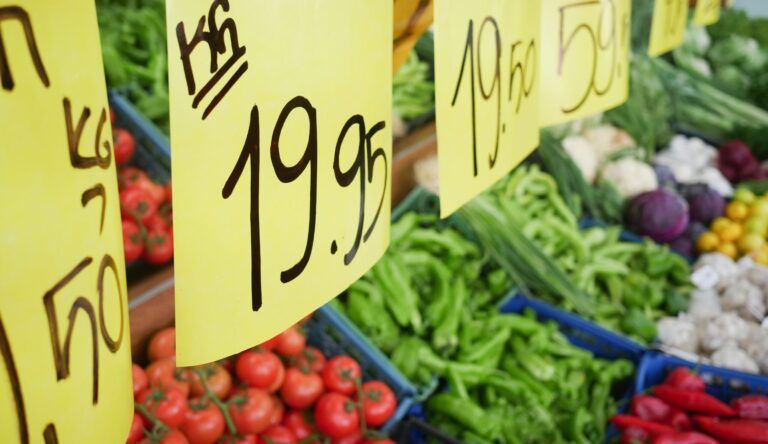
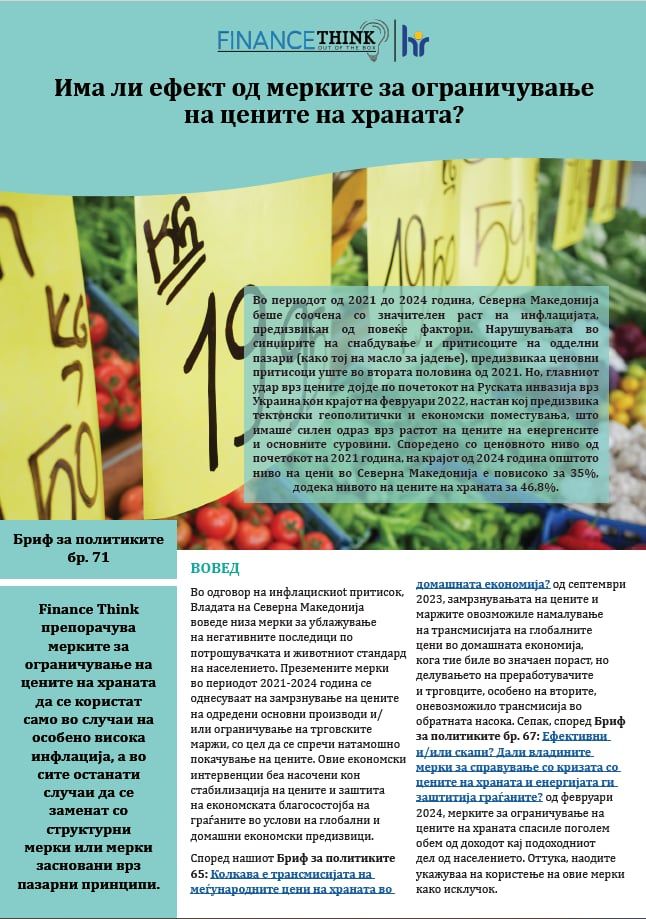
    Between 2021 and 2024, North Macedonia faced significant inflation growth driven by multiple factors. Supply chain disruptions and pressures on specific markets (such as edible oil) caused price increases as early as the second half of 2021. However, the main price shock came after the Russian invasion of Ukraine at the end of February 2022, an event that triggered tectonic geopolitical and economic shifts, significantly impacting the prices of energy and essential raw materials. Compared to the price level at the beginning of 2021, by the end of 2024, the general price level in North Macedonia had increased by 35%, while food prices had risen by 46.8%.
    In response to this inflationary pressure, the Government introduced a series of measures to mitigate the negative impacts on consumption and the living standards of the population. Between 2021 and 2024, measures included freezing the prices of certain basic products and/or limiting trade margins to prevent further price increases. A total of nine key decisions were made by December 2024, three of which targeted margin limitations, while the others focused on price controls. Some measures applied to specific food products, while others covered a broader range of food items.
    The findings of the analysis show that price control measures for food had a mild aggregate effect and a strong immediate effect. During periods without such measures, the average month-on-month food inflation rate was 0.5%. Under these measures, food inflation averaged as low as -1%, indicating that food prices decreased during the intervention. Thus, the estimated effect is relatively significant. However, this effect diminishes after the first month of implementation (if the measure lasted longer than one month). This indicates that while the measures achieve their strongest expected effect on reducing food prices in the first month, the impact quickly weakens, likely due to market adjustments (e.g., rising prices of alternative products not covered by the measures).
    Another finding suggests that price control measures only temporarily suppress inflation, as prices tend to increase again once the measure expires. Inflation returns almost entirely to its pre-measure dynamics, without evidence of overshooting.
    Finance Think recommends that food price control measures be used only in cases of exceptionally high inflation. In all other situations, they should be replaced with structural or market-based measures, such as:

    Consistent and impartial enforcement of the Law on Unfair Trading Practices.
    Strengthening the capacity and tools of the Commission for Protection of Competition.
    Overhauling the agricultural subsidies system to increase domestic production.
    Targeted budget support for the most vulnerable segments of the population.

  • Read our latest Policy Brief 71

    Our latest 📖 Policy Brief 7⃣1⃣ answers the question: Do government #measures to limit food prices have an effect ⁉1️⃣ Measures to limit food prices have a strong effect only in the first month of implementation, reducing inflation by up to -1%! 📉2️⃣ After the first month, the effect dissipates due to market adjustments, such as increases in the prices of alternative products. ⚖️3️⃣ Inflation returns to its previous dynamics immediately after the measures are lifted, but there is no overshooting. 🔄4️⃣ Finance Think recommends using such measures only during periods of very high inflation. In other cases, structural and market-based measures are needed. 🛠️🖇 Full brief: shorturl.at/KApmC#Inflation #Prices #TemporaryEffect #FinanceThink

  • EFCSN disappointed by end to Meta’s Third Party Fact-Checking Program in the US; Condemns statements linking fact-checking to censorship

    The EFCSN strongly condemns Meta’s CEO’s statements linking fact-checking with censorship
    Platforms retracting from the fight against mis- and disinformation allows for election interference
    The EFCSN encourages the European Union to stand strong in the face of such political pressure and not be deterred in its efforts to stop the spread of mis- and disinformation on VLOPs

    7 January 2025 – The European Fact-Checking Standards Network (EFCSN) is disappointed by Meta’s decision to end its Third Party Fact-Checking Program “starting in the United States” and strongly condemns its CEO’s statements linking fact-checking with censorship. “This seems more a politically motivated move made in the context of the incoming administration of Donald Trump in the United States than an evidence-based decision”, says Clara Jiménez Cruz, Chair of the EFCSN. The EFCSN encourages the European Union to stand strong in the face of such political pressure and not be deterred in its efforts to stop the spread of mis- and disinformation on Very Large Online Platforms.
    Fact-checking is not censorship, far from that, fact-checking adds speech to public debates, it provides context and facts for every citizen to make up their own mind. Fact-checking has been proven to be effective in countering misinformation time and again. Equating fact-checking with censorship is a false and malicious claim. Fact-checkers do not ‘censor’ anyone. Our members investigate and publish the evidence of claims potentially being false. It has always been Meta’s decision what to do with the content fact-checkers label, not ours.
    The EFCSN takes issue with the characterisation of fact-checkers and journalists by Meta CEO, Mark Zuckerberg, in his announcement. In the justification for ending the program, Zuckerberg says, “Fact checkers have just been too politically biased and have destroyed more trust than they’ve created.” This is patently false. Fact-checkers are held to the highest journalistic standards of non-biased reporting, transparency, integrity and accountability, with organisations like the EFCSN upholding these standards through an independently conducted audit. Linking fact-checking with censorship is especially harmful as such false claims are already one of the driving forces behind harassment and attacks on fact-checkers. Furthering these claims can only exacerbate an already dire issue affecting fact-checkers across the world.
    With several European countries heading to the polls in 2025, platforms retracting from the fight against mis- and disinformation allows and potentially even invites election interference, especially from foreign actors. The EU in particular must stand strong in the enforcement of its own laws, even in the face of pressure from other countries.
    What the facts (and Meta) say on the impact of the Third Party Fact-checking program

    In the announcement, Meta also equated the system of labelling fact-checked disinformation with censorship, stating “A program intended to inform too often became a tool to censor.” This is actually the opposite of the functioning of a labeling system. Labels on misinformation empower users to make informed decisions themselves about which content to interact with and share. In fact, just last year, in the lead up to the EU’s 2024 Parliament Elections, Meta emphasised the effectiveness of its labeling system, stating: “Between July and December 2023, for example, over 68 million pieces of content viewed in the EU on Facebook and Instagram had fact checking labels. When a fact-checked label is placed on a post, 95% of people don’t click through to view it.”
    Meta has also previously celebrated its Third Party Fact-Checking Program as successful and beneficial to users, stating, “We know this program is working and people find value in the warning screens we apply to content after a fact-checking partner has rated it.” In the latest press release, Meta’s CEO alludes to “too many mistakes and too much censorship”; but Meta’s own most recent DSA transparency report shows that Fact-Checked demoted content by mistake only affected 3,15% of the total of complaints of demotion on Facebook.
    The Community Notes model proposed as an alternative to the Third Party Fact-Checking Program also has weaknesses. Community Notes could best be used to counter false claims when they are based on proper expertise and fact-checking work. In the context of the 2024 US election, Poynter found that X’s Community Notes had at best an extremely marginal effect on combating election disinformation. In another investigation EFCSN member organization Science Feedback found that most of the content on X (formerly Twitter) that fact-checkers found to be false or misleading had no visible signs of having been moderated..
    The European Fact-Checking Standards Network is an association of fact-checking organizations who commit to the standards of independence, transparency, and journalistic quality outlined in the European Code of Standards for Independent Fact-Checking Organisations. With over 50 verified members across Europe, the EFCSN is the voice of European fact-checkers.

  • 2025 will be the year of ZERO ethnic and religious hate speech in schools in the municipalities of Prilep and Dolneni!

    During the month of December 2024, we conducted a series of activities in the municipalities of Prilep and Dolneni to address and respond to ethnic and religious hate speech that exists in online communication between young people/students from primary and secondary schools.

    In this regard, three workshops were organized in two primary and one secondary school in the municipalities of Prilep and Dolneni, where students of different ethnic and religious backgrounds had the opportunity to learn and interactively engage in discussions on the topics of interreligious and interethnic diversity, critical thinking and media literacy as powerful tools for opposing hate speech both online and offline.

    The workshops were held in the period from 23rd-25th of December 2024 and included students aged 12-18 in the three schools. The content and implementation were delivered by an externally engaged expert, Monika Taleska, in cooperation with the school staff.

    The lectures took place in the following order:

    1. Lecture at the Primary School “Ismail Qamili” – village Crnilishte, municipality of Dolneni.

    Date: 23rd of December 2024

    Topics covered by the lecture:

    – Research on media literacy: understanding how the media shape opinions and attitudes.

    – The psychology behind hate speech and its impact on individuals and communities.

    – Practical exercises: Evaluating media content for bias and misinformation.

    2. Lecture at the Primary School “Dobre Jovanoski”, Prilep

    Date: 24th of December 2024

    Topics covered by the lecture:

    – Introduction to hate speech: definition, examples and legal implications.

    – The role of the media in the spread and fight against hate speech.

    – Interactive session: Identifying hate speech with online and offline scenarios.

    – Tips for critical thinking and evaluating information sources.

    3. Lecture at SOEPTU “Kuzman Josifoski Pitu” Municipality of Prilep

    Date: 25th of December 2024

    Topics covered by the lecture:

    – Intersection of hate speech and freedom of expression.

    – Case studies: Real-life examples of the consequences of hate speech.

    – Media literacy skills: Recognizing fake news and combating disinformation.

    – Group discussion: How can young people contribute to a more respectful online environment?

    Next, on 27th of December 2024, was organized a New Year’s networking event at the office of the Association LET Station in Prilep.

    The timing of the event was deliberately chosen to capitalize on the spirit of renewal and shared optimism for the future, creating a significant platform to address the critical issue of hate speech in schools, particularly on ethnic and religious grounds.

    The event was attended by around 30 people, including: youth representatives (students from primary and secondary schools in Prilep and Dolneni), school staff and educators who previously played a key role in organizing workshops aimed at fostering tolerance and understanding, and representatives from various religious institutions, ensuring the inclusion of different perspectives and promoting interfaith dialogue.

    The event began with a warm welcome by the organizers, who highlighted the importance of the initiative in light of the growing concern about hate speech and its harmful impact on youth and community cohesion. Participants shared personal stories, insights and examples of the challenges they face in dealing with hate speech. These stories fostered empathy and understanding among those present, who highlighted practical approaches that have proven successful in different contexts.

    Also, was prepared a “New Year’s Resolution for Zero Hate Speech” making efforts for a collective commitment to promote zero tolerance for hate speech in schools and communities whose representatives participated in the event. This moment served as a powerful visual representation of unity and shared responsibility in addressing hate speech.

    Schools were encouraged to display the resolution prominently as a reminder of their commitment to fostering a safe and inclusive environment and to engage students, parents, and community members in discussions about hate speech and its consequences.

    The New Year’s networking event marked a significant step towards building a culture of respect, tolerance, and inclusion in the municipalities of Prilep and Dolneni. By engaging diverse stakeholders and emphasizing collective action, the event laid the foundation for ongoing efforts to combat hate speech and create a positive environment where every student can thrive.

    The activity is part of the Encouraging Collective Action for Religious Freedom in the Western Balkans project, which is being implemented in collaboration with NDI North Macedonia.
Нема повеќе содржини

Нема повеќе содржини