• Openness starts with knowledge and collaboration: Mentoring support for transparent and accountable municipalities

    The mentoring support aimed at increasing openness and transparency among municipalities in the Republic of North Macedonia is ongoing. This initiative, provided by the Rural Coalition in collaboration with the Metamorphosis Foundation, supports nine municipalities across eight planning regions where the digital tool mZaednica is either being implemented or planned for implementation.
    Among the first municipalities to receive this opportunity to strengthen the capacities of the municipal administration towards proactive publication of documents, improving transparency and openness, as well as overcoming current challenges, in order to encourage more informed civic participation in local decisions, are the municipalities of Kocani, Kriva Palanka, Valandovo, Aerodrom, Demir Hisar, Gostivar, Negotino, Struga, and Štip.
    The mentoring is conducted online in January and February 2025, based on a methodology for strengthening the capacities of municipalities developed according to the Openness Index of local self-government, with an emphasis on systematization and prioritization of information based on the results of the Openness Index.
    The mentoring is conducted online in January and February 2025, following a methodology developed to strengthen municipal capacities, based on the Openness Index. The primary focus is on systematically prioritizing information according to the latest results from the monitoring of local self-government openness, as shown in Assessment of Good Governance in Local Self-Government Units in the Republic of North Macedonia Using the Openness Index.
    The ultimate goal of this activity is to train public officials who will be able to work independently on consistently improving the openness of their municipalities.

    This activity is part of the project (DIGILOC) Digital transformation at local level – Engaged community for corruption resilience supported by the Government of Switzerland through Civica Mobilitas.
    Partners in the project are Metamorphosis Foundation for Internet and Society, Rural Coalition, and Center for Social Innovations Blink 42-21.
  • ACRID Network

    “ACRID Network” is a private initiative, independent, non-partisan, non-political, international network, with strong focus, expertise and interest in Science, Innovations, Research and Development and have 4 sectors of members: Private,
    Academic,
    Public and
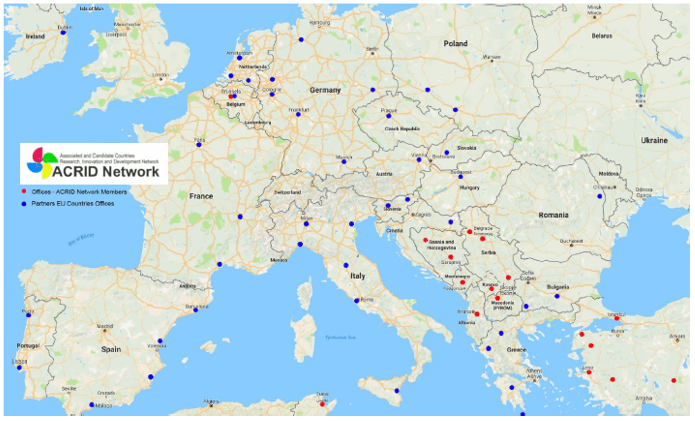
    Experts.Concept and PurposeACRID means Associated Candidate Countries Research, Innovation and Development Network. ACRID is a private professional network focusing to support and improve the R&D+I in the accession and negotiation process to EU by the Horizon Europe Associated and Candidate Countries as Albania, Bosnia and Herzegovina, Georgia, Macedonia, Montenegro, Moldova, Serbia, Switzerland, Turkey, Ukraine, including *Kosovo, with opportunities to include other EU programmes Associate countries and third countries.ACRID is focusing on improving the Research, Innovation and Development Capacity of EU Associated Candidate Countries. With aim of promoting EU values and EU financial instruments from the MFF 2021-2027, fully aligning with EU values on EU Green Deal, Digitalization, Education, Innovation, Climate, Health, Environment, Energy and Agriculture.ACRID Network is bringing together, connecting and offering project disseminating activities to more than 42 Mill citizens in EU Associated Countries. This is very important for young population, researchers, project results dissemination, and impact in EU projects, bringing additional value and know-how shearing among citizens and institutions.ACRID Network capacity in numbers until (Q1)2023:ACRID Network – 10 Countries from (EU Candidate AL,BiH,NMK,MNG,RS,TR,ML,GE,UA)ACRID Network – 150 million Market Economy – Population (EU=446,8) = 33,7% of EUACRID Network – 42 mill Citizens, Direct Dissemination of the Project ResultsACRID Network – 947,5 Billion GDPACRID Network – 8,049 euro average GDP per capitaACRID Network – 8,5% average GDP GrowthACRID Network – 141 Billions Gov BudgetACRID Network – 1,410 Mill (1%) for R&D from Gov Budget (2,5%=3,520 Mill euro)ACRID Network – 450 Mill euro Horizon 2020 Projects 2014-2020ACRID Network – 144 ExpertsACRID Network members by the end of 2022 are coming from the cities and regions with population as: (20mill)-Istanbul, (1,5mill)-Canakkale with Balikesir, and (10mill)-Aydin with Izmir and with Konya regions, and (1,2Mill)-Skopje, Ohrid, Negotino, Gevgelija, Kumanovo, Tetovo, then (1Mill)-Tirana, and (1Mill)-Prishtina region, (0,5Mill)-Podgorica, (1,4Mill)-Sarajevo, Banja Luka, Zenica, Tuzla, Mostar, Bihać, (2,4Mill)-Belgrade, Novi Sad, Nis, Vranje.ACRID Network is bringing together project applicants from countries with 172,6 mill people market as total number of citizens. (Turkey 88mill, Macedonia 2,4mill, Albania 3,2mill, Moldova 2,59 Mill, Montenegro 0,8Mill, Bosnia and Herzegovina 3,8mill, Georgia 3,71Mill, Serbia 8.2mill, Israel 9,6Mill, Tunisia 12,3Mill, Ukraine 38Mill and *Kosovo2.2Mill)Total of 150 million Market EconomyACRID Network is connecting with partners from more than 18 EU Member States (EU Member States) partners from: Bulgaria, Greece, Portugal, Spain, Italy, Slovenia, Croatia, Hungary, Slovakia, Czech Republic, Italy, France, Germany, Nederland, Sweden, Poland, Romania, Lithuania, and additional partners from 4 international countries (+USA, Japan, Indonesia & Malaysia)and partners from 15 African Countries: Ghana, Nigeria, Kenya, Zimbabwe, Tanzania, Zambia, Mozambique, South Africa, Congo, Seychelles, Botswana, Rwanda and north Africa countries Morocco and Egypt.VisionACRID Network aims to be the best and different R+I&D Network in South East Europe and Associated Candidate Countries with impact in Academic and Private Sector, bringing educational, entrepreneurial and business opportunities for employment, networking and know-how transfer to young population, academic, private and public sector.MissionTo improve the Innovation Capacity, Innovation Index and R&D capacity in the EU Associated Candidate Countries. Networking the best researchers and experts from Academic and Private Sector, collaborating to improve the Education, R+I&D, Entrepreneurship and Startup ecosystems, Investors and Policy makers decisions, in EU Associated Candidate Countries and focus on Western Balkan Region.

  • LET US IMPLEMENT OUR READINESS FOR COOPERATION

    “I am convinced that in a dialogue with the CSOs we can build better policies, we can make better decisions on certain areas of society.” This was one of Prime Minister Mickoski’s messages sent to the CSO representatives at the Civica Mobilitas National Forum that took place on 15th November…

  • Regional Policy Debate held

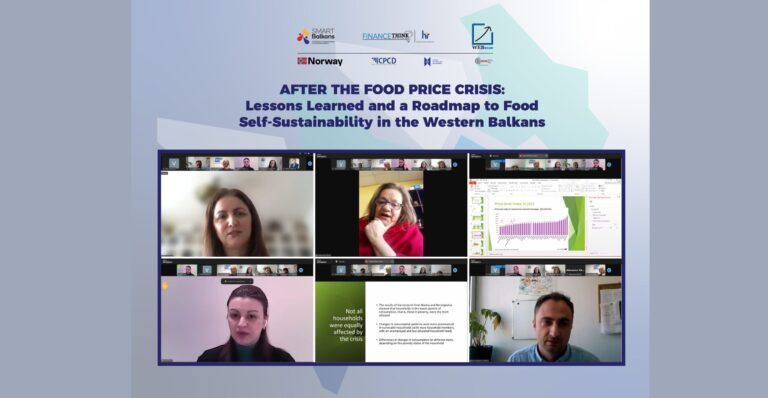
    Today, the Regional Policy Debate “After the Food Price Crisis: Roadmap for Food Self-Sustainability in the Western Balkans Region – Lessons Learned and the Path Forward” took place.

    At the debate, we discussed the dependence on food imports, the need for rural development and climate change adaptation, as well as regional cooperation in the Western Balkan region.

  • The openness measurement of local self-government units for 2025, through the Openness Index, has begun

    The Metamorphosis Foundation in partnership with the Rural Coalition has begun the implementation of this year’s measurement of openness of local self-government units in the Republic of North Macedonia.
    The measurement of openness for all 81 local self-government units will be conducted using the Openness Index, a composite indicator that gauges the degree of institutional openness to citizens and society. It was created to assess how effectively institutions provide citizens with clear and accessible information.
    To measure the degree of openness in local self-government, monitoring through the Openness Index is conducted in accordance with legal regulations, international standards, recommendations, and best practices. This evaluation is based on specific quantitative and qualitative indicators, including access to information on official websites, published data on institutional operations, public procurement, and the spending of public funds, among others.
    Upon completing the openness measurement of local government units, and based on the analyzed data, the Metamorphosis Foundation will prepare a public policy document that will be shared with local government and the public, in order to help promote the openness of local government to citizens.
    Additional information on the latest measurement of openness in local government units can be found in the publication Assessment of Good Governance in Local Self-Government Units in the Republic of North Macedonia Using the Openness Index.
    This activity is part of the project (DIGILOC) Digital transformation at local level – Engaged community for corruption resilience supported by the Government of Switzerland through Civica Mobilitas. Partners in the project are Metamorphosis Foundation for Internet and Society, Rural Coalition, and Center for Social Innovations Blink 42-21.
  • “Build Strong Links with the Community!”

    At the recent Civica Mobilitas workshop, “Good Practices for CSO Sustainability”. Led by Simon Forrester, the Center for Youth Activism KRIK presented their experience. This was the reason to talk to Mila and Angela about the efforts of the organization for function and deal with all challenges as they appear….

  • Opennes Index: The ninth wave of openness measures for the executive and legislative branches has begun

    The ninth wave of measuring the openness of the executive and legislative branches of power in four countries of the Western Balkan region, namely Bosnia and Herzegovina, North Macedonia, Serbia and Montenegro, through the Openness Index, has begun. The measurement is carried out by the network “Accountability, Technology and Institutional Openness Network in South East Europe – ACTION SEE” with support of the National Endowment for Democracy – NED “Leveraging technology to promote institutional accountability and transparency.”

    The Openness Index is a composite indicator that measures, over the course of eight consecutive years, the degree of openness of state institutions in the Western Balkans to citizens and society. It was developed to assess the extent to which citizens in the region receive relevant and understandable information from these institutions.
    To measure the degree of institutional openness, the partners of the ACTION SEE network, in line with international standards, recommendations, and best practices, monitor institutions using specific quantitative and qualitative indicators. These include access to information on official institutional websites, the quality of the legal framework for various issues, alternative public information sources, published data on the operations of institutions, public procurement data, and information on public spending, among others.
    Based on the eighth wave of measurements carried out during 2024, the publications Assessment of Good Governance of the Executive Branch in North Macedonia and the Region through the Openness Index according to the Measurement for the Year 2023 and Assessment of Good Governance of the Legislative Branch in North Macedonia and the Region through the Openness Index according to the Measurement for the Year 2023 provide a detailed picture of the openness of individual institutions and include concrete recommendations and steps to improve their transparency.
    The project “Leveraging technology to promote institutional accountability and transparency” is implemented by the Center for Democratic Transition (Montenegro) in partnership with the Metamorphosis Foundation for Internet and Society, the Citizens Association Why Not?, and Partners for Democratic Change Serbia (Serbia), with financial support from the National Endowment for Democracy – NED.

  • Metamorphosis Foundation at “Privacy Week” in Belgrade: Privacy for All

    The Metamorphosis Foundation participated in the 5th annual “Privacy Week” conference, organized by Partners for Democratic Change (Partners Serbia), held in Belgrade from January 29-31, 2025, under the theme “Privacy for All.”

    This year’s conference focused on privacy and data protection, with a particular emphasis on safeguarding the rights of the most vulnerable, including activists and journalists.
    On January 30, 2025, the central event of “Privacy Week” took place, coinciding with International Data Protection Day. The conference explored the synergy of personal data protection and the fight against discrimination, the protection of digital rights for citizens outside the European Union’s regulatory framework and the so-called Brussels Effect, the protection of medical data in the development of artificial intelligence models, along with several other related topics.

    Danche Danilovska-Bajdevska, Program Director at the Metamorphosis Foundation, was the moderator of the panel “Brussels Effect—A View from the Periphery,” which was focused on the impact of European regulations such as the General Data Protection Regulation (GDPR), the Digital Services Act (DSA), and the Digital Markets Act (DMA) on the digital market and human rights in countries outside the EU regulatory framework. Panelists in this session examined the effects of these regulations, with particular attention to the rights protection mechanisms available to citizens and the challenges in applying them outside the EU. The discussion also highlighted successful initiatives to protect digital rights outside the EU, as well as the opportunities and benefits of integrating the Western Balkans into the single digital market.

  • Economists from WEBecon Network in the podcast “Where Is the Money?”

    Boycott. Discontent. High Prices.The region is protesting against rising store prices.
    But is the crisis nearing its end, and are these just its final, delayed effects?Has the region significantly impoverished over the past four years?If a new crisis arises, will we be able to handle it?
    Our economists from WEBecon Network provide answers to these pressing questions:

    Marija Basheska from Finance Think, North Macedonia
    Vojin Golubović from ISSP, Montenegro
    Lazar Ivanović from Centar za visoke ekonomske studije – CEVES, Serbia
    Amela Kurta from CREDI, Bosnia and Herzegovina

    Tune in to the podcast “Where Is the Money?” with Goran Temenugov on Pari.com.mk.

    https://www.youtube.com/watch?v=mFkYg0UkKJA

  • The 2025 Carol Bellamy Leadership Award: Call for Applications

    The Pleiades Organization invites all interested organizations or individuals in Macedonia to apply for the Carol Bellamy Leadership Award (CBLA) for 2024-2025. This prestigious fund provides financial support to organizations or individuals working to empower women to prevent/fight violent extremism. Who is qualified to receive the CBLA 2025 award? Any…

Нема повеќе содржини

Нема повеќе содржини