• Gender Equality School

    Through education and resources, we create sustainable models of community organizing to advance gender equality in the region.

    As part of the project “Her Voice – Her Power: Empowering Marginalized Women and Girls in Pelagonija”, a Gender Equality School was successfully implemented in December. The Gender Equality School was attended by 20 people from the Pelagonija region, who were selected in order to be trained and educated on topics related to gender equality, the rights of women and girls, and ways to actively participate in their empowerment.

    The goal of the school was to create a network of gender promoters who will continue to work on the implementation of the project in their communities and who will contribute to raising awareness about gender equality and the importance of empowering women and girls in Pelagonija.

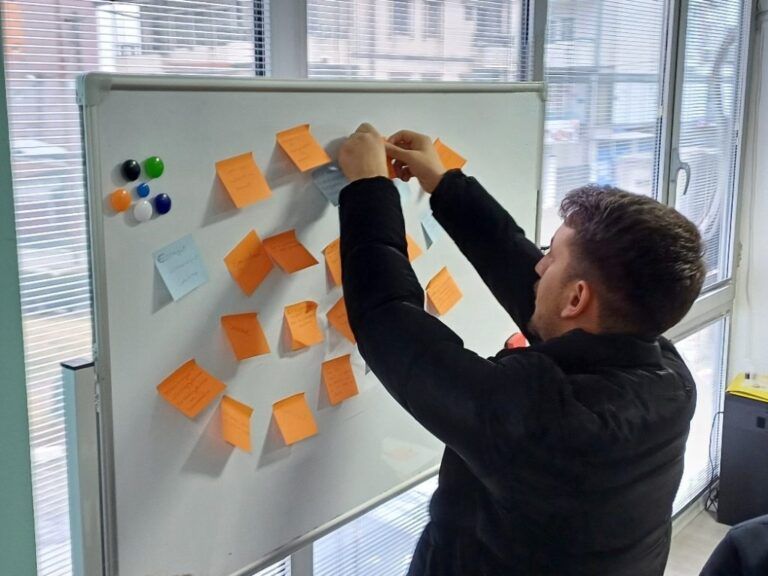
    The school was conducted through interactive workshops, lectures, group discussions, and case studies. The program covered the topics of gender equality basics through which the participants learned about basic theoretical concepts, such as gender, sex, gender role and gender stereotypes. The students learned how to distinguish gender discrimination from other types of inequalities, the specific challenges that women and girls face in Pelagonija, such as limited employment opportunities, lack of educational resources, as well as socio-cultural barriers. The participants learned how to organize and influence their communities through campaigns, public speeches and initiatives to change attitudes and legislation regarding gender equality. They acquired skills to identify and solve women’s problems in their local communities.

    The implementation of the School for Gender Equality represents a significant step towards the empowerment of women and girls in Pelagonia, as well as their active involvement in the process of changing awareness and attitudes in their communities. With this school, the project not only provides necessary education and resources for participants, but also creates lasting impacts by forming a network of gender equality promoters who will continue to work to advance gender equality in the region.

    “Her Voice – Her Power: Empowering Marginalized Women and Girls in Pelagonija” is a project implemented by the Civic Initiative Center – Prilep in partnership with the Association for Legal Education and Transparency LET Station from Prilep and the Multiethnic Association for All Ages from the village of Crnilishte, Dolneni. The project is supported by the Government of Switzerland through the Civica Mobilitas program.
  • REC NETWORK CALL

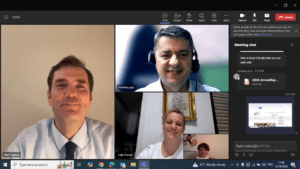
    The members of the REC Network Advisory Board on December 19, 2024, convened for an important meeting to discuss past activities and future strategies for the network. Participants included Directors, Mihallaq Qirqo from REC Albania, Lejla Suman from REC Bosnia and Herzegovina, and Rifat Ünal Sayman from REC Türkiye, and Milena Manova Ilikj, President of REC North Macedonia. The meeting focused on reviewing the activities undertaken by REC Network member organizations in 2024 and planning strategic priorities for 2025.

    One of the central topics of discussion was the need to enhance collaboration across the network by developing a unified annual report format. This initiative aims to standardize reporting across RECs and improve transparency and efficiency. Additionally, efforts to establish common administrative standards and policies were highlighted as a crucial step toward streamlining operations within the REC network.
    To further strengthen collaboration, it was decided that the next Advisory Board meeting will be organized as an in-person workshop in Istanbul during the second quarter of 2025. In preparation for this workshop, working groups will be established during the first quarter of the new year to ensure effective planning and productive outcomes. These groups will focus on specific tasks related to the network’s strategic goals and administrative alignment.
    Members of the REC Network:
    •Albania: Resource Environmental Center
    •Bosnia and Herzegovina: Resource Environmental Center
    •North Macedonia: Resource Environmental Center
    •Türkiye: Resource Environment and Climate Association
    This collaborative effort underscores the commitment of the REC Network to foster cooperation, establish shared standards, and strengthen its impact across member countries.

  • From waste to innovation: Youth as drivers of environmental transformation

    Change begins with us, but it mostly relies on young people. They, with fresh knowledge and awareness, can drive positive changes in their surroundings. When youth become familiar with the challenges in their environment, they turn into active participants in the process of transformation. I was inspired by the educational…

  • Opening of the exhibit “Inter-religious Cooperation”

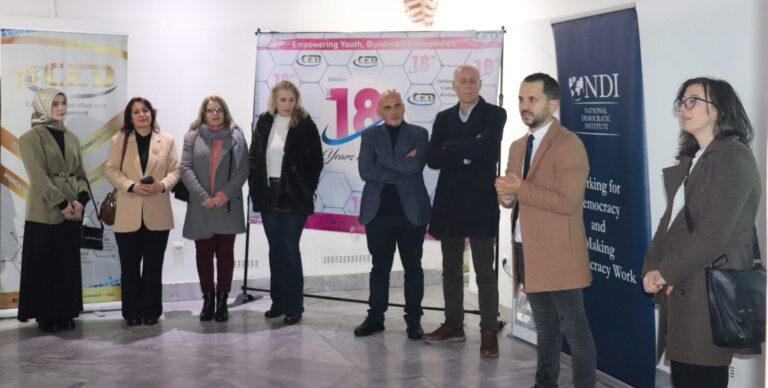
    December 23, 2024 – Tetovo, MacedoniaOn December 23, 2024, at the Art Gallery in Tetovo, CED opened a week-long exhibition with over 33 photographs taken by primary school students from the municipalities of Tearce and Tetovo. This exhibition is part of the project “Unity in Diversity: Youth-Led Intercultural Dialogue,” supported by NDI North Macedonia.To bring this exhibition to life, young people and volunteers from CED organized a series of workshops in schools focusing on interfaith collaboration. The best artworks were awarded, along with the mentoring teachers who guided the creative process. The exhibition will remain open throughout the week for all visitors at the Tetovë Art Gallery. You are invited to experience the powerful message of cooperation and intercultural dialogue conveyed through the art.The project aims to promote intercultural cooperation and understanding among youth through a range of engaging activities. Interactive workshops will encourage dialogue, teamwork, and mutual respect, while an open call for essays and artworks on the theme of “Intercultural Cooperation” will provide a creative platform for young voices. Educational sessions will raise awareness about the importance of intercultural collaboration, address stereotypes, and share successful practices. A final event will celebrate the submitted works, acknowledge outstanding contributions, and allow young participants to present their ideas. To maximize the project’s impact, a media campaign will showcase its outcomes, utilizing social media, articles, videos, and interviews to raise public awareness.This initiative aims to strengthen communication between diverse cultures, promote school-led activities that reduce stereotypes, and empower youth from various communities to engage in collaborative actions across religious and national divides.

  • Transparency, Scope, and Targeting of State Aid in the Western Balkans: A Key to Growth?

    Finance Think has published the study “Empowering Western Balkan Economies: Attractiveness and Transparency of State Aid in the Region.” The link to the full analysis is available here.
    The goal of this study is to examine the types, amounts, and measures of state aid provided by the governments of the six Western Balkan countries to domestic and foreign companies, aiming to foster innovation, technological advancement, productivity, and more.
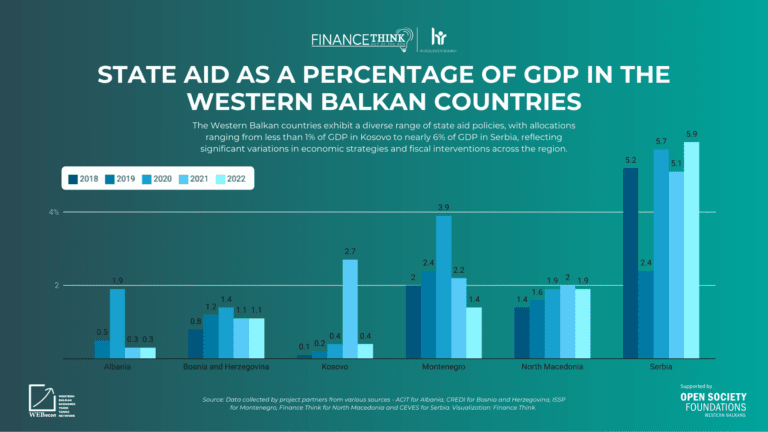
    State aid in the Western Balkan countries ranges from below 0.5% of GDP in Kosovo and Albania to 5.9% of GDP in Serbia (2022 data). North Macedonia allocates state aid amounting to 1.9% of GDP or €253 million (Figure 1).

    In general, all countries have numerous state aid measures targeting three segments: farmers, domestic companies, and foreign companies. To some extent, these measures are similar across the countries, especially those aimed at farmers and foreign companies operating in free economic zones. Low transparency and lack of information regarding the measures and the amounts of allocated aid are additional commonalities among the analyzed countries.
    More specifically, the results show that state aid allocated to farmers accounts for more than half of the total state aid in four countries (Kosovo, Bosnia and Herzegovina, Montenegro, and North Macedonia). On the other hand, this aid cannot be linked to increased agricultural and livestock production, suggesting the need to reassess the purpose, model, and distribution methods of such aid. For example, in North Macedonia, a significant reduction in livestock production aid has been observed over the past two years, while meat production has consistently increased. Although aid for plant production support varies from year to year, vegetable production remains relatively stable.
    State aid targeting domestic companies varies between countries, particularly in terms of the sectors being supported. More than half of the aid for domestic companies in Albania is directed toward manufacturing and tourism. Serbia is the only country allocating a larger portion of state aid to the development of small and medium-sized enterprises. In North Macedonia, over 90% of the aid is allocated across all sectors, with the remainder targeting manufacturing, energy, and tourism. Similar trends are observed in Bosnia and Herzegovina and Kosovo.
    State aid should not function as a form of social assistance for companies. It should lead to increased productivity, innovation, competitiveness, job creation, and technological development for both the recipient company and the economy as a whole. An increased amount of state aid allocated to innovation correlates with an improved ranking of the Macedonian economy in the Global Innovation Index. The introduction of aid for new start-ups and spin-off companies is associated with an increased number of newly established companies. On the other hand, despite the continuous increase in aid for new employment, training, and employee specialization, labor productivity in the country has not improved.
    All Western Balkan countries, except Kosovo, offer a wide range of attractive measures to attract and support foreign investors. The state aid scheme for foreign investors in North Macedonia is rated the most transparent, straightforward, and attractive compared to other countries. All foreign companies, regardless of location, can utilize the measures outlined in the Law on Financial Support of Investments, which, according to the analysis, account for two-thirds of state aid allocated to foreign investors. For the other analyzed countries, data on aid for foreign investors is incomplete (Serbia and Albania) or non-existent (Bosnia and Herzegovina and Montenegro), highlighting the need for increased transparency among the institutions responsible for managing and overseeing this type of aid.
    The recommendations from the analysis are focused on three segments:

    Improving regional cooperation to align state aid policies, enabling a more integrated market that can attract cross-border investments and stimulate regional development. This can be achieved through joint initiatives, sharing best practices, and creating regional funds addressing common challenges.
    Focusing state aid on strategic sectors by promoting innovation, digitalization, and sustainability. In the future, aid should target sectors such as green technologies, renewable energy, and digital infrastructure, positioning the countries as competitive players in the global market.
    Enhancing transparency and accountability of relevant institutions by introducing more robust mechanisms for monitoring and reporting the types and amounts of state aid allocated.

  • Successfully Second Part of the Kick-off Meeting within the NBS4Resilience Project

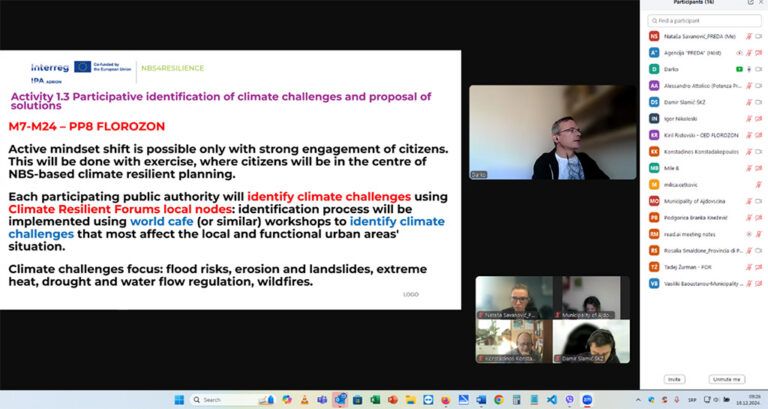
    On December 18, 2024, the second part of the Kick-off Meeting for the NBS4RESILIENCE project was successfully held online. Organized by the Development Agency of the City of Prijedor (PREDA) as the lead partner, this meeting gathered project partners from across the Adriatic-Ionian region to further align on project implementation, governance, and strategic planning.Key Discussions and OutcomesCo-Creation of Climate Resilient NBS in the IPA ADRION RegionLed by Mr. Darko Ferčej (ISD, Slovenia), this session focused on the role of Climate Resilient Forums (CRFs) as a core mechanism for engaging stakeholders in developing and implementing Nature-Based Solutions (NBS). These forums will:
    Serve as local advisory bodies for public decision-makers
    Facilitate the co-creation of climate resilience action plans
    Act as catalysts for changing mindsets and increasing citizen participation in climate adaptation efforts
    Support pilot projects in six countries targeting climate risks such as floods, erosion, extreme heat, and wildfires

    ✔ Integration of NBS4RESILIENCE into Standards, Policies, and GovernanceMr. Tadej Žurman (POR, Croatia) presented an overview of WP3, focusing on integrating climate resilience into ISO and TC standards, and developing governance models that incorporate Nature-Based Solutions into policy frameworks. The main objectives of this work package include:
    Drafting policy recommendations for integrating NBS into climate transition strategies
    Establishing a governance guidebook to support public authorities in implementing NBS
    Developing proposals for incorporating NBS into international climate resilience standards

    ✔ Establishing the Steering CommitteeThe governance structure of the project was solidified through the establishment of the Steering Committee, which will oversee the project’s progress and provide strategic guidance. A Memorandum of Understanding (MoU) will be finalized by February 2025, outlining the framework for cooperation and the long-term sustainability of the project’s outcomes.Next Steps and Implementation MilestonesFollowing the successful Kick-off phase, the NBS4RESILIENCE project is now moving into the implementation phase, focusing on key actions that will drive climate resilience across the IPA ADRION region.The first major milestone is the finalization of the Climate Resilient Forum (CRF) Guide, led by PP3 – ISD, Slovenia. This guide will serve as a practical framework for establishing and operating CRFs, ensuring effective stakeholder engagement in nature-based climate solutions.From March to May 2025, the project will initiate the launch of Climate Resilient Forums (CRFs) in participating cities. These forums will function as collaborative platforms, bringing together local governments, businesses, academia, and civil society to address specific climate challenges and co-develop nature-based solutions.Simultaneously, partners will intensify engagement with policymakers to promote the integration of Nature-Based Solutions (NBS) into existing local and national strategies. This will support the adoption of long-term climate resilience policies, ensuring that project outcomes contribute to sustainable environmental governance.Additionally, the project will organize capacity-building workshops tailored for public institutions, businesses, and civil society organizations. These sessions will enhance participants’ knowledge and equip them with the necessary skills to implement NBS-driven climate adaptation measures effectively.Learn more about the project: www.interreg-ipa-adrion.eu

  • Successfully Organized Round Table on Environmental Justice

    On International Human Rights Day, December 10, 2024, the Faculty of Law “Iustinianus Primus” hosted a roundtable discussion titled “Environmental Human Rights and Environmental Justice – Promotion, Protection, and Advancement.” The event was held under the project “Integration of Environmental Justice in Higher Education,” implemented by the Center for Environmental Democracy FLOROZON in…

  • “A Collective response is essential to overcome challenges and achieve sustainable results”

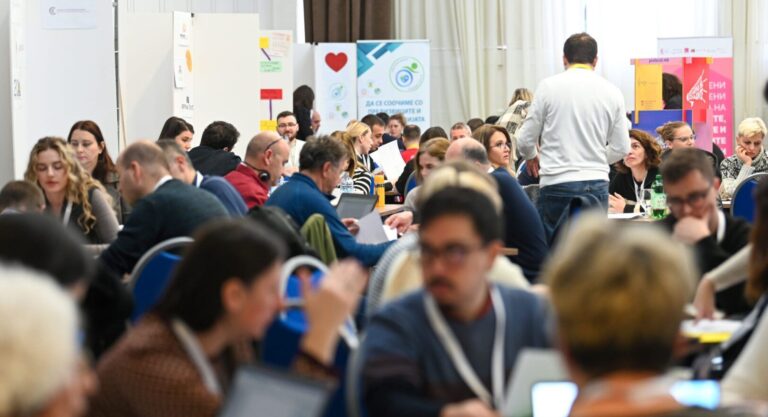
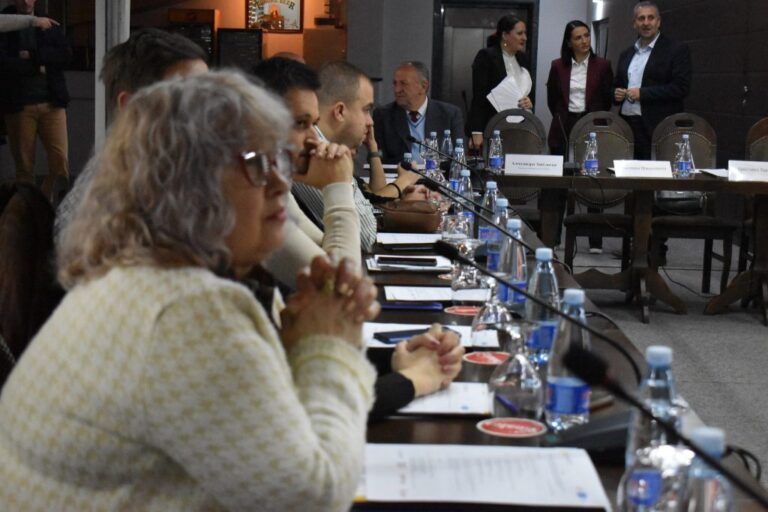
    The exchange of experiences and discussions about challenges in implementing activities were the focus of the traditional Civica Mobilitas Networking Meeting held on December 4–5, 2024, in Skopje. Ninety-four representatives from 58 civil society organizations (CSOs), program grantees, and experts participated in the event.  “There is no democracy without a…

  • Regional event: “Conditional release, electronic supervision and treatment in the function of successful resocialization and reintegration of convicted persons”

    On 29th of November 2024, was held a regional event on the topic “Conditional release, electronic supervision and treatment in the function of successful resocialization and reintegration of convicted persons”, organized by the Macedonian Young Lawyers Association and LET Station in Prilep. During the event were discussed the current situation with the application of the…

Нема повеќе содржини

Нема повеќе содржини