

Shaping the Future: Youth Empowered to Challenge Gender Norms
Article by Antonija Popovska
Photo by: Maja Janevska Ilieva
The office of the Kvinna till Kvinna Foundation in Skopje (kvinnatillkvinna.org), with the Institute of Social Sciences and Humanities – Skopje, has recently been implementing a training programme “Gender Equality Education for Practitioners – From Theory to Policy Implementation”, which is intended for policymakers, representatives of the civil society sector, as well as public servants from the Western Balkan countries. For more than 25 years, Kvinna till Kvinna is actively working in the Western Balkans, defending women’s rights and strengthening the influence and power of all women striving to achieve gender equality and justice. The Institute of Social Sciences and Humanities-Skopje, is both a civil society and academic institution, fully integrating advanced knowledge and policy practice, keeping gender as one of its central areas of expertise since its foundation 14 years ago.
In this article, Dijana Stojanovic Djordjevic, Programme Manager at the Kvinna till Kvinna Foundation, and Katerina Kolozova, Director of the Institute of Social Sciences and Humanities, discuss the importance of being part of such programmes and the necessity for policymakers to be educated about gender equality.
Structured Learning for Future Feminists
Speaking about the programme, Stojanovic Djordjevic highlights that the lack of formal gender studies programmes leaves young feminists without access to structured resources and theoretical knowledge on feminism, intersectionality, women’s rights, and gender equality.
“Knowing that there are young people in the region who seek comprehensive, systematised information, we recognised the need for a programme that combines both theoretical foundations and practical insights,” says Stojanovic Djordjevic.
To address this need, Kvinna till Kvinna joined forces with the Institute of Social Sciences and Humanities to develop a programme that, through carefully designed modules, offers essential knowledge aimed at empowering young people to critically engage with gender issues and effectively counter rising misogyny and concerning anti-democratic trends.
The Power of an Inclusive Approach
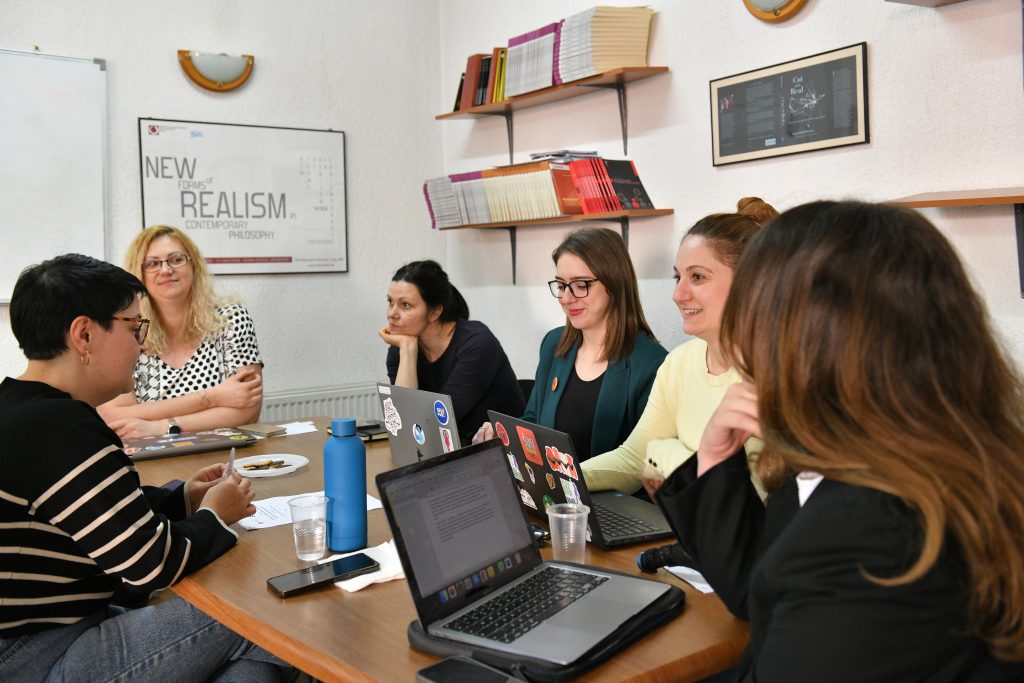
A unique aspect of this programme is its inclusive approach, which brings together participants from both civil society organisations and public institutions. This setting provides a valuable opportunity to build meaningful connections, engage in networking, share experiences, and offer mutual support. This synergy not only enhances participants’ daily work, but also strengthens their collective impact in driving positive societal change.
“Тhe exchange of knowledge and perspectives helps bridge gaps between sectors and countries. By working together, participants were able to identify common challenges, explore innovative solutions, and develop more effective strategies for policy implementation and advocacy. Our goal is to ensure that policymakers and practitioners develop policies or advocacy actions that reflect the diverse realities women face, leading to more inclusive and effective governance“, she added.
Applying theoretical knowledge in practice
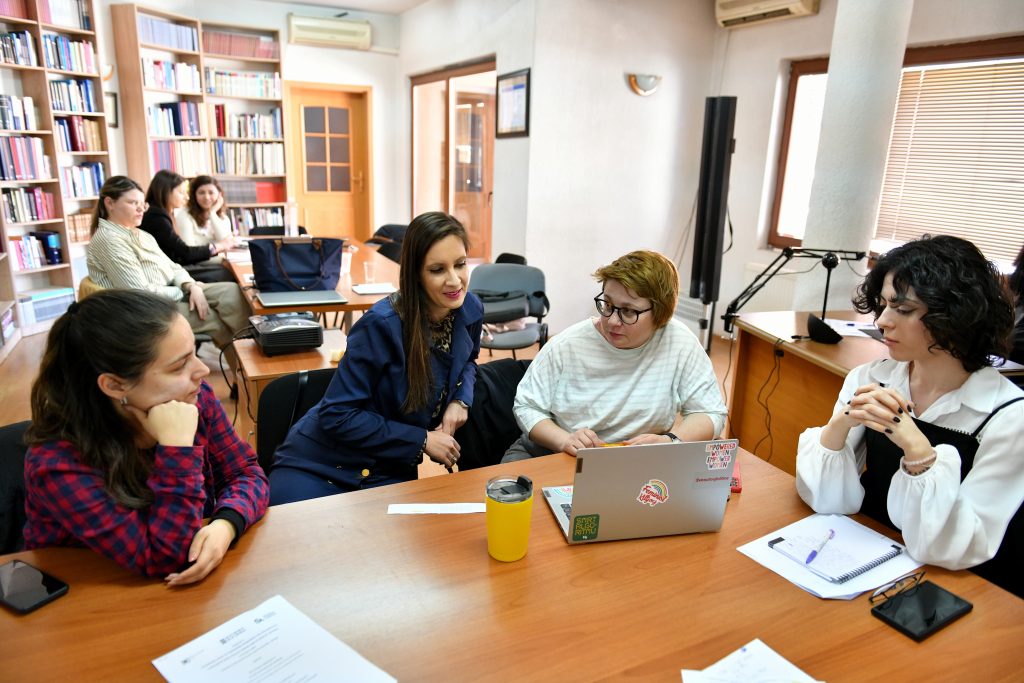
A key aspect of this programme is that participants are not merely passive listeners in lectures; instead, they are given the opportunity to work on practical assignments. This was facilitated through a mentorship process, during which each participant developed an individual position paper on a topic aligned with their interests and field of work.
“It was evident that some participants were engaging in this type of process for the first time. This experience enabled them to strengthen their knowledge in articulating and presenting identified issues, along with proposed solutions, in a structured and well- argued manner. The mentorship process also included personalised feedback aimed at strengthening the arguments and positions presented in the document, which was highly appreciated by all participants. Many found this experience invaluable in developing their research skills and deepening their understanding of gender-related issues. One particularly inspiring example was a participant who, encouraged by the mentorship process, decided to continue her education and successfully completed her postgraduate studies. This is a genuine example of how the program has a long-term impact on both personal and professional growth“, said Stojanovic Djordjevic.
Integration of meaningful content and an engaging approach to teaching
Katerina Kolozova, Director of the Institute of Social Sciences and Humanities, explained that the Institute offers a curriculum that blends up-to-date academic knowledge in the fields of gender and women’s studies with practical, skills-oriented training in policy analysis and advocacy for practitioners across the Western Balkans. At the core of the programme is both the content and the method of knowledge transmission, which together serve as a bridge between academic depth and the practical application of that knowledge in policymaking.
“The program is structured in such a way because novel ideas that turn into novel policy trends are normally developed in academic circles of gender theory and education and we believe that keeping the young professionals active in the field of gender equality up to date with the latest academic trends and theories in the area offers depth of analysis and broadens their imagination of transformative thinking which will allow them to devise new and actionable models of policy change“, Kolozova said.
Theory isn’t just academic, it’s a tool for action
One of the key goals of the programme is to ensure that gender equality is not treated as an abstract concept, but as a concrete framework that can shape effective policymaking. Educating policymakers and practitioners on gender issues is essential for creating informed, inclusive, and impactful policies that benefit everyone — women, men, and society as a whole. Kolozova illustrates this through a concrete example.
“I will try to respond through an example (the most obvious perhaps): the concept of gender itself (as opposed to sex and understood as a social construct) has emerged in academia first in the 1990′, gaining traction in the 2000′, and becoming a convincing idea adopted by an ever grater number of future professionals that learned about this idea as students. This reality whose “birthplace” is the academia, has paved the way for gender equality policy discourse to emerge and has even influenced legal theory to adopt the notion of gender as distinct from sex. This is a mere illustration as to why theory is relevant for activism and practice: ideas upon which one acts as a policy advocate and activist are formed in academia, and their complexity needs to be grasped in order to competently transmit them into policy practice“, she added.
According to Kolozova, young professionals in the field of gender, if not enrolled in academic gender studies, need to be kept up to date with novel ideas, concepts and terminology through programs such as the one the Institute offers: a blend of theory and practice.
“In this way, they could be introduced to the contemporary debates about the challenges to third way feminism, the emergence of xenofeminism and how it reshapes the gender debates landscapes, the feminist notion of “planetareity” (linking climate change and gender in important ways, not so well known in the Balkans, but necessary to adjust to the contemporary moment and its needs), and other ideas already shaping new policy trends“, еxplains Кolozova.
Empowering new voices in the gender equality conversation
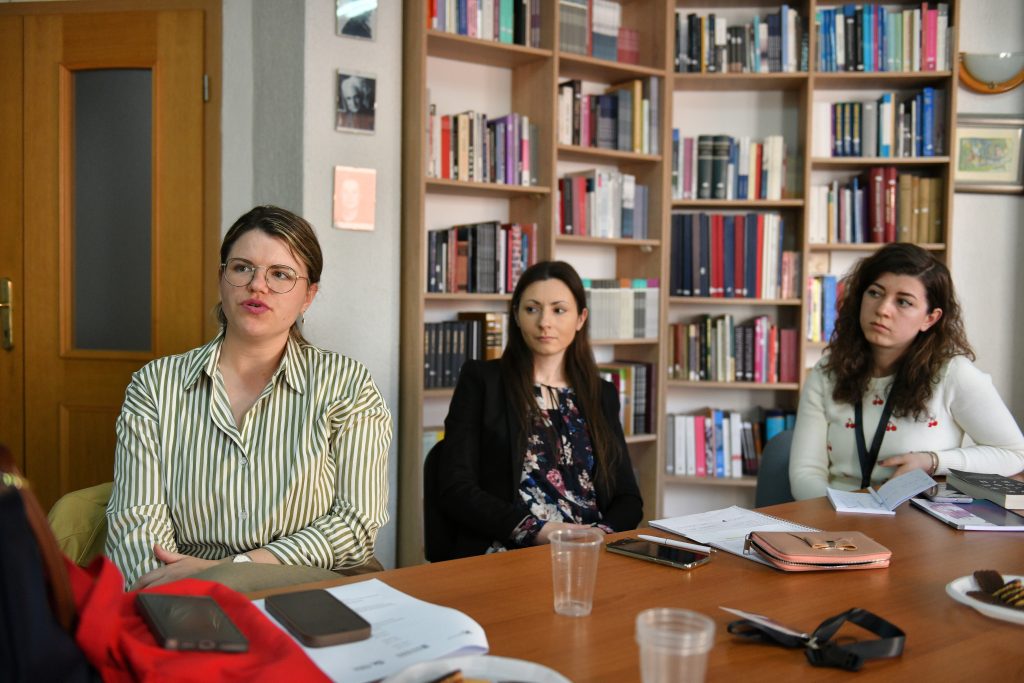
By adding depth and challenging the status quo of dominant knowledge and discourse in the region, the programme exposes young professionals to debates that are gaining significant traction in more developed academic and activist circles.
“In this way, they are empowered to engage in debates with more confidence and to be equipped with in depth competence when advancing new policy models gearing gender equality suited for the era we live in. New ideological battles are raging around the concept of gender, and anti-gender movements are emerging that are equipped with a certain level of theoretical knowledge that allows them to challenge the gender equity discourse as an ideology“, Kolozova еxplains.
Through the programme’s in-depth curriculum, gender advocates and young professionals are not only gaining essential theoretical foundations, but also developing the critical tools needed to respond effectively to the ideological pushback. By strengthening their understanding and sharpening their arguments, they are better prepared to defend the values of gender equality and to navigate the increasingly complex terrain shaped by anti-gender narratives.
This article is developed within the programme “Gender Equality Education for Practitioners Training Program – from Theory to Policy Implementation” implemented by The Kvinna till Kvinna Foundation, together with the Institute of Social Sciences and Humanities, Skopje. The training program is financially supported by the Swedish Institute, within the “Swedish Institute Academy for Young Professionals (SAYP) Western Balkans” program.
![[Aggregator] Downloaded image for imported item #51694](https://civicamobilitas.mk/wp-content/uploads/2026/10/1_cover-600x400-1.jpg)
![[Aggregator] Downloaded image for imported item #51442](https://civicamobilitas.mk/wp-content/uploads/2026/10/VACANCY_Comms-officer-600x400-1.png)
![[Aggregator] Downloaded image for imported item #51393](https://civicamobilitas.mk/wp-content/uploads/2026/10/share-default-768x403.jpg)