

Debate: The reforms in the educational process key to the Europeanization of society
Education is a key way in which society is upgraded and developed. Through quality education, the generations are educated about the rights, laws and protection of their own, but also the rights of others, which contributes to the introduction of the domestic culture and values, but also of the European culture and values. With the introduction of reforms and changes in the educational process, but also in other parts of the social wellbeing, great progress and a step forward in the process of Europeanization are to be expected.
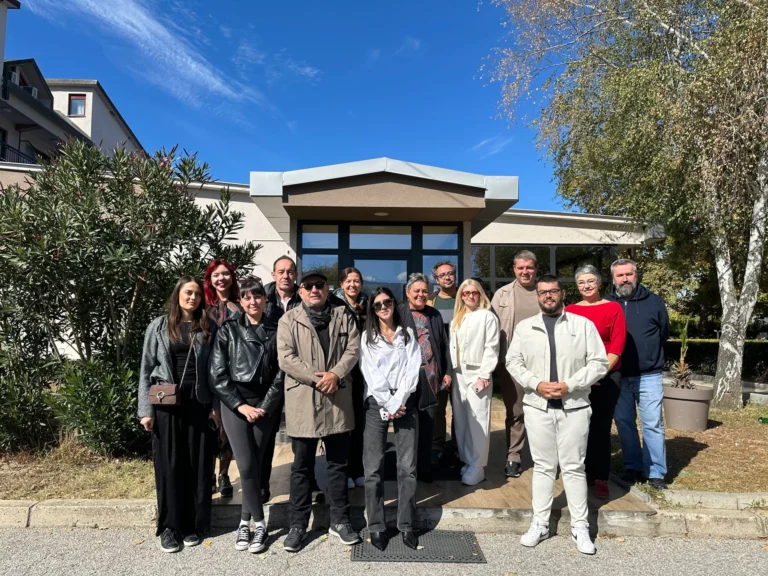
The discussion “Democratic society in North Macedonia and the challenges it faces” aimed to involve citizens in a debate discussion through which they could express their views on various aspects of a democratic society, from gender inequality to the development of Macedonian consciousness of life in the European society. The first part of the discussion was left entirely to the participating citizens, who had the opportunity to express and oppose their views. In the second part, the citizens had the opportunity to ask questions for which they have added interest to an expert in the field.
As part of the discussion, in addition to the participants from the Ohrid and Struga region, the professor from the Institute for Sociological, Political and Juridical Research at the University “St. Cyril and Methodius ”, Goran Janev, as an expert in the second part of the discussion who directly gave an additional explanation to the questions of the citizens. The discussion was moderated by professor Abdula Azizi, from the Southeast European University.
Gender inequality is a topic of discussion in a wide radius around the world. Participants of the discussion noted that most women feel repressed and discriminated against by the male population. Although there is legal regulation for such issues, the majority of real-life examples say the opposite. Cases such as gender discrimination in the workplace, inability to report violence because no one will believe, and many others prove the superiority of men in society. It was stressed that it is necessary to take actions that would guarantee a change in society in terms of gender equality.
The participants also discussed a more positive view of the female position in the workplace. Inequality is a perception of individuality and we should not all limit and adopt the opinion of others. Many examples prove that women can reach high positions with that and to the extent that their hard work is appreciated. The very concentration of inequalities, without taking action, will not change the current situation. When the individual view and way of thinking is opened to modern changes and the collective consciousness can be adapted to the same.
Among other things discussed, the participants also referred to the migration of young people to European countries. According to them, the country is losing young people due to the great distance from European standards and opportunities. Most young people go or are planning on going abroad, whether for education or work. Problems such as partisanship at almost every level state level as well as the limited availability of resources for promotion are reasons why the state loses its youth, and thus the opportunity for development. In the whole process of migration, the participants fear that it will continue to take place, most probably to an even greater extent, if the state does not make an effort to at least get closer to the great economic powers.
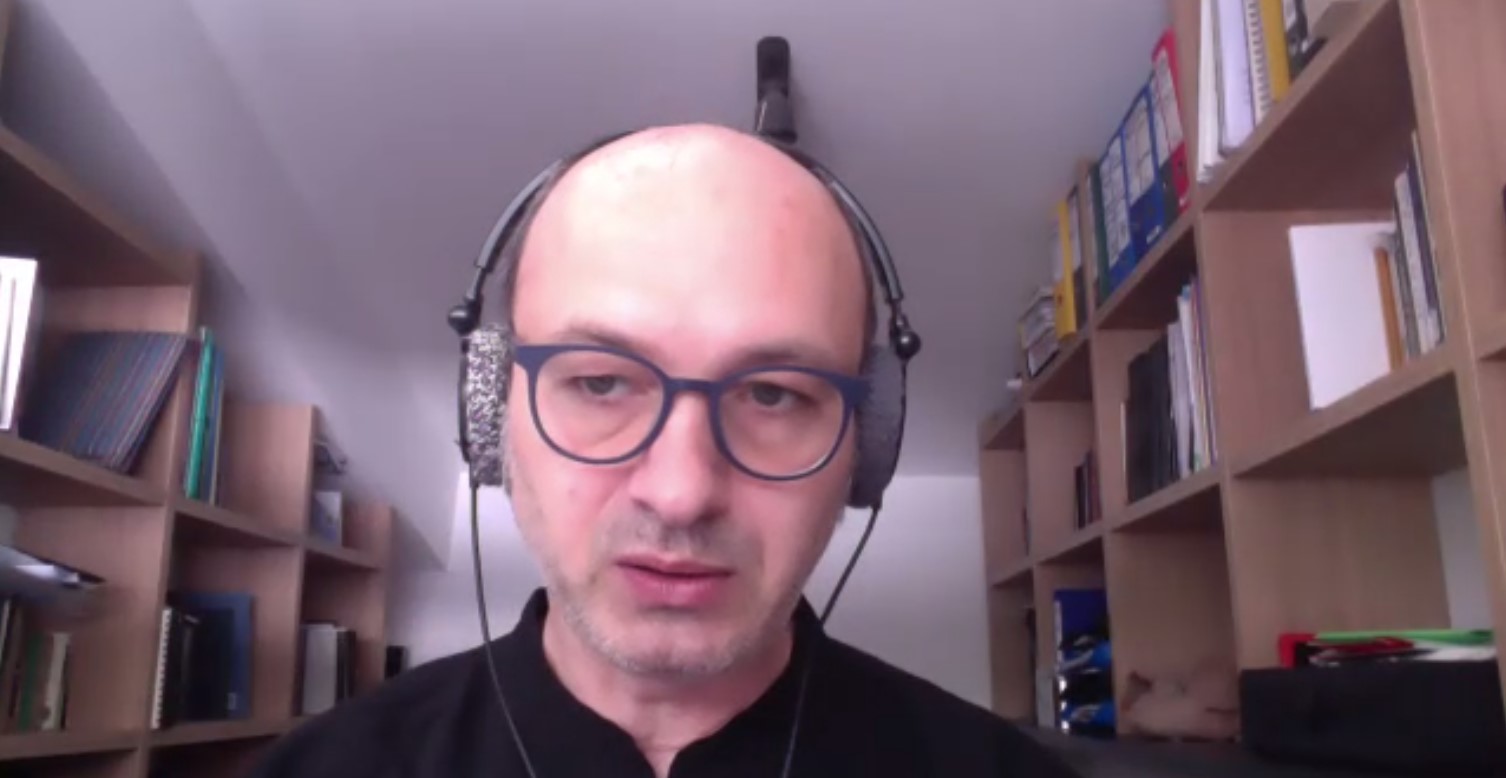
Professor Janev, in his part, pointed out that interethnic relations have historical roots. The “democratic” system is characterized by ethnocracy, and the citizens are politically predisposed members of ethnic groups who articulate their political existence through representatives. As he said, this results in a world in which no one can fight for the human rights and freedoms of citizens, except those within the ethnic prism. We, the citizens, have been deprived of the process of participation in society by being turned into ethnic entities.
“There should be three pillars in the country that guarantee democracy: the law, the executive, and the judiciary. There is an order in which the pillars need to act, which in Macedonia is completely intertwined and disrespected. Political entities are the ones who independently make decisions on what is best for the country itself. The fact that power is completely located in the political parties leads to the devaluation of the democratic system. “Europeanization will begin when we reject politicization and ethnically situated interests,” said Professor Janev.
According to him, the very class stratification and disenfranchisement of the citizens lead to the loss of the trust and hope of the youth, as well as an increased sense of non-belonging in the community. As citizens are divided, unity is lost. False authorities and insufficient valorization are what degrades the whole country.
The event was organized as part of the project “ACT-Active Civic Action 2.0”, implemented by the European Policy Institute-Skopje with the support of the Center for Deliberative Democracy at Stanford University in the United States. The project is funded by theNational Endowment for Democracy from the United States. This discussion, together with 4 other debate discussions with citizens on various topics across the country, will contribute to the development of the National Debate Survey that is planned in 2022.
The post Debate: The reforms in the educational process key to the Europeanization of society appeared first on EPI.
![[Aggregator] Downloaded image for imported item #52203](https://civicamobilitas.mk/wp-content/uploads/2026/10/Cover_MM-Albania-600x400-1.jpg)
![[Aggregator] Downloaded image for imported item #52158](https://civicamobilitas.mk/wp-content/uploads/2026/10/Is-Political-Interference-Addressed-in-the-Frameworks-of-the-Prosecutorial-Councils-in-North-Macedonia-and-Bosnia-and-Herzegovina-pdf-1-724x1024-1-e1792394173877.webp)
![[Aggregator] Downloaded image for imported item #52160](https://civicamobilitas.mk/wp-content/uploads/2026/10/Raising-the-Bar-on-Integrity_Aligning-North-Macedonia-and-Bosnia-and-Herzegovina-with-the-2026-EU-Anti-Corruption-Directive-pdf-1-724x1024-1-e1792393418465.webp)