
Civic Space in the Western Balkans and Türkiye in 2025: Key Takeaways from the Monitoring Matrix Launch
Progress in legislation and institutional commitments has not consistently translated into better conditions for civil society across the Western Balkans and Türkiye. But recent civic mobilisation, successful advocacy and judicial decisions show that progress remains possible.
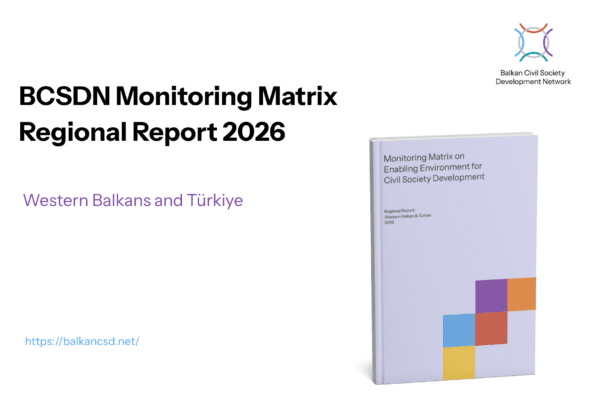
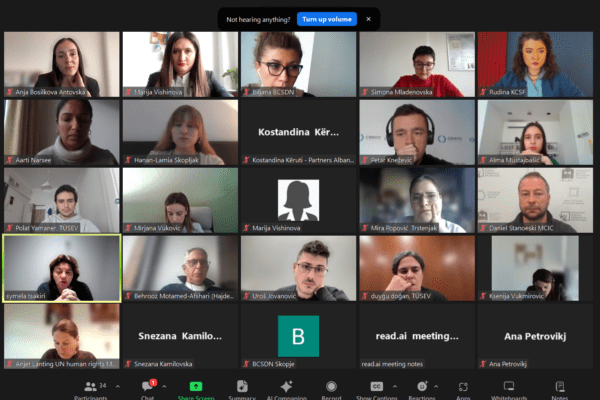
This was among the central messages of the online launch of BCSDN’s Monitoring Matrix Regional Report 2026, held on 27 October. The event brought together BCSDN members and national researchers, representatives of the European Commission, European civil society networks and other stakeholders to discuss the report’s findings, recent developments and the role of independent monitoring in strengthening democratic accountability.
Opening the event, Anja Bosilkova-Antovska, BCSDN Executive Director, reflected on recent developments in Serbia, where sustained student-led mobilisation demonstrated the importance of civic engagement and demands for accountability. She also pointed to developments in Albania and continued restrictions on civil society in Türkiye, emphasising that democracy depends not only on elections and institutional commitments, but also on citizens’ ability to organise, speak out and hold those in power accountable.


Representing the European Commission’s DG ENEST, Symela Tsakiri, Team Lead on Civil Society and Media, reaffirmed the importance of civil society in the EU enlargement process, including its role in shaping, implementing and monitoring reforms. She highlighted the need for more meaningful participation in the Reform and Growth Facility and the Commission’s continued commitment to supporting civil society. She also welcomed the close alignment between the Monitoring Matrix findings and the assessment of the EU Guidelines for Support to Civil Society, recognising the value of complementary monitoring approaches.
A Difficult Year for Civic Space, but Not Without Progress
Presenting the regional findings, Simona Mladenovska, BCSDN Senior Policy and Advocacy Officer, highlighted that the overall enabling environment for civil society has changed little in recent years, with a persistent gap between legal guarantees and their implementation.

The report identifies growing pressure on fundamental freedoms, increasingly exercised through administrative obstacles, inspections, smear campaigns and legal harassment. Financial sustainability remains a major weakness, particularly following disruptions to international assistance, while government–civil society cooperation often exists formally without translating into meaningful influence over public decisions.
Nevertheless, positive developments were recorded, including the annulment of restrictive “foreign agents” legislation in Republika Srpska, the withdrawal of proposed restrictions on road blockades in Montenegro and renewed commitments to government–civil society cooperation.
BCSDN’s national researchers connected the report’s findings with recent developments across the region, highlighting both progress and persistent challenges:
- Montenegro: Petar Knežević (CRNVO) highlighted ongoing revisions to the Law on NGOs. Following civil society advocacy, some restrictive provisions were reconsidered, but concerns over AML/CFT requirements, public funding and consultations remain.
- Türkiye: An update from TÜSEV highlighted the lack of significant policy improvements and continued targeting of organisations working with people living with HIV and LGBTIQ+ activists.
- Serbia: Alma Mustajbašić (Civic Initiatives) reflected on the student-led movement’s recent electoral victory following sustained civic mobilisation, stressing that accountability for past abuses and rebuilding democratic institutions remain priorities.
- North Macedonia: Daniel Stanoeski (MCIC) highlighted stalled public funding reforms and the impact of withdrawn US assistance on civil society. The proposed co-financing mechanism remains unadopted.
- Albania: Kostandina Këruti (Partners Albania) highlighted the positive reuse of confiscated assets for community purposes, alongside concerns over restrictive AML provisions and limited public consultation.
- Bosnia and Herzegovina: Hanan-Lamia Skopljak (CPCD) discussed the slow implementation of the country’s first state-level civil society strategy, despite some administrative progress.
- Kosovo: Rudina Hasimja (KCSF) highlighted the pending adoption of a new cooperation strategy and opportunities to reactivate the government–civil society council, while meaningful participation remains a challenge.
Connecting Regional Evidence with European Developments
Aarti Narsee (European Civic Forum) brought a wider European perspective, drawing attention to growing pressures on civic space within the EU itself, including scrutiny of NGO funding, restrictions on peaceful assembly and political narratives that risk undermining independent civil society. These developments raise important questions about the consistency of civic space protection within the EU and across the enlargement region. The discussion highlighted the importance of ensuring that independent civil society evidence not only informs assessments and policy discussions but also contributes to earlier institutional attention and more effective responses when fundamental freedoms are threatened.

Building on the Monitoring Matrix, BCSDN is piloting a Regional Civic Space Early Warning System to identify emerging risks and connect verified information with institutions and actors able to respond before situations escalate.
The launch reaffirmed both the challenges facing civil society and its continued resilience, demonstrated through civic mobilisation, successful advocacy and judicial protection of fundamental freedoms. It also underlined the need for more consistent implementation of existing commitments, meaningful participation in democratic reforms and sustained support for independent civil society.
BCSDN will continue working with its members and partners to bring Monitoring Matrix evidence into national and EU policy discussions and strengthen the connection between civic space monitoring and timely institutional responses.
This post was originally published on this site