
From Civic Mobilisation to Democratic Change – A Historic Moment for Serbia
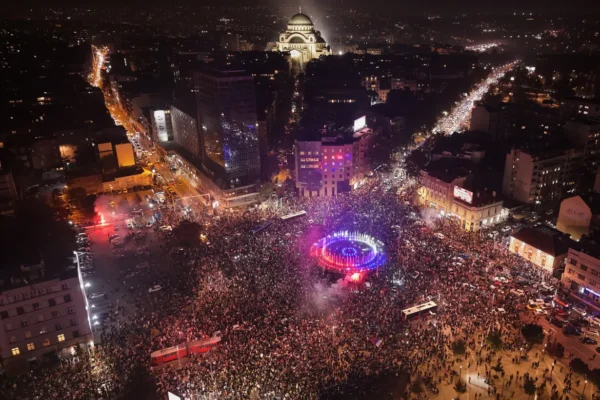
After nearly two years of sustained protests, repression, and an extraordinary display of civic determination, Serbia has reached a historic turning point. The victory of Serbia’s student-led movement in the parliamentary elections on 25 October is more than an electoral breakthrough. It is a powerful testament to what sustained civic mobilisation, solidarity, and collective action can achieve, even in the face of intimidation and shrinking democratic space.
For years, civil society in Serbia and across the region has documented violations, raised alarms, and stood in solidarity with those defending fundamental freedoms. Today, there is also a reason to celebrate: the determination of citizens who refused to give up their demands for accountability and change. But this historic achievement also marks the beginning of a new challenge: turning political change into stronger democratic institutions, protected fundamental freedoms, and a more enabling environment for civil society.

From Protest to Political Change
Student mobilisations following the disputed December 2023 elections and allegations of electoral fraud, followed by widespread environmental protests against the Rio Tinto lithium mining project in 2024, demonstrated growing civic resistance to institutional failures and a lack of accountability. These successive waves of mobilisation set the stage for an even broader protest movement following the Novi Sad railway station tragedy. What began as student protests following the Novi Sad railway station tragedy grew into one of the largest and most sustained civic mobilisations in Serbia’s recent history. Despite arrests, intimidation, attacks on protesters and journalists, and increasing pressure on independent organisations, citizens continued to organise, demand accountability, and defend their right to peaceful assembly.
Civil society played an important role throughout this period. Organisations documented violations, provided legal assistance, supported protesters, and kept international institutions informed. The ŠTIT initiative, established by BCSDN member Civic Initiatives, provided an important example of practical solidarity and protection for those facing repression.
Beyond this support, civil society helped sustain public accountability at a time when democratic institutions were failing to adequately protect fundamental rights. Serbia’s experience demonstrates the power of collective civic action to bring about political change even under sustained pressure, and the indispensable role of independent civil society in defending fundamental freedoms and holding those in power accountable.
Beyond the Elections: Restoring Civic Space
Political change alone will not reverse years of democratic deterioration. Serbia now faces the task of rebuilding public trust, ensuring accountability for past abuses and establishing institutions that are transparent, independent and responsive to citizens.
Restoring freedom of association must be central to this process. CSOs must be able to operate without intimidation, smear campaigns, arbitrary inspections or politically motivated restrictions. The rights to peaceful assembly and freedom of expression must be fully protected, while attacks and legal harassment against activists, journalists and organisations must be effectively addressed.
Rebuilding the relationship between public institutions and civil society is equally important. This requires genuine opportunities for organisations to contribute to legislation and public policies, transparent and fair public funding, and meaningful participation in decisions affecting the country’s future.
But an enabling environment also means protecting civil society’s independence and its right to scrutinise and criticise those in power, regardless of who forms the government. Democratic renewal cannot be measured only by a change in political leadership, but by whether institutions uphold fundamental freedoms and remain accountable to citizens.
These reforms will also be essential to restoring the credibility of Serbia’s EU integration process, ensuring that renewed political momentum translates into tangible progress on the rule of law, fundamental freedoms, and democratic accountability.

A Message for the Region and the EU
Serbia’s experience carries an important message for the wider Western Balkans. At a time when civic space is shrinking across the region, it is a reminder that democratic change is possible when citizens remain engaged, organised, and determined to defend their rights. Civic mobilization, solidarity, and independent civil society are not only responses to democratic pressures, but essential foundations for democratic resilience.
For the EU, Serbia’s experience highlights the need to connect civic space monitoring with timely institutional responses. CSOs have spent years documenting restrictions, warning about democratic deterioration, and calling for stronger action. Their evidence must lead to earlier political engagement and concrete responses when fundamental freedoms are threatened. Consistent EU support for independent civil society is particularly important when organisations face the greatest pressure.
Serbia’s citizens have shown that democratic change is possible, even after years of sustained pressure. The responsibility now lies with the country’s institutions to ensure that the freedoms citizens defended in the streets are protected in everyday democratic life.
BCSDN will continue to monitor and report on developments affecting civic space in Serbia, working with its members and partners to document challenges, advocate for the protection of fundamental freedoms and support democratic reforms.
Photos source: Armin Durgut/AP Photo for Aljazeera
This post was originally published on this site