MACEDONIA IN A CRISIS: THE DISCLOSURE OF A FAKE NATIONALISTIC POLITICS

MACEDONIA IN A CRISIS: THE DISCLOSURE OF A FAKE NATIONALISTIC POLITICS

Nationalism is the most successful way for mobilizing masses for a project. The greatest dictators world has ever known have been creations of an aggressive nationalism. The invasion of neighboring territories, the extermination of others and hatred against others, are the most certain ways of mobilization and leadership of a nation. Einstein called nationalism “an infantile disease” being “the measles of mankind”.

Orwell called nationalism “power hunger tempered by self-deception”, whereas Chomsky qualified it as “a way of oppressing others”.   Nationalism, however, has proven beneficial in certain areas. According to research carried out by the World Bank, countries with stressed nationalism have lower levels of corruption and developed economies. While the greatest number of examples shows that nationalism has created strong leaders and millions of others that have sacrificed for them, the case of Norway shows the opposite. In this Scandinavian country the level of corruption is zero, whereas the economic development is impressive.   The nationalist bureaucracy in Norway is not oriented against the foreigners who live there, but in the protection of public property and state funds as if they were personal belongings. Even the slightest forms of abuse of public funds and properties are considered as national betrayal.   Their nationalism does not make them rude and cruel towards the others, but rather too sensitive against damages to the nation they belong to and feel proud for that. Without constructive nationalism and affection towards the society one belongs to, there would not be any reactions even against the worst cases of corruption and organized crime.   In countries where nationalism is destructive, i.e. oriented towards hating the others, the citizens are mostly selfish – they feel satisfaction in others’ corruption and regress rather than their own and their nation’s advancement and progress. This particular type of nationalism has been the cause of the greatest tragedies mankind has ever lived.

Продолжи со читање

  • Journalists Decode EU Institutions, Acquis, and Enlargement Policies

    On 16–17 October 2026, the European Policy Institute (EPI) organized the first training module under the project “Decode the EU – Communicating EU policies together” in Strumica. The two-day workshop brought together 10 journalists from diverse media outlets, aiming to strengthen analytical, evidence-based reporting on North Macedonia’s EU accession journey.The…

  • MoU with the British Business Association in North Macedonia

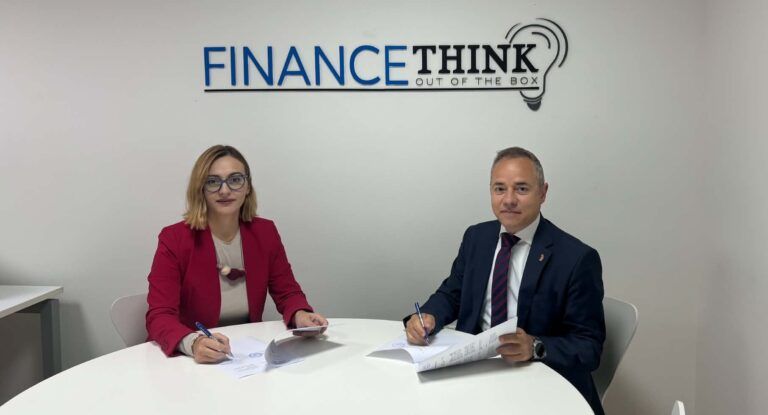
    🤝 Strong economies are built on strong partnerships. Finance Think and the British Business Association in North Macedonia signed a Memorandum of Understanding yesterday, laying the foundation for closer cooperation on issues of importance to the business community, policymakers and society. The partnership brings together the British Business Association’s extensive business network and Finance Think’s […]
    The post MoU with the British Business Association in North Macedonia first appeared on Finance Think.
    The post MoU with the British Business Association in North Macedonia appeared first on Finance Think.

  • On pension matters, participation in Bloomberg

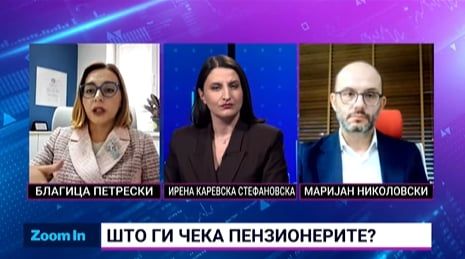
    🔴 What awaits future pensioners? 🟥 What kind of pension model do we need, and who will bear the burden of future reforms? 📌 Without measures, the deficit in the Pension and Disability Insurance Fund will continue to grow, and by the mid-2040s there will be fewer insured persons than pensioners, according to a study […]
    The post On pension matters, participation in Bloomberg first appeared on Finance Think.
    The post On pension matters, participation in Bloomberg appeared first on Finance Think.

  • Is Political Interference Addressed in the Frameworks of the Prosecutorial Councils in North Macedonia and Bosnia and Herzegovina?

    This policy brief examines the frameworks governing prosecutorial councils in North Macedonia and Bosnia and Herzegovina to assess whether their laws ensure adequate independence in line with European standards. The rule of law and an independent justice system are fundamental to the European Union’s enlargement process, particularly within the crucial Chapter 23. A cornerstone of […]
    The post Is Political Interference Addressed in the Frameworks of the Prosecutorial Councils in North Macedonia and Bosnia and Herzegovina? appeared first on EPI.

  • Raising the Bar on Integrity: Aligning North Macedonia and Bosnia and Herzegovina with the 2026 EU Anti-Corruption Directive

    This policy brief evaluates anti-corruption alignment and structural vulnerabilities in North Macedonia and Bosnia and Herzegovina against the EU’s Directive (EU) 2026/1021 on Combatting Corruption. Within the European Union’s “Fundamentals First” enlargement methodology, establishing an accountable administration, an independent judiciary, and robust anti-corruption enforcement is a primary condition for membership. Despite significant differences in their […]
    The post Raising the Bar on Integrity: Aligning North Macedonia and Bosnia and Herzegovina with the 2026 EU Anti-Corruption Directive appeared first on EPI.