
More than 80 CSOs Presented Their Work to the Citizens at Civica Mobilitas Festival
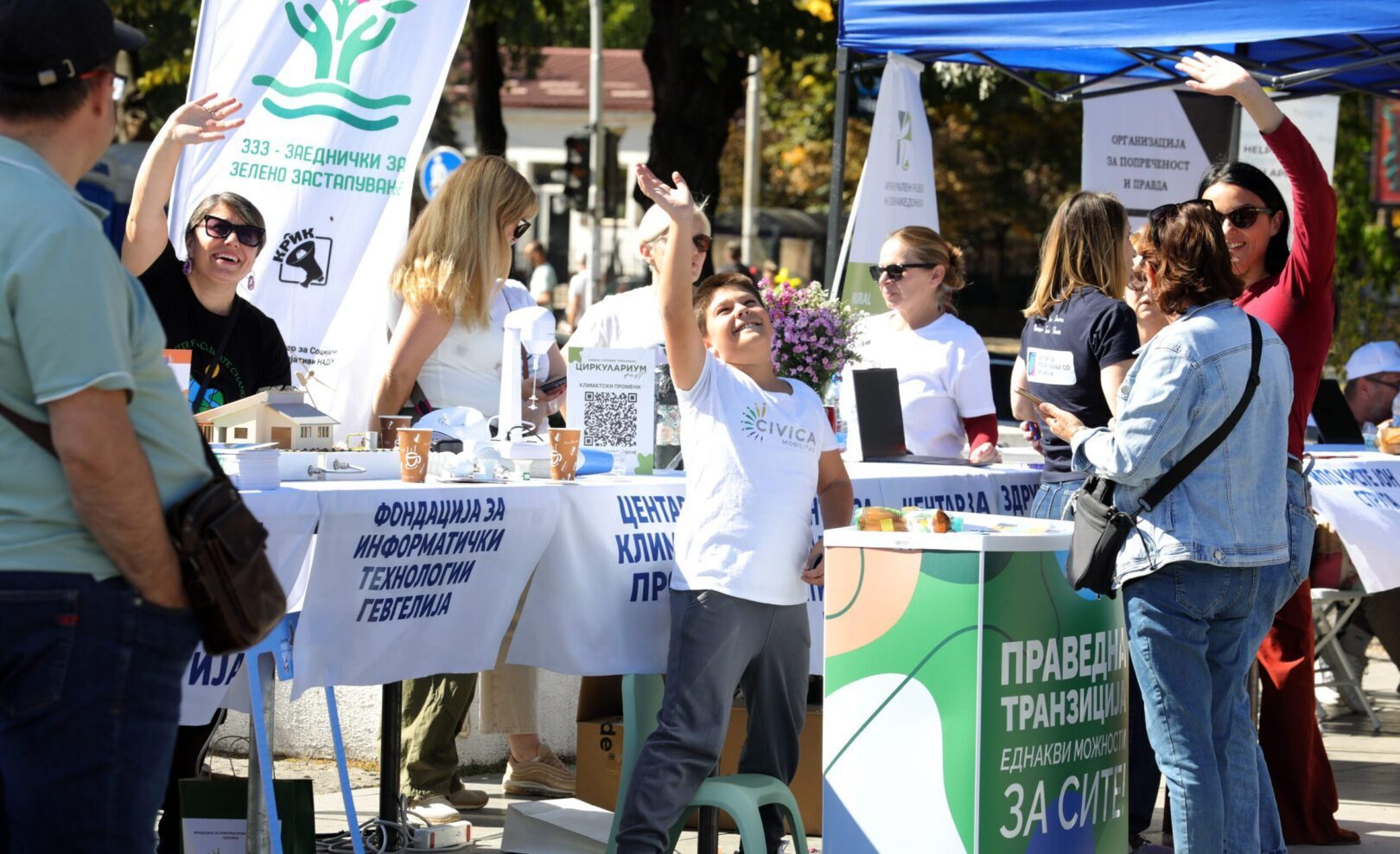
The sixth Civica Mobilitas Festival “Day of CSOs” took place on 3rd October 2026, from 11 to 16 hrs. at the Skopje City Park at “Lotus” fountain. More than 80 CSOs from the whole country arrived to show their activities and results to the citizens. The programme took place at the main stage, in five tents and in a children’s corner, and the visitors could discuss with the organizations at their stands.
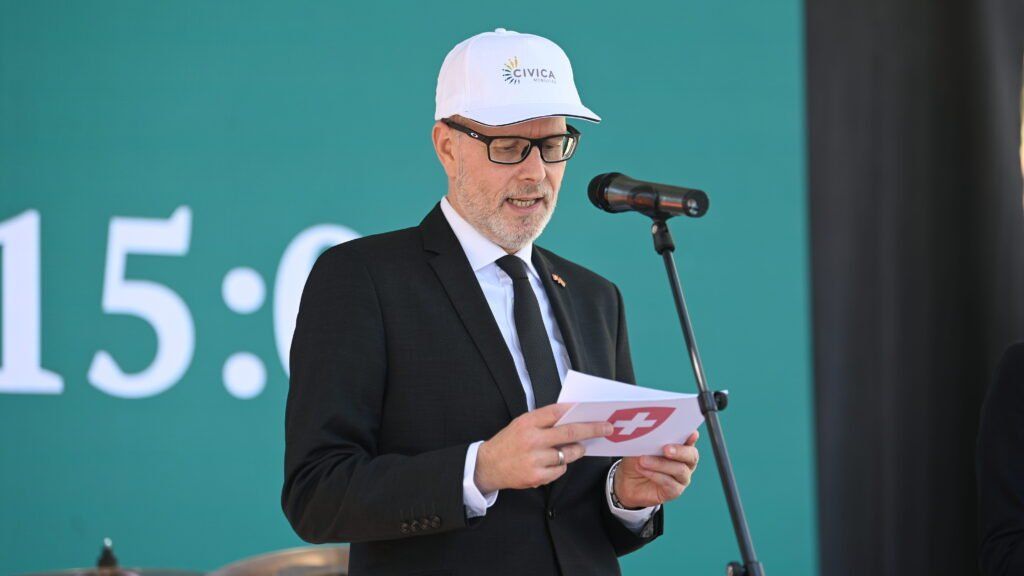
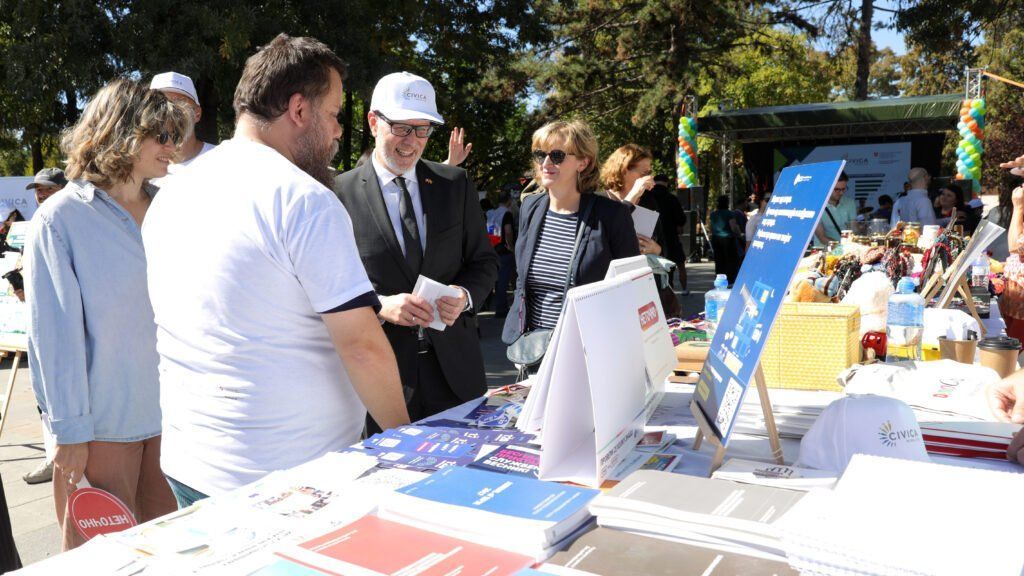
“This Festival is a celebration of civic activism and its contribution for the society and citizens, and I want to thank the organizers and express my recognition to them”, said the Swiss Ambassador H.E. Christoph Sommer in his address to the people present. The Ambassador reminded that Switzerland had supported the CSOs for almost 15 years in North Macedonia and he stressed that democratic societies were under pressure, and that the organizations should rely on credible information and create space for well-founded debate. “This is a good moment that we, as citizens, remind ourselves about the crucial role of the active and lively civil society for our democracies. In this sense, I am especially happy to see more and more visitors, citizens that are interested in the work of CSOs. Reconnecting the organizations with the citizens, helping them consolidate their communities and increasing the trust of the citizens in CSOs are important goals of Civica Mobilitas and crucial challenges in these times”, said Sommer.
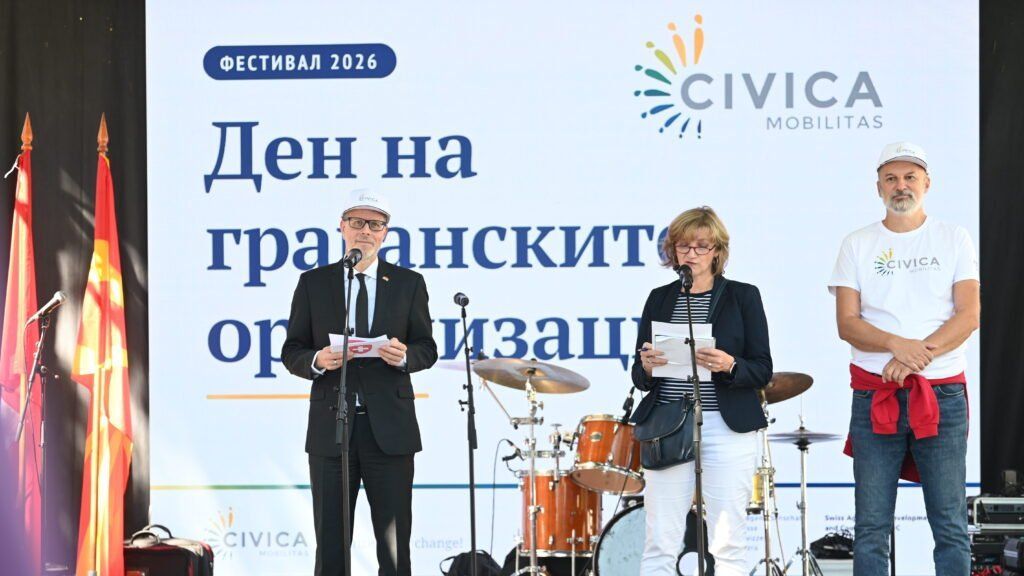
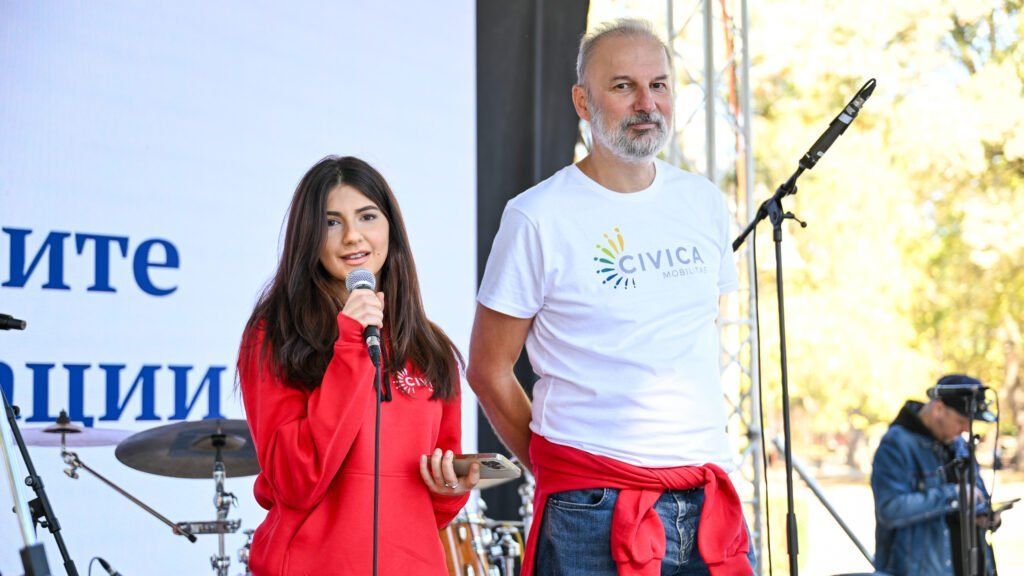
MCIC Director, Aleksandar Krzhalovski stressed that the organizations presented their achievements precisely in front of those for whom they work. “Therefore, I invite everybody to visit the stands, speak with the organizations and see how much civil society can do when it is connected with the citizens”.
CSOs who participated at the festival tried to bring their work closer to the citizens via interesting and simple examples. Below, there are part of the activities in several themes.
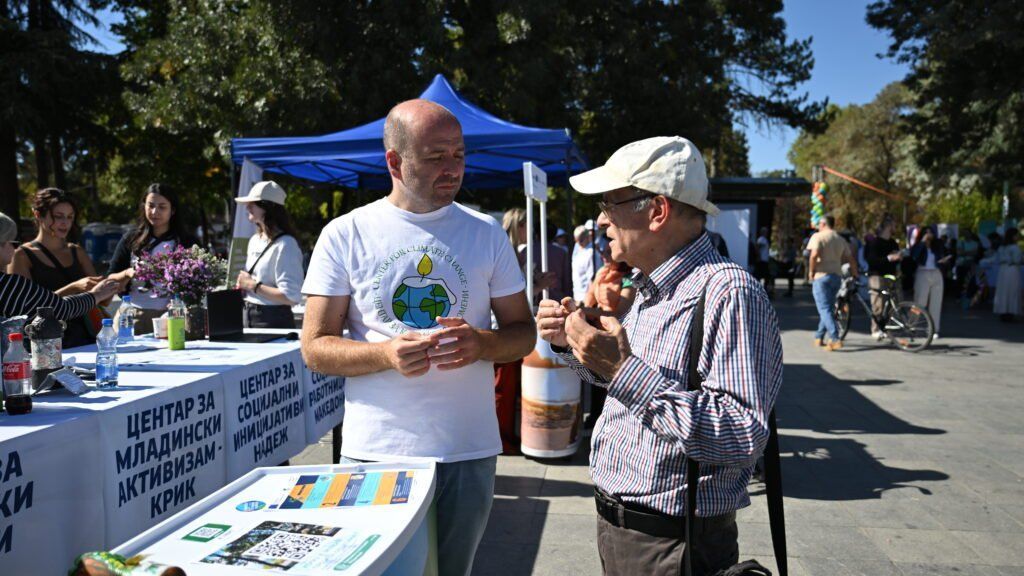
The Center for Climate Changes from Gevgelija and the Foundation for Local Development and Information Technologies from Gevgelija showed the visitors how to decrease the electricity usage with proper habits and appropriate selection of devices. They used a device for measuring the usage to compare household appliances with different electricity use. “The purpose of today’s workshop is that the citizens are informed how they can save electricity in their homes. When they see how much electricity an appliance uses, they can easily recognize where there is space for saving”, said Filip Stojanovski from CCC.
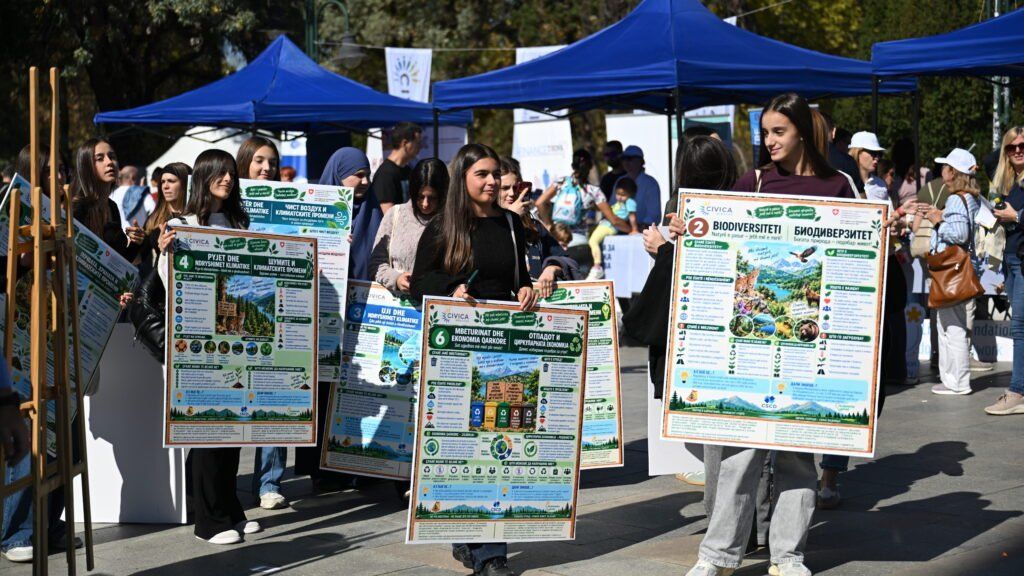
Students from “Said Najdeni” primary school from Debar, supported by the Center for Sustainable Community Development from Debar set an educational path to climate changes. The visitors passed by boards with the reasons and consequences of climate changes and possibilities for protection and adjustment. The contents had been prepared by the students themselves, via research and information processing.
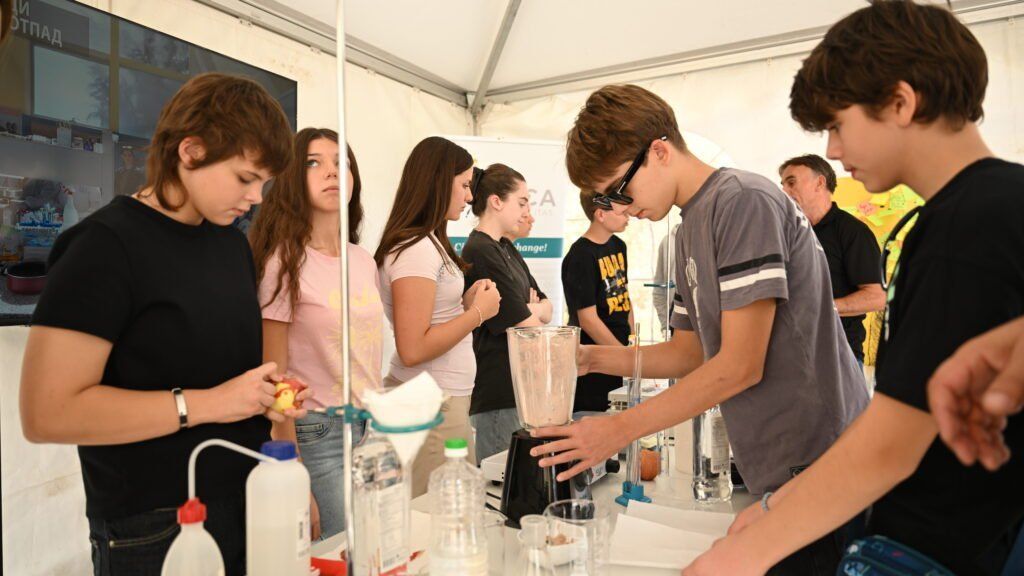
The Center for Environment Resources (REC) together with Eco-Logic and Florozon exhibited the products that the students had made at the competition “Green Business Ideas”. At the stand, there were eco-insulation tiles, ecological check from eggshells, orange peel perfume, ethanol, ecological soap from burnt oil, plates from potato waste starch and pellets from apple peels. The three organizations also held experimental workshops for bio-waste processing. One group worked with apple peels and obtained pectin, a natural sweetener from them, while the other obtained bio diesel from burnt oil. “The goal of the workshop is to teach the children that it is possible for organic waste or bio-waste to be transformed into useful products”, said Tamara Radovanovikj Angjelkovska from REC. “It is great that we have the possibility to work on such an important topic, use professional equipment and learn how to recycle, process and obtain usable products, while making something positive for the environment”, said one of the participants in the experiment, a high school student.
The ecological association Ekozvon from Skopje turned their stand into a discussion place with a message “We haven’t come here to tell you what you should think about the environment, we have come to ask you what we can do together.” They say that they wanted to see what the citizens think about the environment and give them proposals that will be crucial in asking for changes before the institutions in charge. “I believe that the change starts with the people who have decided not to remain an audience”, stated Slagjana Stamenkovska from the association.
This year, there was also a biodiversity event by Slow Food Vodno at the same place where the festival was. The “School Gardens” project has been implemented for 13 years in primary schools around the country. Vasilka Stefanovska, project coordinator, explained that the practical work enables the children to monitor the whole process directly, starting from sewing and planting to obtaining food. “The goal is that the children have contact with nature from earliest age, learn about sewing and planting and follow the path from a seed to the table. With this lecture we want to introduce the visitors to our activities, become part of the project and protect the environment together”, said Stefanovska. Apart from school gardens, the organization also implements workshops in the open. “We have learned what the purpose of school gardens is, but also how they encourage teamwork and creativity. We were also shown practical examples of school gardens”, said Matilda Bajkova, a teacher at “Vera Ciriviri-Trena” primary school.
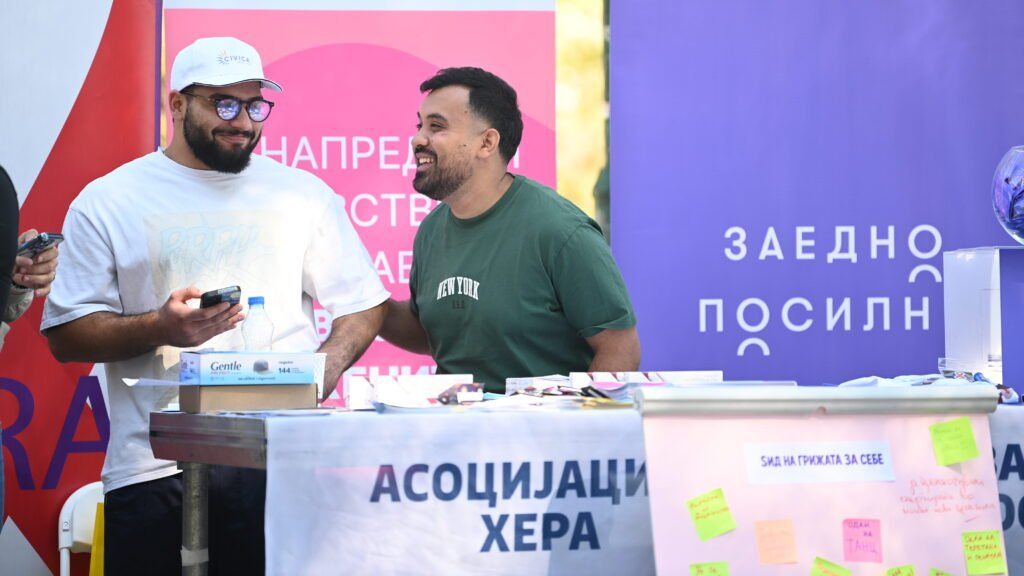
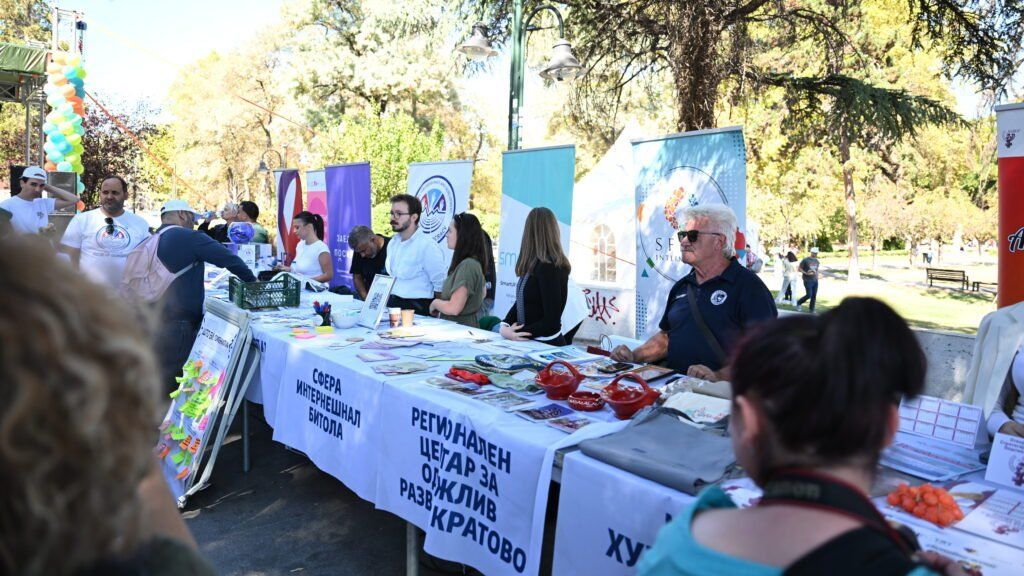
HERA, the Health Education and Research Association offered information about sexual and reproductive health at their stand, as well as on HIV, mental health and gender-based violence. The visitors were able to have a confidential and free HIV testing, pick up self-testing tests, pregnancy tests and contraceptives, as well as fliers. They also got acquainted with youth centres I Want to Know, MM Centre for Counselling and Support to Boys and Men in Crisis and the First Family Centre. “Our goal is to bring information, prevention and services close to the citizens. We believe that information, prevention and timely access to support are crucial so that people can take care about their health and make informed decisions”, said Goran Jakimoski from HERA.
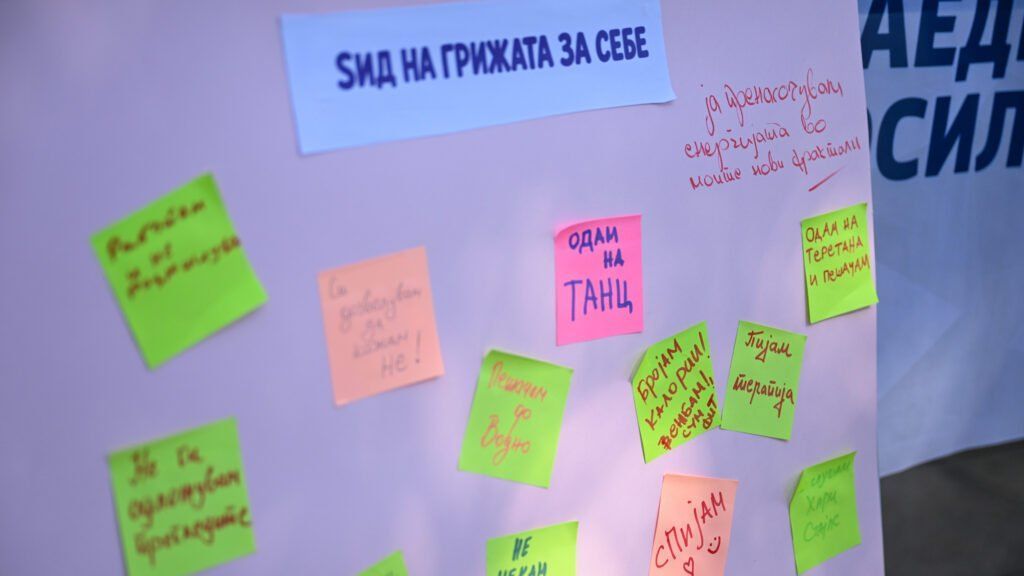
Interactive games for access to health care services and HIV prevention and sexually transmitted infections were offered to the citizens by the Association for Health Policies and Rights “Stronger Together” from Skopje, an organization of people living with HIV. The myth quiz challenged the visitors to check their knowledge. Citizens left their messages on the wall of care. “Civica Mobilitas Festival is an excellent opportunity to present our organization and its goals and find allies for them among the others”, said Andrej Senih from the association.
HOPS Healthy Life Options Skopje association which works on decreasing the drug harms and HIV prevention presented their programmes for social inclusion of vulnerable and marginalized communities. The visitors could buy handcrafts from the creative expression workshops of HOPs beneficiaries and in this way, they generated a modest economic income. The citizens also received printed materials for decrease of harms from drug usage. “It is important that HOPS is present at this event because it is a possibility to present part of our work, the field experience and problems that people with whom we work experience. Our presence gives us visibility, possibilities for connecting with other organizations and a chance to clearly show why HOPS work matters”, stated Irina from HOPS.
HOUP association for assistance and support of people with aphasia held a workshop on awareness raising on this condition. Lenk Ugrinovska, the President of “ELIT” association of women managers and a member of HOUP stressed that aphasia is not a disease, but a neurological condition which most often occurs after a stroke or a brain injury. It can affect speech, reading, writing and understanding, but not the intelligence, thoughts and feelings. Ugrinovska also told the story of the lawyer Mirjana Markovska, the founder of HOUP, who experienced aphasia after a stroke. “Nobody should be alone in this fight. Together, we can create a society in which everybody can communicate and live in a dignified manner”, said Ugrinovska. Among the participants there was also the 29-year-old Jasmina Ivanovska-FIlipovski, a member and lawyer in HOUP, who had experienced aphasia herself following a stroke. “I had a difficult period, but I survived it. Now I work, I have two children and I am active in HOUP to help other people with aphasia. I am an example that we should not give up”, she said.
The Institute for Democracy Societas Civilis Skopje (IDSCS) used interactive quizzes to bring the functioning of the institutions, good governance, Parliament and European integration closer to the citizens. The questions pertained to the number of MPs and the duration of their mandate, the Reform Agenda, Growth Plan and the institutions that fight corruption. The participants were given awards. “One of the goals of the interactive quizzes is to educate the citizens and raise their awareness on the topics that we work on. However, we want to contribute to increasing the trust between the CSOs and citizens, as well as the trust among the people in the society, in general. The trust is an important part of the social capital”, stated Misha Popovikj, Programme Director at IDSCS.
Center for Civic Communications presented their web platform Open Data, which presents how the public money is spent. Using the tool “Where Does My Money Go”, the visitors could see a calculation on how much they pay in taxes and benefits on daily basis, according to their salaries. Many people were surprised by the amount. “When the people know how much they pay, they want to be more involved in the budget creation and they ask for bigger accountability in public money spending”, stressed German Filkov from CCC.
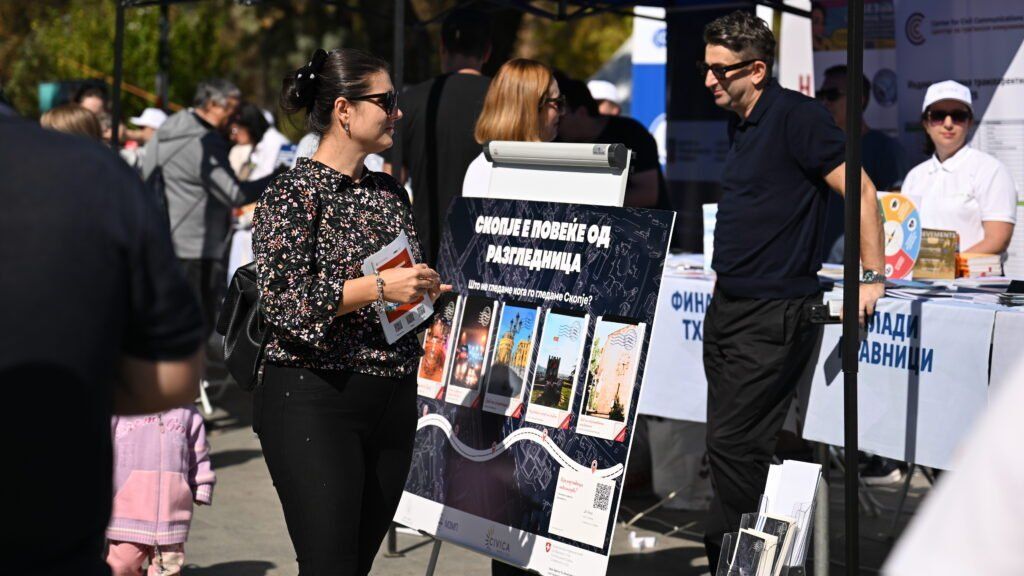
The Macedonian Young Lawyers Association (MYLA) presented an interactive exhibition “Skopje Is More than a Postcard” which starts with the question “What do we not see when we look at Skopje?”. The basis of this exhibition are situations connected with discrimination, so under the tourist postcards the visitors were discovering facts that the official image of the city overlooks. The visitors wrote postcards to the institution in charge which MYLA would submit, and they answered the question “Which postcard is missing?” on empty postcards or in a short anonymous survey. “Each one of us knows a Skopje that is not on the postcards. We want this Skopje to be also seen by the institutions”, stated Martina Drangovska Martinova from MYLA. At the stand the citizens were also given information on free legal aid.
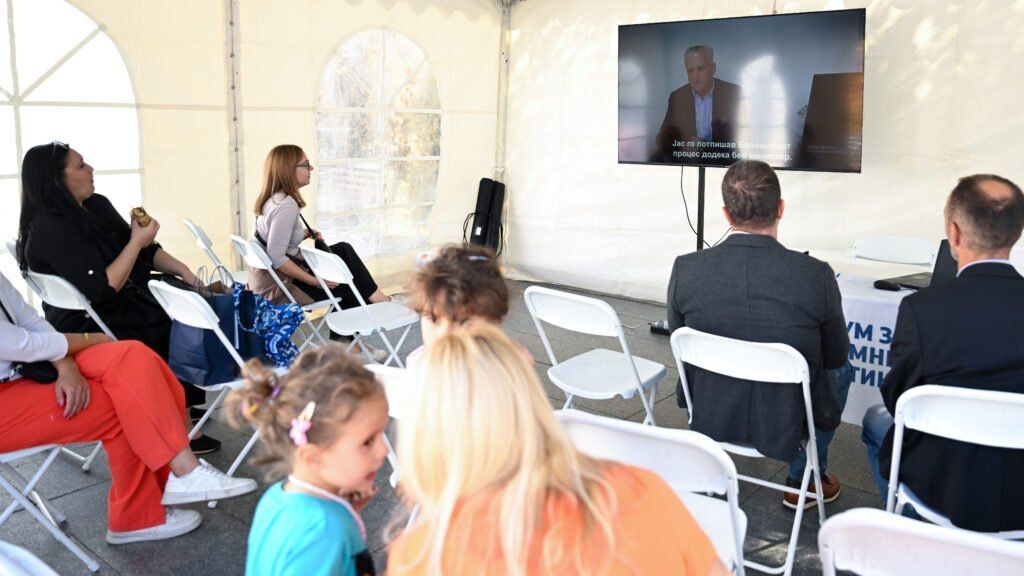
Representatives of the Parliamentary Support Programme – NDI held a training on legal advocacy. The Forum for Reasonable Policies and BIRC screened a documentary film “Universities at Crossroads: Reforms, Autonomy and Future”, while the National Roma Centre screened a video presentation on the life in Roma settlements.
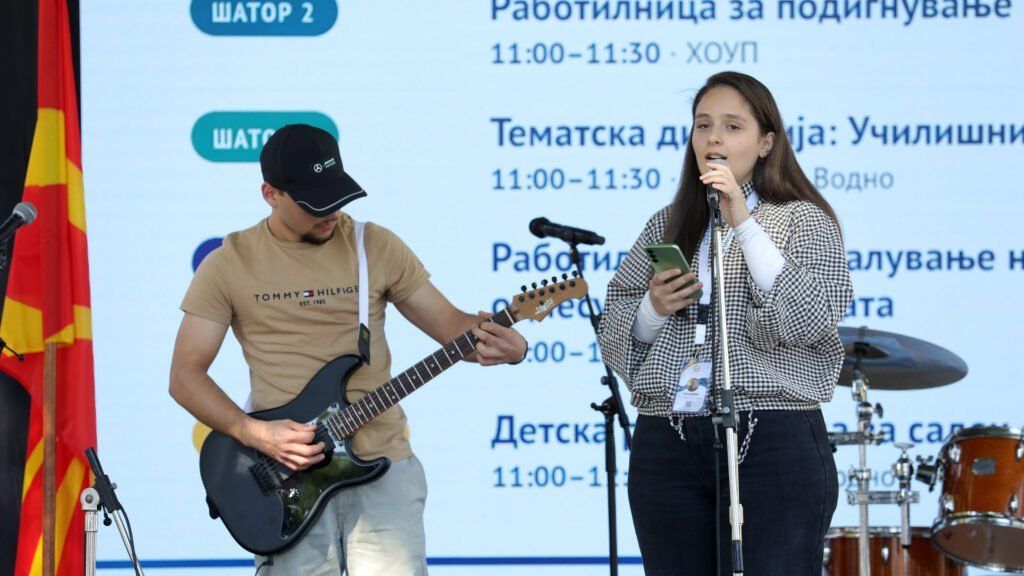
The Young People from the High School Student Alliance from Tetovo apart from opening the festival with a music performance were part of the youth mini festival “Voice in Action” which was organised by ZGI Antiko and Adrion together with “Always Cohabitation”. The High School Student Union of Tetovo (NIMBUS) worked with the visitors on interactive workshops during the whole festival. The students presented the cooperation among the schools, volunteering and community engagement. With the presentation “Voice of Students” explained the role of the high school student organization, and the visitors left their proposals for changes in the corner “My Idea for the School”. In the “60 Seconds” part, the young people told their story and what they have learned via activism, and with their activity “Draw Your Voice” they created a collective work on the topic of “How Does the Voice of the Young People Look Like?”.
The programme “Voice Has Many Forms” brought music, recitals and student performances. The medical high school students measured blood pressure and glucose level in the corner “Knowledge in Service of Health” and the textile school students presented the exhibition “From Idea to Clothes” with sketches, materials and final clothing. Young artists drew caricatures of the visitors, and with the installation “My Voice for the Community” the audience expressed the changes that they want to see in their communities.
The Institute for Human Rights from Skopje spoke with the young people about peer violence. The Institute cooperates with primary and secondary schools, and it is especially focused on bullying of girls. They explained the young people that after they turn 14, they can be held criminally accountable for their actions. As a provider of free legal aid, the Institute offered the visitors the counselling support when they wanted to find out whom to address if they experience violence.
The RastUm workshop was dedicated to the mnemonic memorizing technique. The children used imagining to learn the phases of growth of a plant. “The phases of growth might sound complicated to be memorized, but when we visualize that process, we can memorize them more easily”, stated Marija Hana Trajkoska, the co-founder, educator and organizer of RastUm. “This workshop is for everybody who wants to develop their memory in a creative way and learn the phases of growth and development of a plant in a creative way”, added the educator Tijana Kosteska.
The association for education of children and young people “Powerful Youth” from Skopje involved children aged 5 to 14 in the educational game “Wheel of Knowledge”. The issues covered the rights of the children, goodness and volunteering, healthy food, ecology and family relations. One of the challenges was that a child gives a compliment to a family member. For the parents, the association opened the corner “Ask a Pedagogue” on issues related to school, studying motivation, relations with peers and parenting styles.
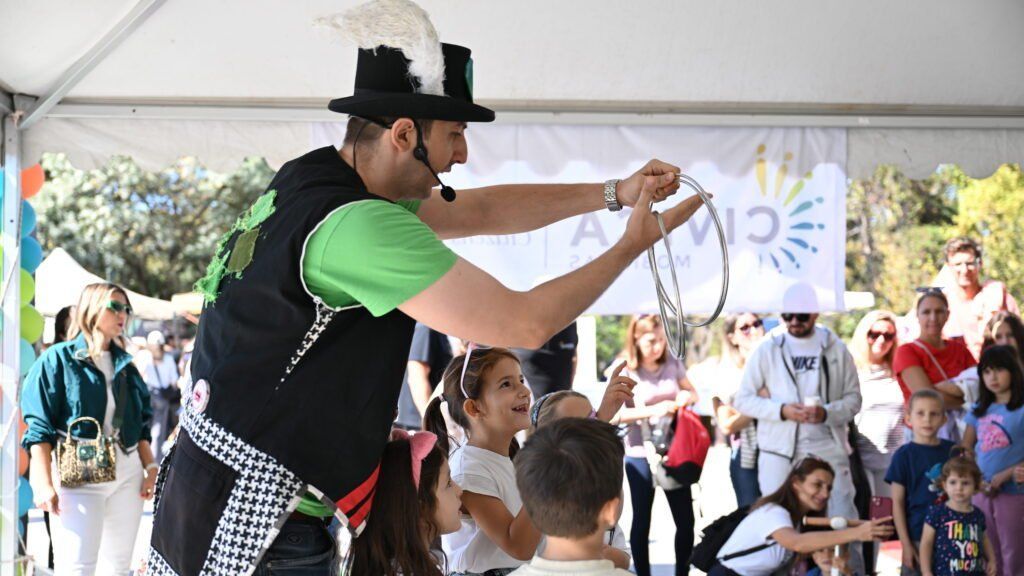
Slow Food Vodno organised a children’s workshop for planting and drawing “We Sew, We Plant and We Prepare for Our Garden” and with the magician Kristijan Shopov – Kiko Magiko, as expected, was full of children and there was an eruption of laughter, joy and noise.
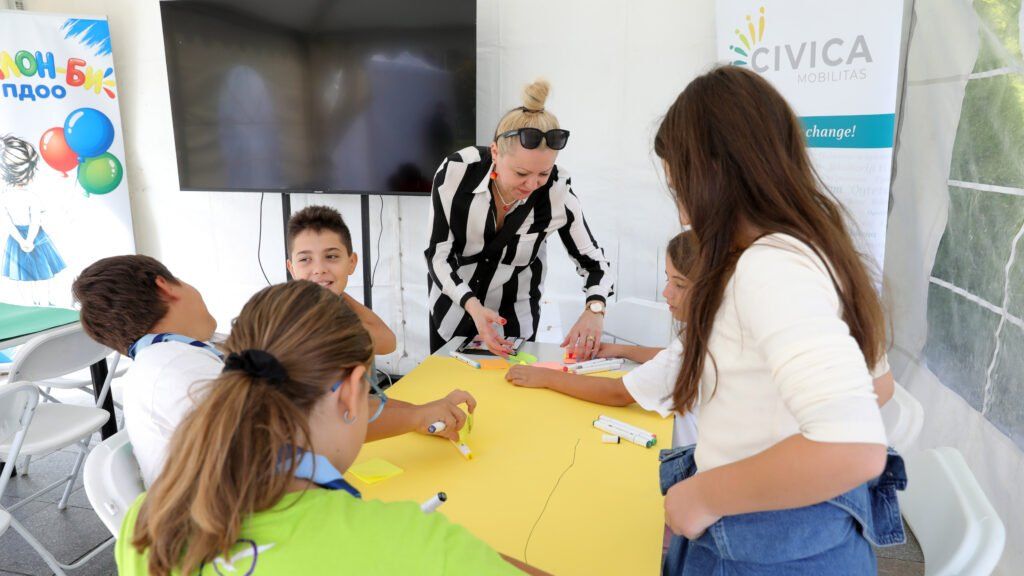
The organization Oslon showed the “Power of Good Words”. The children drew a tree together and they put on it the words with positive meaning, such as love, friendship, respect and support. “The goal of the workshop is to encourage the children to recognize and express their emotions in a positive way, to learn how to channel the negative energy and via joint work to develop cooperation and positive behaviour”, said the people from Oslon. “I wrote the rod friendship because it is a positive and good word. It is part of my life, and I have many friendships that I love and cherish”, shared one of the participants.
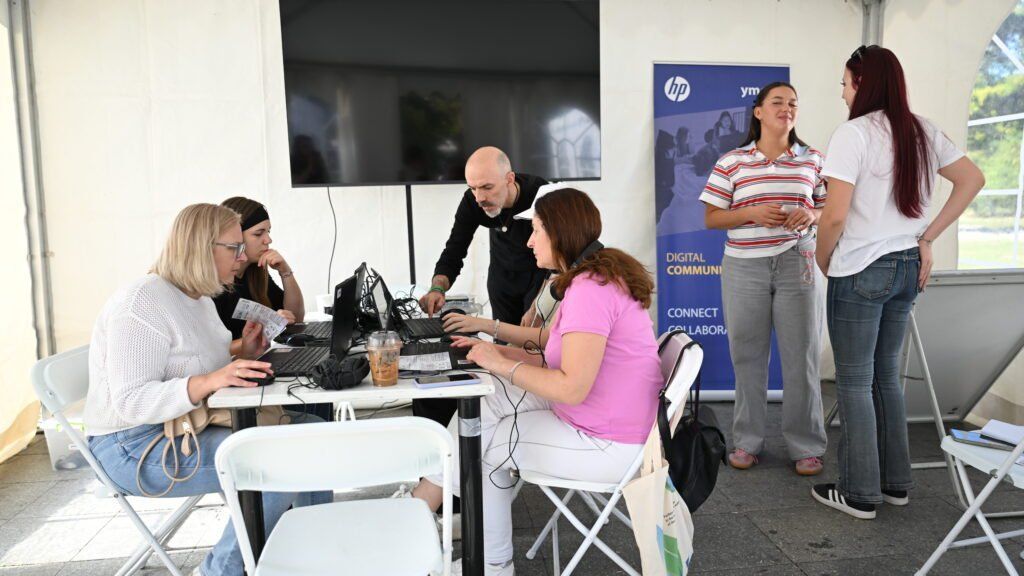
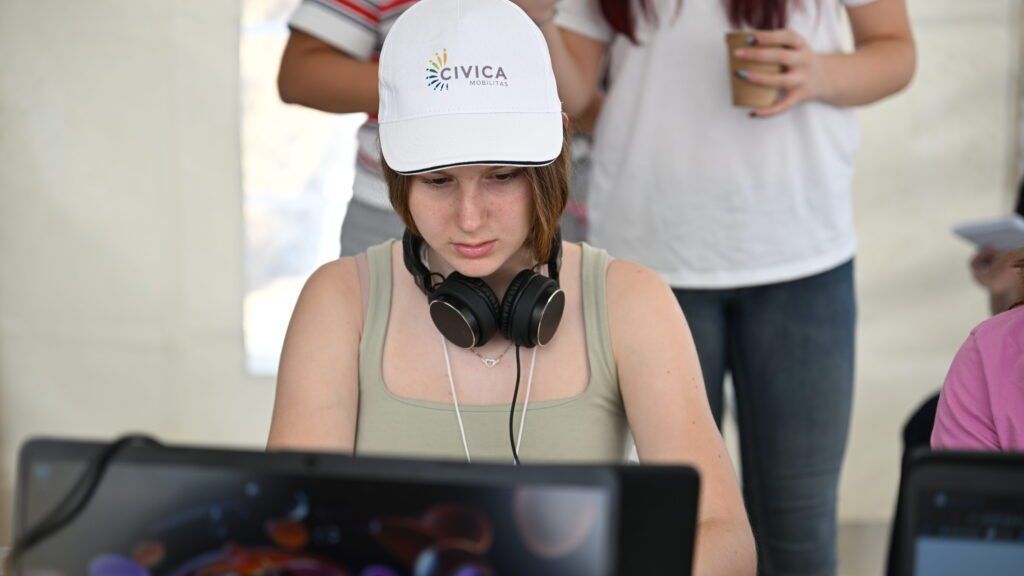
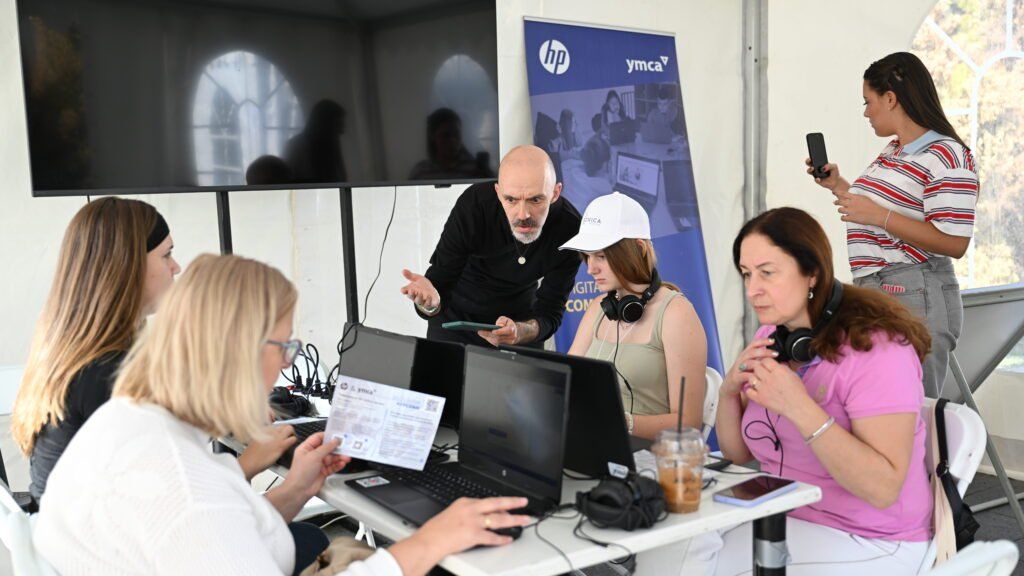
The digital technologies were covered by the representatives of SFERA International and IMKA Bitola. SFERA International held a workshop on writing scrips on the risks of digital technology usage. There were six participants, and the workshop was led by Martin Mojanovski, a project assistant at SFERA International. Via a story of a 17-year-old high school student, the participants discussed the pressure created by social networks: the comparison with idealized lives, unrealistic expectations, and violation of privacy. In the script, following an argument, a boy releases private photographs of the girl without her consent. With this example, the participants opened the issue on digital violence. The participants changed the behaviour of supporting characters to see how timely support can change the course of events. They spoke about the role of peers, friends and family, as well as about the assistance of a psychologist, pedagogue, social worker and police. Mojanovski stressed that it was important to see if the proposed solutions would help in real life. “Once we share a message, photograph or location, we no longer have a full control where this content ends. Therefore, we should carefully think what we share and with whom we share it”, stressed Mojanovski. He added that parents should openly speak with children on their Internet activities. “If we want, we can find a solution – share selectively, keep the privacy and educated both the children and the parents”, said one of the participants.
The participants concluded that the timely recognition of risks, the open communication and digital literacy are crucial for safer usage of digital technologies.
IMKA Bitola held a free class on digital education. “Digital education should be free and accessible, because not everybody can afford paid courses, software or appropriate equipment. The HP LIFE platform offers these contents free of charge, and we help the people use them”, stressed Viktor Iliev, the Executive Director of the organization. In order to access HP LIFE, the users should first register with an e-mail account and open a profile. Then, they can choose among more than 30 free courses from various areas. They learn with their own pace and after the successful completion of each course they receive a certificate.
IMKA Bitola has been implementing the programme since 2023 and on annual basis they cover 700 young people, from seventh grade to fourth year of secondary education. “The courses are useful both for private and professional life. This experience has motivated me to continue to learn and share the possibilities with the teachers and students in my school”, said Enisa Ramicevikj, a Bosnian and Macedonian language teacher.
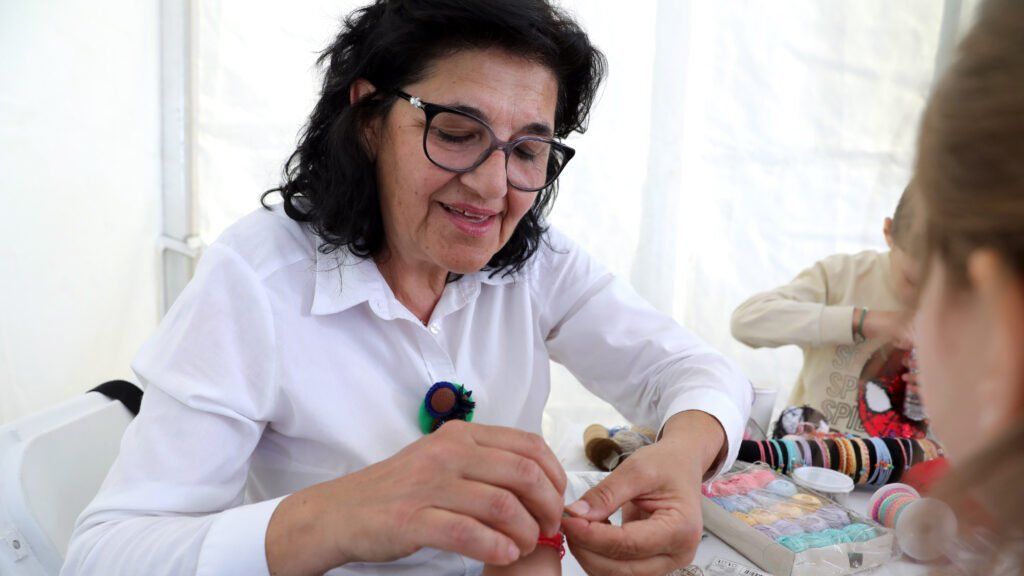
The participants could also obtain practical skills thanks to ZUR Macedonian Handcrafts and “Biser” who used creative workshops to enable the youngest visitors to learn how to make bracelets, jewellery and fashion accessories from natural materials, and at the same time to get acquainted with the traditional knitting techniques. Durin the ZUR “Macedonian Handcrafts” workshop, Gordana Lazarevska, the Secretary of the association explained that these activities, apart from being fun, aim to stimulate children’s creativity. “Today we make bracelets for small children, and they learned how to create unique pieces themselves. With these activities both the attention and focus are developed”, says Lazarevska.
Snezhana Jankulovska from “Biser” – Bitola presented the traditional knitting technique “chingelake” to the visitors, as well as making of jewellery and fashion accessories with natural materials. With practical work, the participants were acquainted with skills that are transferred from one generation to the next one. “With these activities we try to preserve the knitting tradition with chingelake technique and to teach the young ones, so that they can continue with it. Knitting develops the motoric skills with the children, and it is a good way for the elderly to remain active”, says Jankulovska. “The workshops were very interesting. I learned how to knit with elastic bands, and we also saw how jewellery is made of natural materials. It was interesting for me to learn something new”, said Nina Hachik, who took part in both activities.
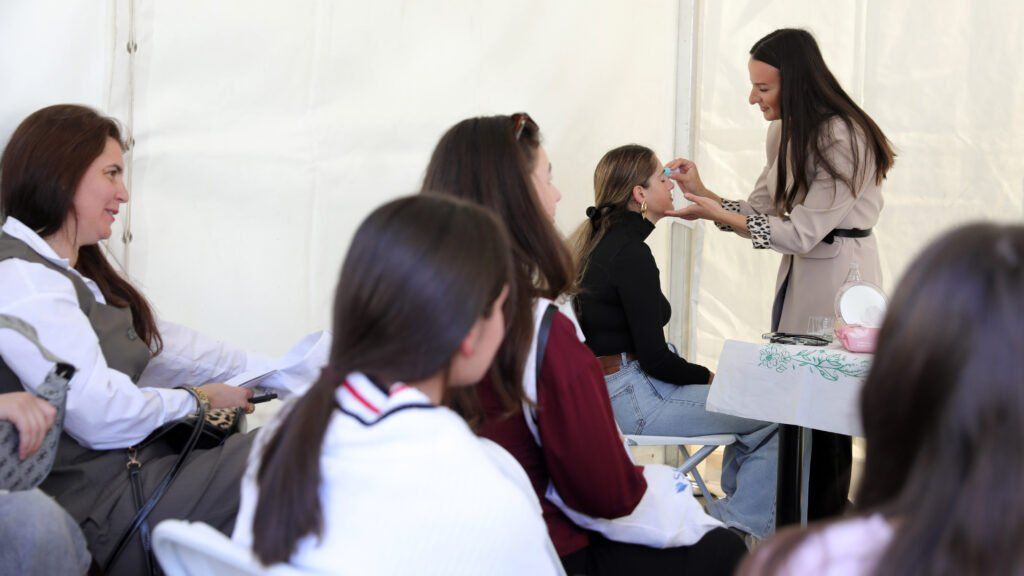
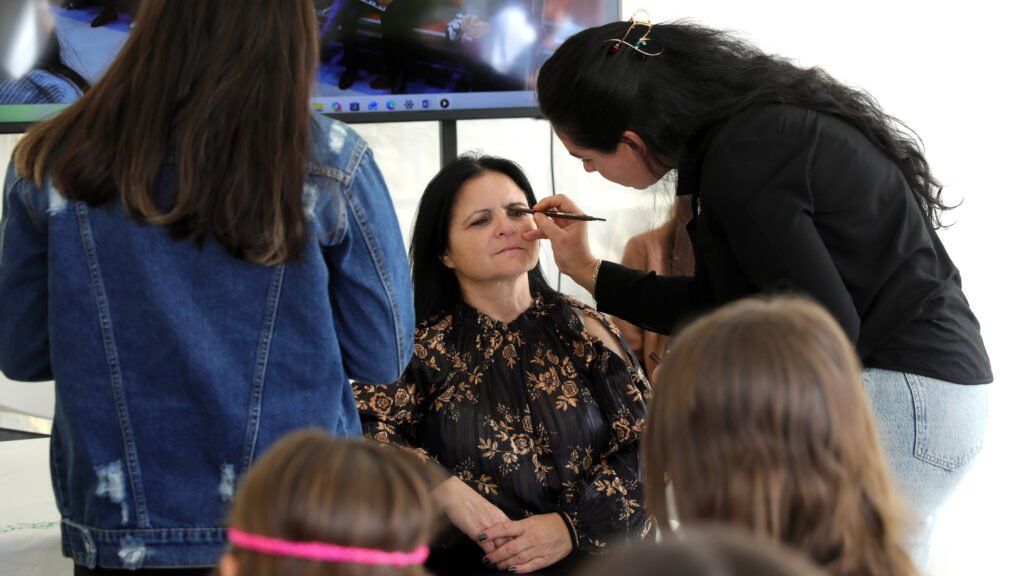
“Cohabitation Always” held a make-up workshop. The association, with courses for women and young girls works on developing practical skills that can help them be involved in the labour market and in their economic empowerment. The participants at the make-up course practically presented the skills and know-how that they had obtained. They were putting make-up on the visitors at the stand, and at the same time showed the process and different phases of applying make-up. “This activity is part of the project where we organised courses for women and young girls, in order to actively involve them in the labour market and empower them economically. Today, our participants presented the know-how and skills that they have obtained at the courses. What we aspire for is strong women, strong society and strong future”, said Umugjulsum Jusufovska from “Cohabitation Always”. “It was interesting to see different phases of applying make-up and to learn some important details. Today, I have learned that you start with the eyes first, and then you move to the face”, said Falia Jusufovska, a participant in the activity. With these activities, “Cohabitation Always” connects the training with the practical implementation of the obtained knowledge, so that women and young girls have skills that will help them become involved in the labour market and build bigger economic independence.
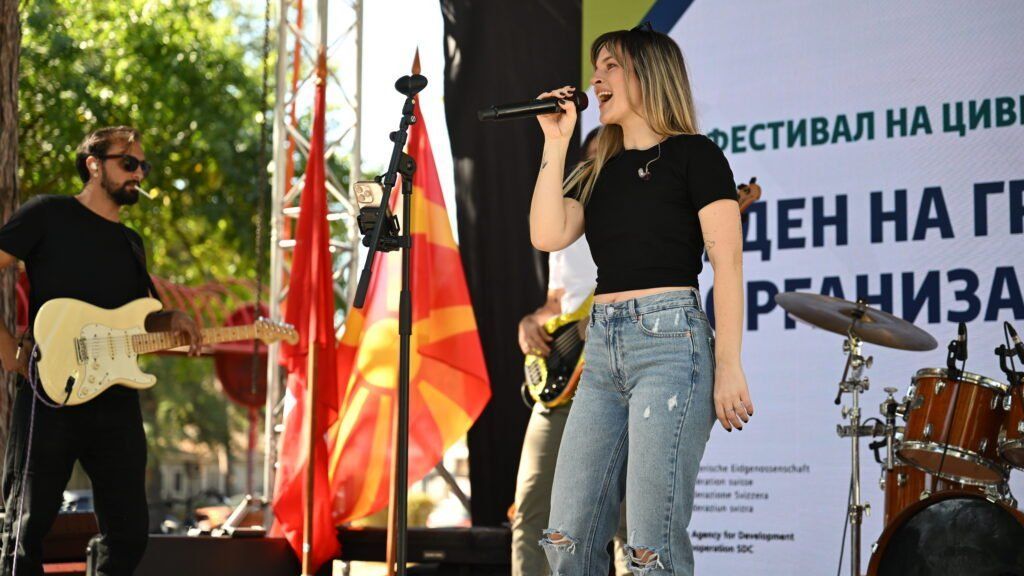
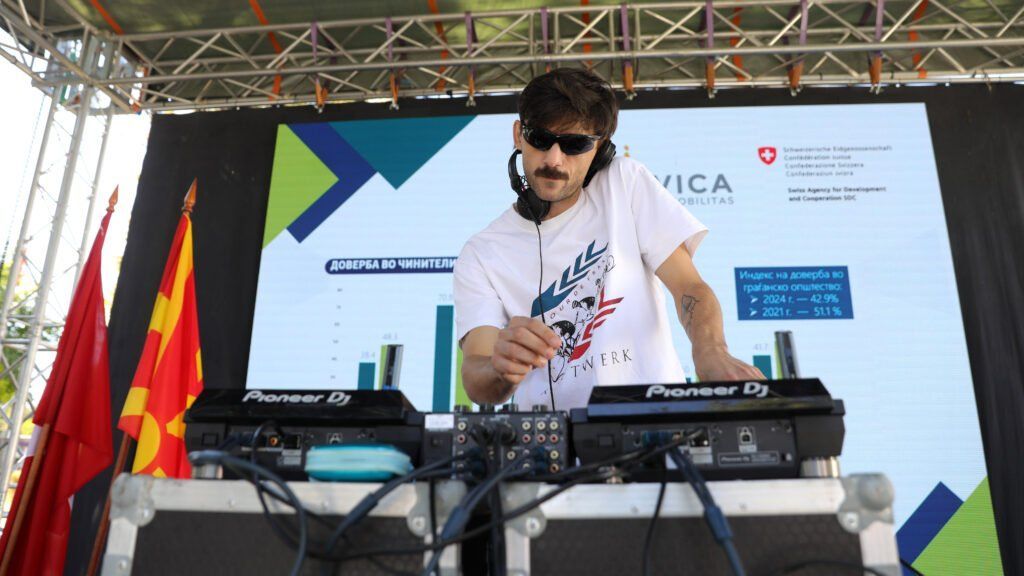
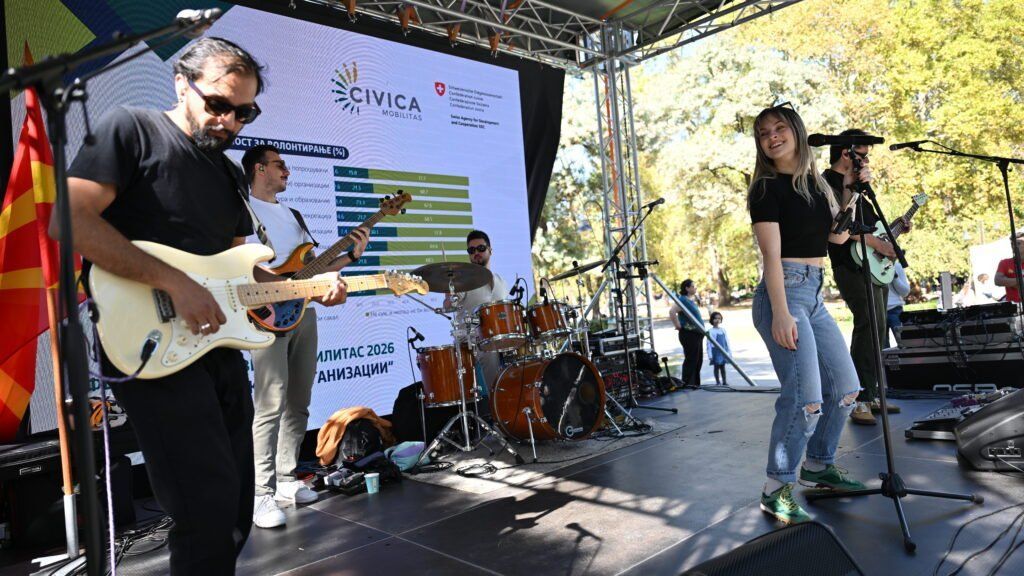
During all these activities, the atmosphere was improved by the musicians. The band The Ringtones, and then also DJ UX, Andreja Jovanovski, together made the festival more entertaining and it attracted more than 1,000 visitors who came, got involved and spent time with CSOs, activists and people from the civil sector in general.
We believe that we have contributed to better understanding of the role of CSOs, we hope that it will motivate the people to become part of the activities, so that we strengthen civic activism together and fight for a better society for all!