

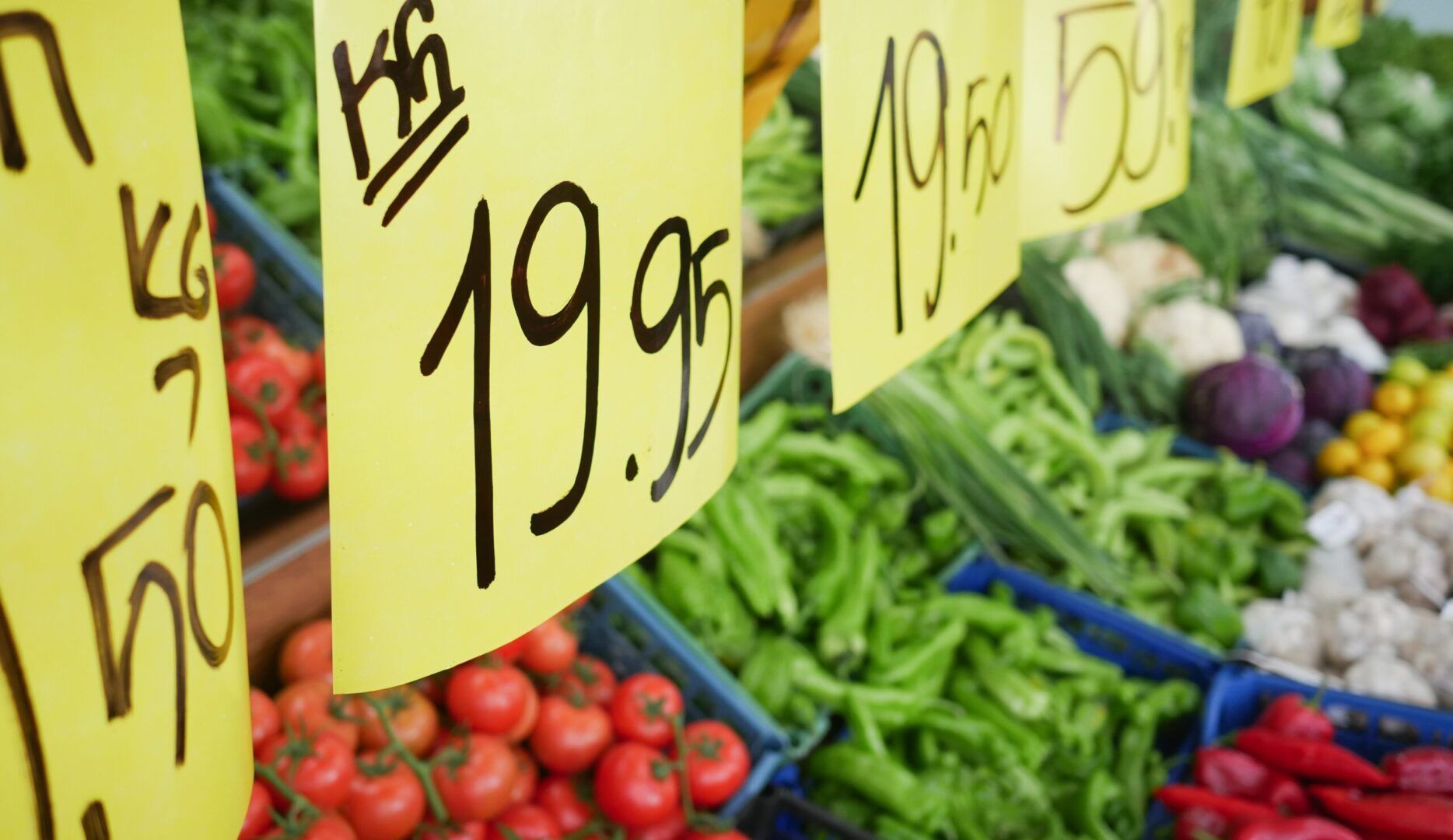
Price and margin control measures stabilize inflation only in the first month, after which it returns
In response to this inflationary pressure, the Government introduced a series of measures to mitigate the negative impacts on consumption and the living standards of the population. Between 2021 and 2024, measures included freezing the prices of certain basic products and/or limiting trade margins to prevent further price increases. A total of nine key decisions were made by December 2024, three of which targeted margin limitations, while the others focused on price controls. Some measures applied to specific food products, while others covered a broader range of food items.
The findings of the analysis show that price control measures for food had a mild aggregate effect and a strong immediate effect. During periods without such measures, the average month-on-month food inflation rate was 0.5%. Under these measures, food inflation averaged as low as -1%, indicating that food prices decreased during the intervention. Thus, the estimated effect is relatively significant. However, this effect diminishes after the first month of implementation (if the measure lasted longer than one month). This indicates that while the measures achieve their strongest expected effect on reducing food prices in the first month, the impact quickly weakens, likely due to market adjustments (e.g., rising prices of alternative products not covered by the measures).
Another finding suggests that price control measures only temporarily suppress inflation, as prices tend to increase again once the measure expires. Inflation returns almost entirely to its pre-measure dynamics, without evidence of overshooting.
Finance Think recommends that food price control measures be used only in cases of exceptionally high inflation. In all other situations, they should be replaced with structural or market-based measures, such as:
- Consistent and impartial enforcement of the Law on Unfair Trading Practices.
- Strengthening the capacity and tools of the Commission for Protection of Competition.
- Overhauling the agricultural subsidies system to increase domestic production.
- Targeted budget support for the most vulnerable segments of the population.

![[Aggregator] Downloaded image for imported item #51694](https://civicamobilitas.mk/wp-content/uploads/2026/10/1_cover-600x400-1.jpg)

![[Aggregator] Downloaded image for imported item #51442](https://civicamobilitas.mk/wp-content/uploads/2026/10/VACANCY_Comms-officer-600x400-1.png)
![[Aggregator] Downloaded image for imported item #51393](https://civicamobilitas.mk/wp-content/uploads/2026/10/share-default-768x403.jpg)