Meet the Guardians of Lake Ohrid and Galichica
A group of 30 volunteers has been fighting for the protection of Lake Ohrid and Galichica National Park for two and a half years, with almost no resources but enormous enthusiasm. They call themselves Ohrid SOS and are the loudest guardians of Ohrid’s natural beauty against the threats posed by irresponsible behavior of institutions and citizens.
“We want to show citizens that we can make a change and prevent what is happening to Lake Ohrid and Galichica National Park. If we succeed in changing the current situation, I hope we will encourage other citizens to become active in environmental protection as well,” says Ilina Arsova, an active member of Ohrid SOS.

What Has Changed?
They prevented the illegal construction of a hotel in Lagadin. Additionally, by raising public awareness about environmental issues in Ohrid, other citizen groups have become active in protecting the Ohrid shoreline in recent years.
What Did They Do?
They have organized smaller and larger public events to creatively illustrate the urgency of the problem and emphasize the personal responsibility of all residents in protecting public resources. Their work also targets children, engaging them through educational events, recycling workshops, theatrical performances, and more.
“We are aware that it is harder to change the opinions of older citizens, so we focus more on young people who are learning how to behave responsibly towards the environment. We hope that through children, we can also influence their parents to act more responsibly,” says Ilina.
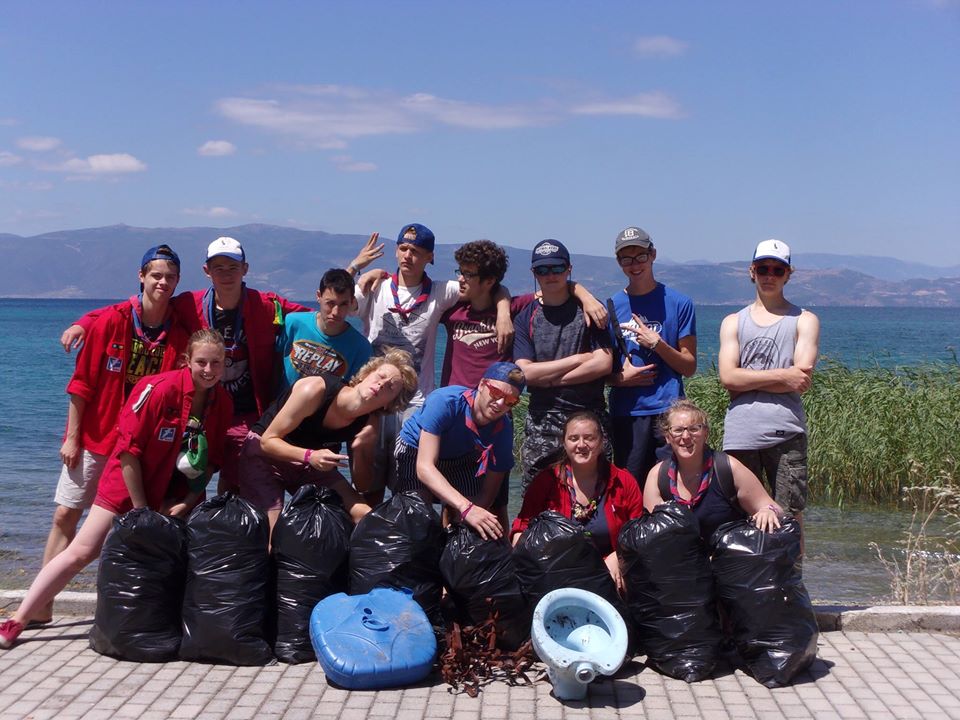
Besides raising public awareness, Ohrid SOS engages in legal battles with institutions to stop activities that damage the ecosystem of Lake Ohrid and Galichica National Park. Thanks to a Civica Mobilitas grant, they can now work alongside professional lawyers to legally address detected issues.
The NGO TACT, a previous Civica Mobilitas grant recipient, recognized the potential for collaboration with the Ohrid SOS initiative. Using the opportunity for financial support, they jointly developed a proposal on how to contribute to the protection of the lake and submitted their program through a simple application process.
How Did They Mobilize?
To inform citizens about their work and involve them in activities, they primarily use social media. They also write articles on these issues, published either on their own website or shared with domestic and international media. Occasionally, they use flyers made from plantable paper (recycled paper that can be planted to grow flowers), in line with their environmental advocacy.

Why Did They Organize?
Their association was a reaction to the Draft Strategic Environmental Impact Assessment for amendments to the General Urban Plan for Ohrid (2014–2024). They felt concerned about the decision to dry and concrete the Studenchishte Marsh – the last and largest wetland ecosystem around Lake Ohrid, which acts as its natural filter. However, this was not the only threat. The amended Management Plan for Galichica National Park (2011–2020) envisaged the construction of new tourist development zones, an expressway, and a ski center in protected areas. Due to these threats, which could lead to irreversible damage to nature, Ohrid SOS activists believe it is their right—and civic duty—to express concern, as these projects could also risk the UNESCO status Ohrid and its lake have held since 1979.
Recommendations from Ohrid SOS for Active Citizenship
“Courage, persistence, and sincerity in intentions. Never give up—in the battle between rock and water, water always wins. Not because it is stronger, but because it is more persistent.”
The project “Ohrid Needs You” is supported by an ad hoc grant from Civica Mobilitas and implemented from April to August 2017 by an informal group of citizens with support from the Association for Promoting Mutual Trust TACT (spasovska.takt@gmail.com).
Civica Mobilitas is a project of the Swiss Agency for Development and Cooperation (SDC), implemented by NIRAS from Denmark, the Macedonian Center for International Cooperation (MCIC), and the Swedish Institute for Public Administration (SIPU).
For more information about Civica Mobilitas, contact +389 2 3088 995 or helpdesk@civicamobilitas.mk