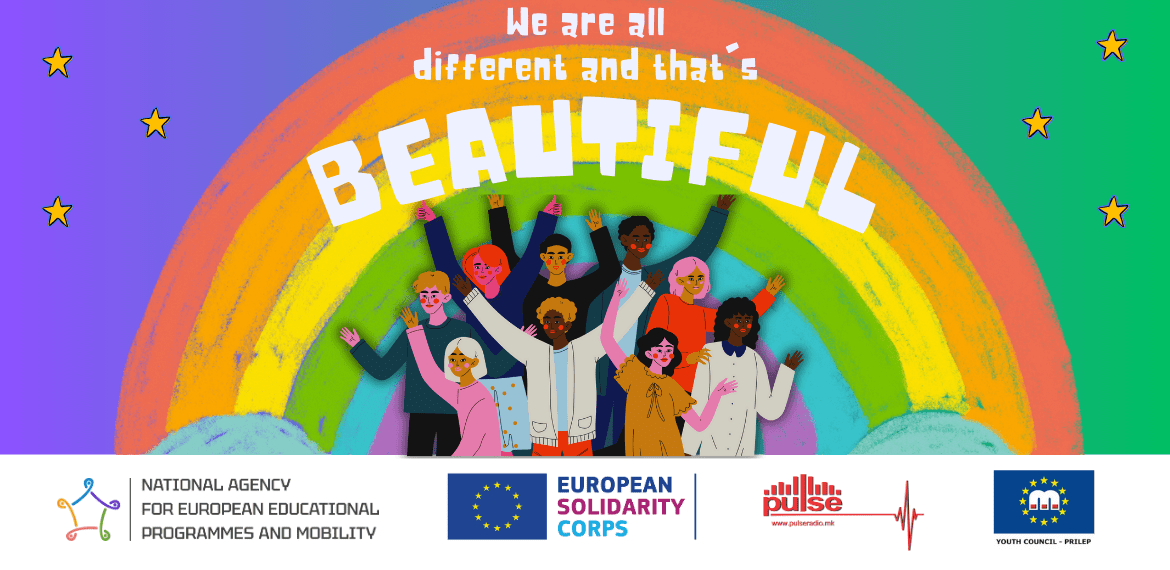
Why diversity, equality and inclusion?
Why have diversity, equality and inclusion been discussed so much recently?
One of the key reasons why this topic is so prominent may be the participation of younger generations in the workforce. The world population is becoming increasingly multicultural. Young people are getting to know different cultures and growing up in much more diverse groups than their parents. For them, diversity is like a natural necessity. Because young people are the most diverse generation we have ever seen in the world, they are attracted not only by demographics, but also by the fact that there is room for different ideas in a company, that different perspectives can be discussed, and that there are company cultures that are positive towards all kinds of people. When this happens, engagement and performance both increase. Diversity in the workplace describes the variation in personal, physical, and social characteristics, such as gender, ethnicity, age, and education. Inclusion refers to the procedures organizations implement to integrate everyone in the workplace, allowing their differences to coexist in a mutually beneficial way. The goal of inclusion strategies is to make everyone feel accepted and comfortable, ready to share their opinions and thoughts without hesitation. In other words, diversity indicates the “what” and inclusion the “how”. Let’s explain these concepts with a simple metaphor. Diversity looks at who is in the room. Inclusion looks at whether everyone’s ideas are heard in the room. Together, these two concepts create a culture where employees feel valued, can express themselves, are supported and have equal opportunities and development regardless of their origin, race, background and orientation.
What are the characteristics that make up diversity?
- Age
- Nationality
- Mind development
- Culture background
- Ethnicity
- Sexual identity
- Language and accents
- Mental health
- Nationality origin
- Parenthood status
- Physical capability
- Race
- Religious and sectarian differences
- Sexual orientation
- Socio-economic level
The issue of diversity was reflected in the business world in 2020 with the murder of George Floyd from the US. Academic studies on this subject have increased and these studies have shown that organizations where diversity is taken into consideration are more successful and more creative. In a 2020 McKinsey study, data collected over 6 years shows that cultures that are more ethnically and culturally diverse create 36% more profitable business results. Recently, we have seen that not only the business world, but also governments and institutions are talking about diversity and creating policies.
Again, if we look at the McKinsey study:
- Companies with women in senior management generated 19% more revenue.
- Companies that create more racially and ethnically diverse cultures outperform by 35%.
- More inclusive cultures provide more room for creativity and diverse ideas for the future.
- Organizations that employ equal numbers of men and women generate 41% more revenue.
- More inclusive companies have been shown to have more engaged employees, more creative teams and more successful results.
- More inclusive companies met their financial targets 120% higher than the average.
ESC Volunteer Betul UNAL
Оваа вест изворно е објавена на веб-страната на Здружение МЛАДИНСКИ СОВЕТ Прилеп


![[Aggregator] Downloaded image for imported item #43092](https://civicamobilitas.mk/wp-content/uploads/2025/12/media-lit-call-for-proposals-fotor-naslovna.png)
![[Aggregator] Downloaded image for imported item #43146](https://civicamobilitas.mk/wp-content/uploads/2025/12/10-1536x1152-1-1024x768-1-768x576.jpg)