
Discussion: If we do not take measures to protect the water resources, we can very easily lose them irreversibly
Around 1.7 billion euros of investment are needed to clean urban wastewater, which is now discharged directly into rivers, lakes and soils and for securing clean water supply in accordance with the EU acquis. Water is a resource that is consumed indefinitely, yet for years now the competent institutions have had no real insight into the quality and quantity of waters in North Macedonia.
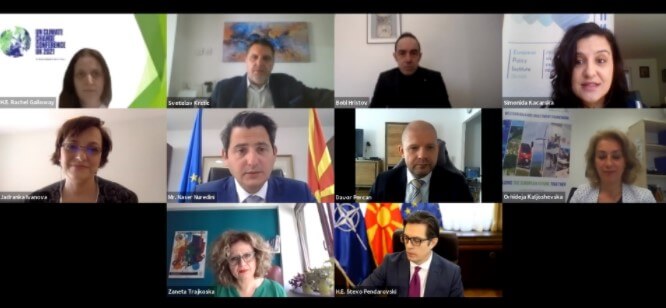
These are some of the topics discussed in the virtual conference “The Green Agenda for the Western Balkans as an incentive for water protection in the Republic of North Macedonia”, organized by the European Policy Institute in cooperation with the Institute of Communication Studies within the “Clear it up” campaign.
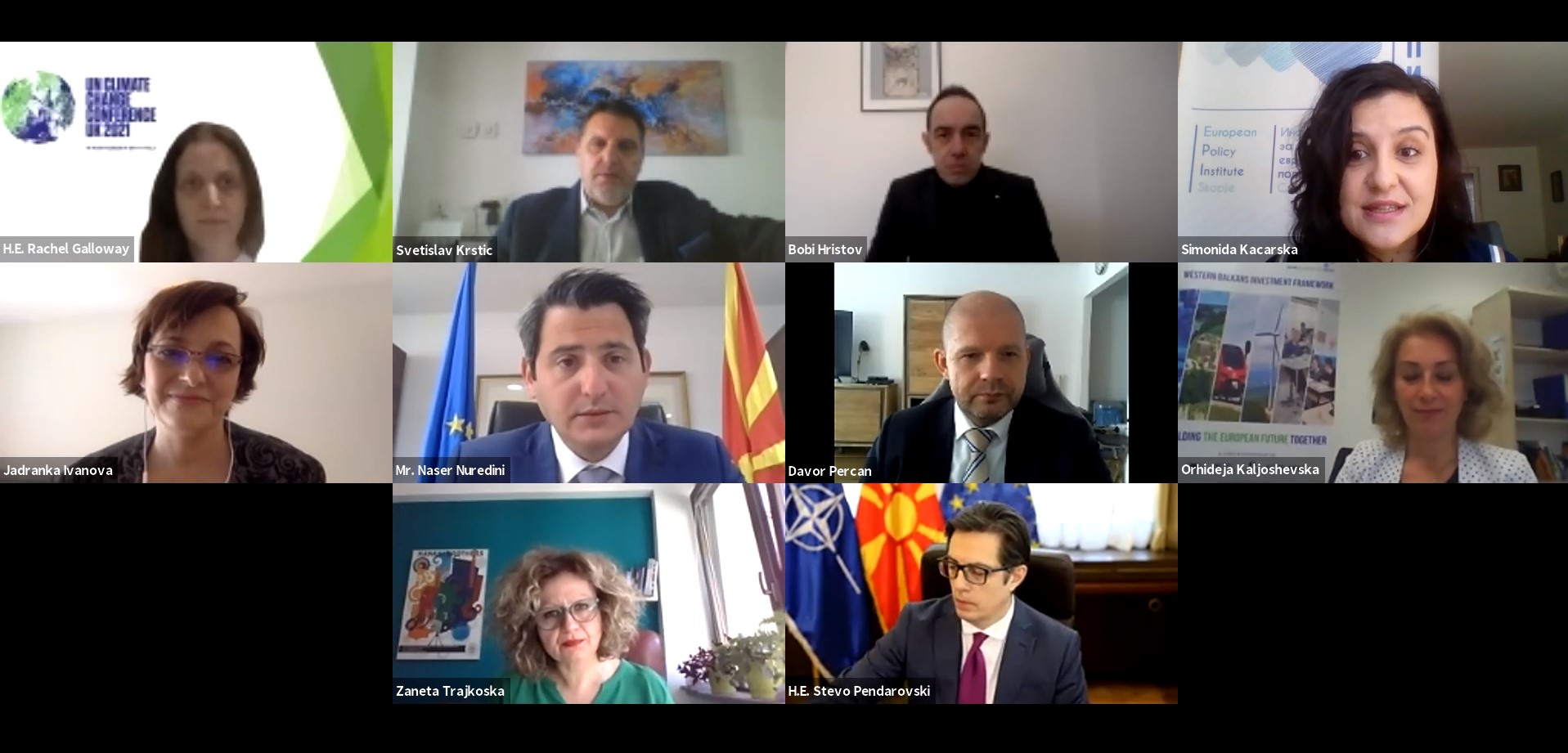
At the opening of the conference, the director of the European Policy Institute, Simonida Kacarska emphasized that the environment is one of the areas of the EU accession process in which no further progress can be noticed and stressed that this conference aimed to create a space where national and EU policies in this area.
The director of the Institute of Communication Studies, Zaneta Trajkoska said that only with open data and transparent institutions can we have quality policies in the environmental field.
“’Clear it up’ as an alliance will seek to include the promotion of laws on water protection, mineral resources and inspections,” Trajkoska said.
“Our country is located in one of the most climate-vulnerable regions in the world. If we do not take measures to protect the water resources, we can easily lose them irreversibly. ”Water protection is not only an internal economic and environmental, but also a European issue. We need to protect water resources in the long run, so that we do not lose them irreversibly,” said President Stevo Pendarovski in his welcoming address to the conference.
British Ambassador Rachel Galloway said that the current monitoring of water quality and quantity is not suitable enough to give a realistic picture of the current state of water resources.
“There is no systematic and continuous monitoring and evaluation, and the authorities cannot obtain adequate data for managing the waters. The absence of real data on the status of water bodies means that the justification, sustainability, rationality and effectiveness of water use and administrative policies and measures are in question.”, Galloway stated at the start of the conference.
According to the data, in North Macedonia, only about 3-4 percent of the total amount of wastewater is treated. The Minister of Environment and Physical Planning Naser Nuredini also addressed this problem.
We are investing in the largest wastewater treatment plant in Skopje and have started projects for Bitola, Kicevo and Tetovo. We are committed to having clean drinking water for our citizens. “We call on you to cooperate with us, to raise awareness for solving these problems,” said Minister Nuredini.
The professor from the Institute for Biology Svetoslav Krstic said that although the waters are the bloodstream of the state, they are being poisoned with harmful substances. “Some have speculated that what the vultures will miss will go away, but this is not true. “Most of our river systems are registered as ‘dead’ ecosystems,” said Professor Krstic.
According to Jadranka Ivanova, a longtime expert in the field of alleged resources, to meet EU standards, 1.7 billion euros are needed for urban water treatment and 87 treatment plants, and EU directives should be met by 2041. Orhideja Kaljoshevska from Investment Framework for the Western Balkans said that the interventions in the treatment plants are the most expensive investments that cannot be covered by only one donor or only from the state budget and that the environmental projects can be implemented through the IPA cross-border cooperation program.
Therefore, according to Davor Percan from the European Commission’s Directorate-General for the Environment, water resources targets must be integrated into other EU policies related to climate change, and in particular energy and agriculture.
The “Clear it up” campaign is implemented by the Institute of Communication Studies and is supported by the British Embassy in Skopje.
The post Discussion: If we do not take measures to protect the water resources, we can very easily lose them irreversibly appeared first on EPI.
![[Aggregator] Downloaded image for imported item #52203](https://civicamobilitas.mk/wp-content/uploads/2026/10/Cover_MM-Albania-600x400-1.jpg)
![[Aggregator] Downloaded image for imported item #52158](https://civicamobilitas.mk/wp-content/uploads/2026/10/Is-Political-Interference-Addressed-in-the-Frameworks-of-the-Prosecutorial-Councils-in-North-Macedonia-and-Bosnia-and-Herzegovina-pdf-1-724x1024-1-e1792394173877.webp)
![[Aggregator] Downloaded image for imported item #52160](https://civicamobilitas.mk/wp-content/uploads/2026/10/Raising-the-Bar-on-Integrity_Aligning-North-Macedonia-and-Bosnia-and-Herzegovina-with-the-2026-EU-Anti-Corruption-Directive-pdf-1-724x1024-1-e1792393418465.webp)