
Citizens for Change #24
JANUARY - MARCH 2026 | DOWNLOAD PDF
Old-New Challenges of the Civil Sector
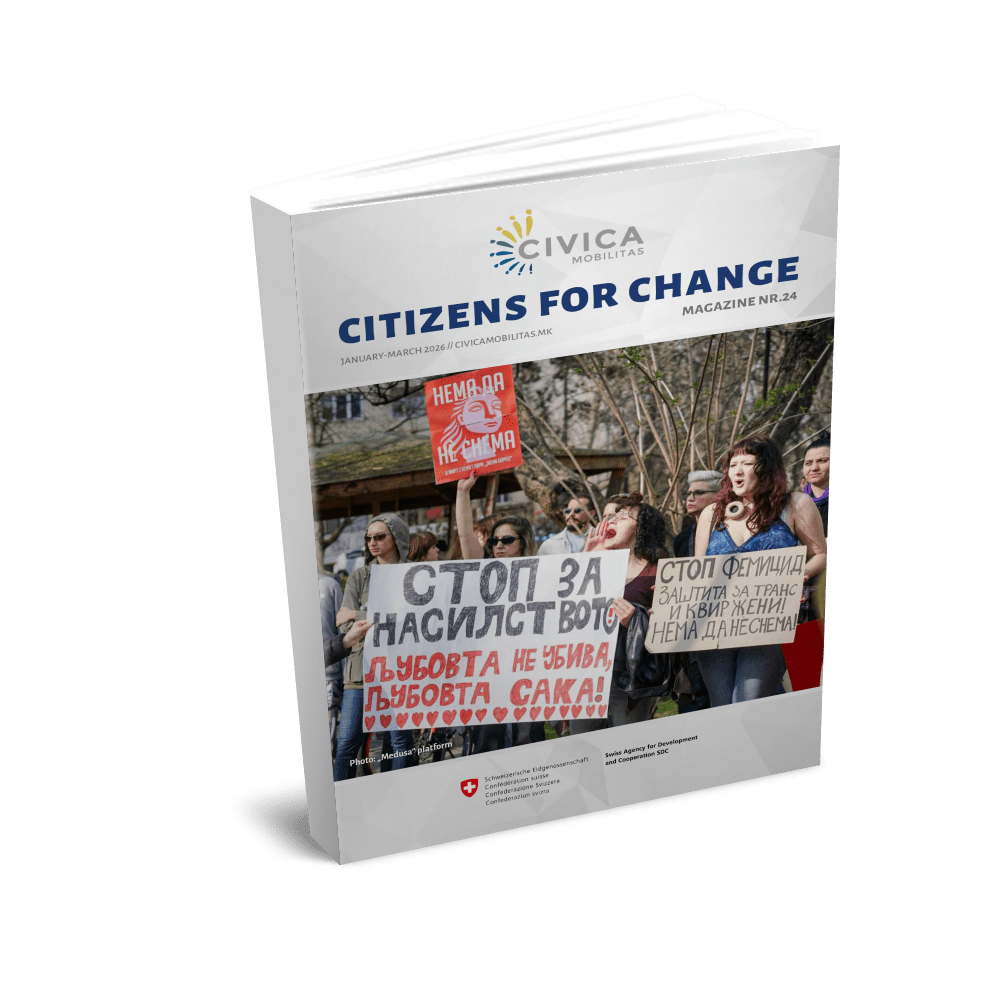
The draft Law on Associations and Foundations, i.e. comments and proposals related to it have resulted in a number of debates in the civil sector at the beginning of the year. This was understandable if one takes into consideration that it concerns a basic law for functioning of CSOs. The submitted around 130 comments very clearly show the interest in how the work of the CSOs will be regulated and if the new law would expand or narrow the space for work of the civil sector. Mostly commented are the articles of the draft law that concern the economic activities and cofinancing of projects by international donor. We have not seen the new text of the draft law yet, and according to the announcements that it would be sent for review by the Venice Commission, there are ample chances that we will finish the year as it is.
Parallelly to this debate, the financing of the CSOs has remained a chronic theme. The UNDP colleagues have presented a research according to which the public funds for CSOs had almost quadrupled in six years, but that there was a structural problem behind this figure. According to the research, more than 37 percent of the national funding in 2024 was distributed without a public call and without a transparent procedure. At local level, sports absorb up to 95 percent of the funds, leaving a marginal budget for the organizations working with the youth, women, environment and social justice.
Apart from these two topics, dedicated to the environment in which CSOs function, the new issue of “Citizens for Change” newsletter also covers the work of the Council for Cooperation between the Government and Civil Society, as well as the new interactive platform of BCSDN which makes the regional data of the civil sector more accessible.
When it comes to the topics related to civil participation, the new issue follows the CSO advocacy efforts related to free health care of Roma women and their children, the capacities of the Public Traffic Enterprise, the functionality and accessibility of the public space for all, the work of the Agency for Free Access to Information, as well as the energy transition which is a deep social transformation.
With civic activism, the organizations have addressed more issues related to the rights of women and girls, environment, personal data protection, inclusion of people with disabilities, etc.
The new issue of “Citizens for Change” follows these processes, documents them and believes that informed civil sector is the best corrective of the political decisions.