News from CSOs

  • Urgent harmonization of the regulatory framework in the Balkans with the Digital Services Act–crucial for the fight against disinformation

    Bardhyl Jashari, Executive Director of the Metamorphosis Foundation | Photo: Vancho Dzambaski

    The lack of legal and institutional mechanisms to protect the digital space in the Balkans makes the region vulnerable to manipulation, disinformation, and foreign influence. While the European Union’s Digital Services Act (DSA) establishes clear rules for greater transparency and accountability of online platforms, countries in the region still lack a similar regulatory framework.
    The collective fight against disinformation is not just about correcting falsehoods. It focuses on preserving our democratic societies in which citizens make decisions and debate based on arguments. The fight focuses on strengthening media literacy at all levels, making societies resilient to external influences and interference. Today, fact-checking is under attack, and with it, democracy. This was highlighted at today’s conference titled “Together for Truth: Whole-of-Society Approach to Safeguard Democracy,” held in Skopje and organized by the Metamorphosis Foundation in celebration of International Fact-Checking Day, April 2.”
    The conference was opened by Ben Nupnau, Deputy Head of Delegation of European Union in North Macedonia, Stephan Mundges, Coordinator of the European Fact-Checking Standards Network (EFCSN), and the Director of the Metamorphosis Foundation, Bardhyl Jashari.
    “Metamorphosis is an example in Macedonia and beyond in the fight against disinformation. With your work, you are fighting against the erosion of democratic values. In the EU, we have mechanisms to combat disinformation with the Digital Services Act and the European Media Freedom Act. The online platforms we have are transparent and independent journalism is spread through them. We are with you when it comes to greater protection of journalists and fact-checkers. This conference is an opportunity to exchange practices and strengthen our efforts to preserve democracy and independent media outlets,” said Nupnau, Deputy Head of Delegation of the European Union in North Macedonia.
    Stephan Mundges, Coordinator of the European Fact-Checking Standards Network (EFCSN), stressed that it is everyone’s task to strengthen democracy and continue the fight against the spread of disinformation.
    “To be lied to and manipulated is to not be free. We meet here in a time of crisis. Fact-checking is under attack, and with it democracy. These attacks come from the East, but they are also starting to come from the West. Political pressure from the United States is making major American technology companies withdraw from the fight against disinformation. Meta’s program is not perfect, but it is the best fact-checking program on a major social network. It does not remove content, but checks for truthfulness. About 95 percent of users who see those tags do not click on the post, because they do not want to see false content. If Meta stops using fact-checking, Europe will be more vulnerable, and the income of fact-checkers will decrease. Meta is not the only one withdrawing, but also TikTok, Microsoft, and Google,” Mundges emphasized.
    He added that fact-checkers are under attack in the Western Balkans and that there are unfounded raids and investigations against them and that the situation is not great. Mundges highlighted the police raid on the offices of the civil society organization CRTA from Serbia, which is also a member of the EFCSN.
    “What can we change? Fact-checkers will not disappear, we have a big project, with which we will work to strengthen our pan-European network for all relevant stakeholders, because the work of fact-checkers is invaluable and it remains to function independently of political influence,” added Mundges.
    The Executive Director of the Metamorphosis Foundation, Bardhyl Jashari, spoke about the need for urgent harmonization of the regulatory framework of Balkan countries with the principles of the Digital Services Act.
    “Western Balkan countries still lack the necessary legal, technical, and institutional safeguards to protect people’s rights online. Unlike the EU, we do not benefit from the protection offered by the Digital Services Act, yet we all live in the same digital space. This creates a dangerous gap in the security and integrity of the Internet in Europe. We therefore call for the urgent alignment of the regulatory framework of Balkan countries with the principles of the Digital Services Act and the creation of a strong regional framework for information integrity,” Jashari said.
    He noted that citizens from the Western Balkans are significantly exposed to harmful and illegal content on the Internet and that disinformation is everywhere–infiltrating political discourse, undermining trust, and distorting reality.
    “Meanwhile, social media platforms, especially the so-called big online platforms, continue to profit from algorithms and amplify disagreements and misinformation, while being largely irresponsible in our region,” Jashari added.
    Soren Liborius, Chief Advisor at the European External Action Service (EEAS), gave a video address at the conference.
    “Disinformation is a core problem that we need to continue to address. In 2015, the heads of EU member states and governments agreed that something had to be done to combat Russian disinformation. Then came the start of the war in Donbas, and all the activities that led to today’s aggression took place, and therefore it was decided that a team should be formed to combat Russia’s ongoing efforts to spread disinformation. The EEAS has a public platform on which we communicate our findings to the public, what are the trends that are present, and how they are related to political developments. We have also developed our own methodology. On the platform euvsdisinfo.eu, we have a database, available to the public, and there are also examples of how the Russian side spreads disinformation,” said Liborius.
    The EEAS report on threats from foreign manipulation and interference in information was presented by Chiara Pacenti, Data Analyst, who spoke about FIMI and the threat on a global scale. She noted that Ukraine is the main target when it comes to Russian FIMI attacks, which aim to weaken Western ties, NATO, EU, G7.
    Today’s all-day international conference focuses on the threats of disinformation, foreign manipulation and interference (FIMI), electoral integrity, fact-checking and cross-sectoral cooperation. In Tirana, an evening forum “Democracy Matters–Facts Matter” will be held, organized by the Faktoje Center. The forum will highlight the fact-checking landscape in Albania, as well as regional cooperation, and will honor journalistic excellence with the Fatos Baxhaku Award.
    Author: Antonija Popovska

  • Final Conference of the Digital Activism Program

    On March 28, 2025, the final conference of the Digital Activism Program was held. The conference was held in Warsaw, Poland, with the participation of over 100 civic activists, representatives of civil society organizations and experts in the field of digitalization and the use of innovative tools. The Digital Activism Program was a three-year project of TechSoup Global, and the Metamorphosis Foundation was a partner in implementing activities in North Macedonia, Serbia and Kosovo.
    Through the Digital Activism Program, 18 grants were implemented to support civil society in North Macedonia, Serbia and Kosovo, more than 100 participants were part of trainings on cybersecurity, data visualization, community building, and public communication, as well as recognizing and preventing disinformation. As part of the Digital Activism Program, two editions of the Megaphone international conference were held, where 15 participants from the Western Balkans had the opportunity to meet, network, and learn from experts in the field of artificial intelligence, communication techniques, and preventing disinformation. 47 short videos were prepared and published on topics of media literacy, open data, cybersecurity and cyber hygiene, as well as artificial intelligence.
    The Digital Activism Program was aimed at increasing the capacities of civil society organizations from North Macedonia, Serbia, and Kosovo, through introduction to innovative technological tools for work, training in cybersecurity and disinformation recognition, mentoring aimed directly at the specific needs of the organizations, and building support networks.

  • Visit of the Deputy Minister of the Ministry of Foreign Affairs and Trade

    On 04.03.2025, in municipality of Gradsko, we had the honor to welcome Gjoko Velkovski, the deputy minister of social policy, demographics and youth, into our housing which is part of the social service “Assisted Living”. During his visit, the deputy minister met with the employees of APCPOD-Veles, and we had the privilege to present our […]
    The post Visit of the Deputy Minister of the Ministry of Foreign Affairs and Trade appeared first on Здружение на лица со церебрална парализа и други попречености – Велес.

  • Workshop – From Statistical Data to Effective Policies

    📊 From Statistical Data to Effective Policies!
    Today, we held the workshop “From Statistical Data to Creating Effective Economic and Development Policies”, with a focus on gender statistics, in collaboration with the State Statistical Office (MakStat / MakStat). 👥
    🔍 Together with representatives from all relevant institutions, we explored:✔️ The available data from the State Statistical Office✔️ Their utilization in research analyses and Finance Think’s models✔️ The possibilities for integrating findings into policymaking
    🎯 Our goal: To ensure that data serve as the foundation for evidence-based policymaking – for more inclusive and equitable development!
    Supported by British Embassy Skopje
    A special thanks to the Ministry of Finance, Ministry of Labor and Social Policy, Ministry of Education and Science, Ministry of Health, Employment Agency of North Macedonia, Ministry of Energy, Mining, and Mineral Resources, UNICEF MK, and UN Women Skopje for their participation.
    #EvidenceBasedPolicies #GenderStatistics #EconomicDevelopment #FinanceThink #MakStat
    📸 More photos: https://www.flickr.com/…/fosim/albums/72177720324734083/

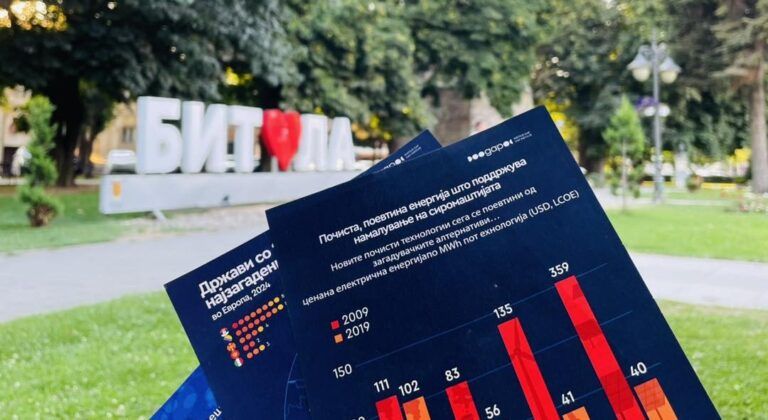
  • Green Resource Hub on the ground in the village of Ropotovo: Together for more sustainable and economical homes

    Since February 2025, our team has been actively working with the residents of the village of Ropotovo, as part of the initiative to improve energy efficiency and sustainable living. In addition to the advisory sessions at the premises of the Municipality of Dolneni, together with the local population, we conducted individual assessments of the energy efficiency of their homes and business buildings. The assessments were carried out using a specially developed questionnaire, which allowed for a precise analysis of the current situation.

    As a result of this fieldwork, we developed and assigned 4 individual energy efficiency plans for households in the community. These plans contain specific recommendations for improving insulation, reducing energy losses and optimal use of renewable sources, in order to reduce costs and improve the quality of life.

    👉 “With this plan, we finally know what we can improve and how to save. We got ideas that we never thought could make such a difference to our bills and heat at home.” — says one of the residents of Ropotovo, a participant in the initiative.The activities will continue in the coming period, with the expansion of assessments and the development of plans for other households in the village. With this, the Green Resource Hub continues to be a partner of communities for a more sustainable, more economical and healthier environment.

    The activity is part of the project: “Smart Green Village for a Sustainable Future”, which is implemented with the support of the Open Society Foundations – Western Balkans.

  • DOCUMENTARY / INTELLIGENCE SERVICES UNDER SCRUTINY: HOW TRANSPARENT IS NORTH MACEDONIA’S SECURITY SECTOR?

    “The security sector is synonymous with secrecy. Covert operations, secret services, wiretapping, undercover agents. Transparency in this sector is often seen as an oxymoron, while accountability appears to be a nearly impossible mission.”This is how the documentary produced by the BIRC Institute, with the support of the Geneva Centre for Security Sector Governance (DCAF), begins. The film examines security sector reforms and their impact on the country’s democratic development.

    [embedded content] 
    The walls of secrecy surrounding the security sector have been built in the name of national security. Public access to information has long been restricted to prevent potential threats. This was particularly evident during the Cold War. In the 1990s, as the Soviet Union collapsed and democratic waves spread globally, some of these barriers fell. This period saw the exposure of numerous scandals previously hidden from public scrutiny.
    Oversight of the security sector is crucial
    Metodi Hadzhi-Janev, a security expert and university professor engaged by DCAF, conducts training and workshops for civil society organizations and the media. His goal is to promote effective civilian oversight of intelligence and security services. He is also part of C3I, an organization that has developed indicators to assess the performance of intelligence services, focusing on transparency, accountability, and effectiveness.
    “In democratic states, oversight of the security sector is essential because it wields immense power—unmatched by any other institution. To prevent abuses, oversight mechanisms must function as correctives to ensure these services operate within legal and ethical boundaries,” Hadzhi-Janev said.
    Abuses within security agencies have underscored the need for stronger oversight, making this issue a fundamental prerequisite for normal state functioning. However, implementing effective oversight remains a significant challenge.
    “Obstacles to oversight vary between societies and often reflect cultural, historical, or political factors,” Hadzhi-Janev noted.
    Legal framework needed to regulate intelligence services
    North Macedonia’s security sector has undergone several reforms aimed at establishing a democratic framework and safeguarding citizens’ rights. Current legislation provides a foundation for better oversight and transparency, but continuous and inclusive reforms are necessary.
    “A legal framework is essential for intelligence oversight. While the existing laws are not inherently flawed, their enforcement is problematic. Obtaining security clearances is exceptionally difficult, even for those authorized to conduct oversight. Additionally, intelligence personnel must be educated on their accountability and the necessity of external scrutiny,” said Iskra Koroveshovska, editor at TV Alfa.
    Despite progress, North Macedonia’s security sector remains largely opaque—similar to other countries where national security often takes precedence over human rights.
    “Our intelligence services have some level of openness—they maintain websites, publish annual reports, and engage with the public to some extent. The Intelligence Agency, for instance, provides insights into its activities. However, compared to the UK’s MI5 and MI6, which operate with greater transparency and public engagement, North Macedonia still lags behind,” said Aleksandar Stojanovski, an author of a study on the transparency and accountability of intelligence services in the UK, Slovenia, and North Macedonia, conducted under DCAF’s intelligence sector reform program.
    Effective oversight is key to greater transparency and accountability
    Without robust oversight, secrecy within the security sector can become problematic, particularly amid global conflicts that heighten security threats. Effective oversight is crucial for enhancing transparency and accountability, but it requires concrete steps.
    “First, awareness must be raised, followed by capacity-building efforts. Public debate should highlight why transparency matters and how it benefits national security,” Hadzhi-Janev said.
    Stojanovski emphasized that “media outlets possess some capacity to monitor intelligence services, but this must be expanded. Civil society organizations, meanwhile, remain limited in this field.”
    While parliament and the government play vital roles in oversight, civil society and the media are equally crucial for independent monitoring. Transparency requires openness and access, while accountability demands mechanisms for responsibility.
    “These indicators are the result of extensive research, including workshops and analysis. They help improve transparency, reduce public skepticism, and ensure intelligence services operate efficiently,” Hadzhi-Janev added.
    The effectiveness of civilian oversight depends on the capacity of media and non-governmental organizations. In North Macedonia, few media outlets have the resources for in-depth investigative reporting, while civil society organizations lack the necessary specialization.
    One of the participants in these training programs, Koroveshovska, remarked: “Media oversight capacity is minimal. After 20 years in journalism, I only recently learned—through DCAF training—how to cover intelligence services effectively. This highlights the significant gap in journalists trained for this field.”
    (This documentary was produced in April 2024)

  • Trust in Civil Society – Citizens’ Views

    The Macedonian Center for International Cooperation (MCIC) has implemented its regular survey of trust in the civil society. In 2024, the index of trust in the civil sector reached 42.9%, which is an 8.2 percentage points drop compared to 2021. The trust in civil society organizations is 39.4%, with a significant…

  • “Together We Are Stronger” – supported by the Kvinna Till Kvinna Foundation

    “Together We Are Stronger” 💪— This was the title of the national conference organised in North Macedonia 🇲🇰 by our partner organisation Association of Persons with Cerebral Palsy and other Disabilities from Veles. The conference, as supported by Kvinna till Kvinna and Sweden, highlighting the challenges and opportunities of women and girls with disabilities. The […]
    The post “Together We Are Stronger” – supported by the Kvinna Till Kvinna Foundation appeared first on Здружение на лица со церебрална парализа и други попречености – Велес.

  • Join Us for International Fact-Checking Day Events in Skopje and Tirana!

    🎯 Join Us in Skopje and Tirana on April 2 for the International Fact-Checking Day!
    🗓️ April 2, 2025 | Skopje & Tirana
    #TogetherForTruthFacts Matter in Safeguarding Democracy
    🧩 To mark International Fact-Checking Day, the Anti-Disinformation Network for the Balkans (ADN-Balkans) invites you to join two regional events taking place in Skopje and Tirana, gathering fact-checkers, journalists, researchers, policymakers, and civil society leaders from across the Western Balkans and Europe.
    🔹 SKOPJE | 10:00–16:30 | 📍 Hotel Holiday Inn
    🔹 Agenda available here.
    A full-day international conference hosted by Metamorphosis Foundation, focusing on disinformation threats, foreign information manipulation and interference (FIMI), election integrity, fact-checking, and cross-sectoral collaboration.
    🔹 TIRANA | 17:00–19:00 | 📍 Destil
    An evening forum organized by QENDRA Faktoje, highlighting Albania’s fact-checking landscape, regional cooperation, and honoring journalistic excellence with the Fatos Baxhaku Award.
    💬 What to Expect
    Latest insights from the European External Action Service (EEAS) on FIMI threatsAnalysis of the geopolitical impact of disinformation on NATO-EU-Western Balkans relationsRegional experiences on election integrity, platform accountability, and content moderationTools and approaches for building societal resilience against online manipulationAward ceremony recognizing excellence in investigative journalism in AlbaniaOpportunities for cross-border collaboration, networking, and exchange
    🎙️ Featured Speakers
    📍 Skopje Conference
    Ben Nupnau – Deputy Head of Delegation, European Union in North MacedoniaManon Janssen – Deputy Ambassador, Kingdom of the Netherlands to North MacedoniaStephan Mundges – Coordinator, European Fact-Checking Standards Network (EFCSN)Bardhyl Jashari – Executive Director, Metamorphosis Foundation, North MacedoniaChiara Pacenti – Data Analyst, EEASMartha Turnbull – Director, Hybrid Center of Excellence, FinlandBeaudine Verhoek – NATO Public Diplomacy DivisionSanda Svetoka – Senior Expert, NATO StratCom, LatviaKatarina Klingova – Senior Fellow, GLOBSEC, SlovakiaLaura Jasper – Strategic Analyst, HCSS, NetherlandsSonya Dimitrova-Martinyuk – Editor, StopFake, UkraineIoana Cosma – Country Director, IFESTamara Branković – Deputy Program Director, CRTA, SerbiaBardhi Bakija – Executive Director, Sbunker, KosovoBiljana Georgievska – Executive Director, Council of Media Ethics of MacedoniaEmilija Petreska-Kamenjarova – Deputy-Head of programme – Agency for Audio and Audiovisual Media Services of Republic of North MacedoniaRuurd Oosterwoud – Founder & CEO, DROG, NetherlandsJona Plumbi – Journalist, Faktoje, AlbaniaMaida Ćulahović – Media and Digital Policy Expert, Why Not, Bosnia and HerzegovinaNacho Strigulev – Journalist, Blue Link, BulgariaDespina Kovačevska – Media Monitoring Specialist – Metamorphosis Foundation, North Macedonia
    Maja Sever – President, European Federation of JournalistsMarko Milosavljević – Professor, University of Ljubljana, SloveniaRaša Nedeljkov – Program Director, CRTA, SerbiaGoran Rizaov – Media program manager – Metamorphosis Foundation, North Macedonia

    📍 Tirana Conference
    Klodiana Kapo – Executive Director, QENDRA Faktoje, AlbaniaBardhyl Jashari – Executive Director, Metamorphosis Foundation, North MacedoniaCoral Garcia – Maldita.es, SpainEnzo Panizio – Pagella Politica, ItalySilvio Gonzato – Ambassador, EU Delegation in Albania
    🎉 Includes the “Fatos Baxhaku” Award Ceremony for investigative journalism and a networking cocktail.
    ✨ Be part of the regional movement for information integrity.
    Let’s stand together for truth—across borders, across sectors, and across Europe.
    📲 To sign up for the conference in Skopje please fill in this form: https://forms.office.com/e/Ng9C1aqwM2
    #TogetherForTruth #FactCheckingDay #ADNBalkans #DemocracyMatters #InfoIntegrity

  • Panel discussion on the topic: Violence and women with disabilities

    Panel discussion on the topic: Violence and women with disabilities on the campaign “16 Days of Activism against Gender-Based Violence”. We remind you that fighting to end violence against women and girls is an on-going, everyday battle. Let’s create a world where every woman feels safe, respected, and empowered— a world where the rights of […]
    The post Panel discussion on the topic: Violence and women with disabilities appeared first on Здружение на лица со церебрална парализа и други попречености – Велес.

Нема повеќе содржини

Нема повеќе содржини