

Clicks, money and elections: Political online ads to have digital footprints
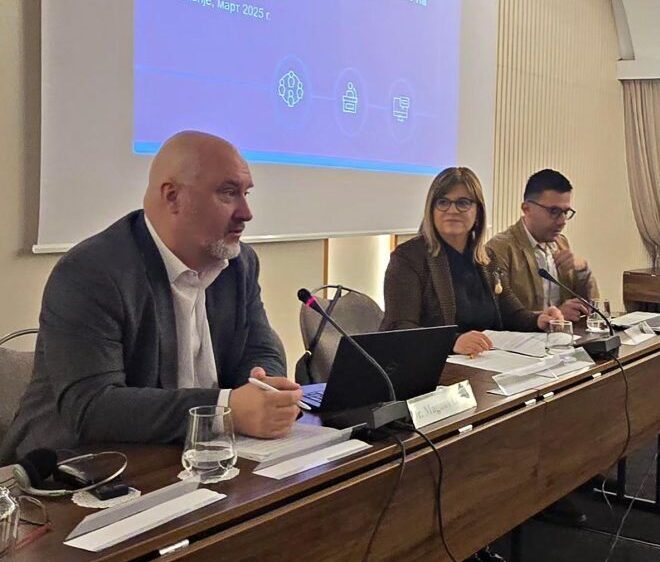
Online advertisements should have so-called (digital) fingerprints, so that it can be tracked who pays for those advertisements, for or against whom they are intended. Such fingerprints of advertisements should not only contain as much information and detail as possible but should also be kept in appropriate files so that there could be greater transparency, and they could be easier to track. These were some of the conclusions that Magnus Öhman, Senior Political Finance Advisor at the International Foundation for Electoral Systems (IFES), shared at today’s briefing with journalists in Skopje, organized by the Metamorphosis Foundation and IFES, within the framework of the project “Money, Media and Elections in North Macedonia.” Dr.Magnus Öhman gave a comparative perspective on political advertising around the world, as well as some of the good practices, saying:
– Paid online funding, as expected, represents the largest share of political funding during elections. For example, in the last two months of last year’s US presidential election alone, $700 million was spent on Meta and Google alone, out of a total of $1.2 billion spent on online advertising during the campaign
Dr.Öhman emphasized that a single country should not be taken as an example to completely rewrite the system, the law on financial reporting, especially since, in his opinion, many of the regulatory frameworks and laws lag behind new methods of political advertising. He emphasized the example of Donald Trump, who during the presidential election allocated less funds for political advertising and turned more to influencers and online commentators.
This is exactly what Emilija Petreska Kamenjarova from the Agency for Audio and Audiovisual Media Services spoke about at last week’s panel discussion. She pointed out that the media regulation covers influencers who share videos on online platforms in order to inform, entertain or educate users, and from that they make economic profit. And with the new rulebook that the Agency is to adopt this year, the criteria for which influencers will be subject to legal regulation will be specified.
“It is sufficient to reference online advertising in the [electoral] code,” says Dr. Öhman, “which would provide adequate oversight, thereby allowing regulatory commissions the opportunity to clarify the method of reporting and informing on online advertising, define what constitutes online political advertising, and specify what does not”
He also emphasizes that it is not only “states”, i.e. political entities, that are obliged to be as transparent as possible about advertising funding, but also the platforms and advertisers themselves where these ads are placed. In other words, how much money the candidates have allocated, how much and from whom the platforms have received it.
He emphasizes that EU regulations will only now need to be harmonized among member states, especially since they themselves have different laws on political advertising. Thus, аll member states will monitor the alignment separately, and the EU Commission will monitor candidate countries such as North Macedonia.
Furthermore, Dr. Öhman shared several good practices that are good to implement. The so-called (digital) imprints were emphasized several times, with which it would be possible to track who pays how much for those ads, for or against whom they are intended. Such imprints would be collected in some kind of files, similar to the Meta and Google ad libraries. As a positive example resembling such a system, the “Political Advert Repository” or PADRE from South Africa was singled out.
PADRE is actually an initiative of the South African Electoral Commission that aims to systematize online and digital political advertisements into easily accessible libraries that will increase transparency in electoral processes.

Photo: Screenshot from the South African Political Advert Repository, PADRE
Although, as Dr. Öhman shared and as can be seen from the website itself, the library is empty and has yet to be filled, the goal is to make the process as easy and quick as possible. This is the second good practice recommendation that Dr. Öhman shared. He believes that this process of reporting political advertising funding should be made simpler, so that it can be monitored.
The last example Dr. Öhman shared is adding some kind of code to the ads themselves. These codes would be placed beneath the ad and could be accessed in a file like PADRE. Alternatively, the codes could include a link that redirects to a library, where you can view the details of the ad’s origin, including the individuals responsible and the amount paid for the advertisement.
![[Aggregator] Downloaded image for imported item #51694](https://civicamobilitas.mk/wp-content/uploads/2026/10/1_cover-600x400-1.jpg)

![[Aggregator] Downloaded image for imported item #51442](https://civicamobilitas.mk/wp-content/uploads/2026/10/VACANCY_Comms-officer-600x400-1.png)
![[Aggregator] Downloaded image for imported item #51393](https://civicamobilitas.mk/wp-content/uploads/2026/10/share-default-768x403.jpg)