Untitled Design 1 1

Pedaling Towards a Sustainable Future: The Impact of the RE-CYCLING Project

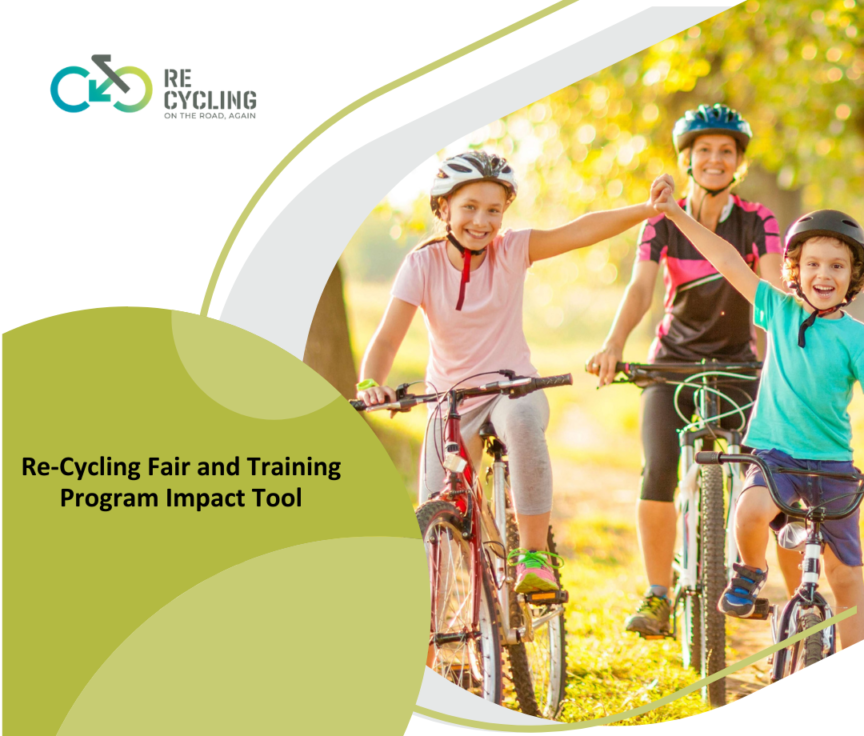
At Eco Logic, we are committed to promoting sustainability through innovative initiatives. One of our standout projects, RE-CYCLING: Bike Reuse and Riding Fair, co-funded by the Erasmus+ Sport Program, has made a lasting impact by encouraging green mobility, circular economy practices, and active lifestyles among children and communities across Europe.

Reviving Cycling, Reducing Waste

The RE-CYCLING project was born out of a dual necessity: reintroducing kids to physical activities post-pandemic and addressing the growing problem of bicycle waste. Children outgrow their bikes quickly, leading to unnecessary waste and increased consumption. Our initiative tackled this issue by integrating bike reuse, repair workshops, and cycling fairs, fostering a culture of sustainability in the biking sector.

Key Achievements of the Project

Over the past year, RE-CYCLING has engaged young cyclists, families, and educators across four European countries—North Macedonia, Austria, Italy, and France—through hands-on activities, training programs, and community fairs. Here’s how we measured our success:

Knowledge Growth

Through our Green and Sustainable Biking training program, participants gained a deeper understanding of circular economy principles and sustainable cycling practices. Surveys showed a notable increase in awareness, particularly regarding bike reuse and repair.

Promoting Green Mobility

One of the project’s goals was to increase cycling frequency among students. While data collection faced some challenges, survey results indicated strong motivation for cycling, with safer infrastructure and peer encouragement as key factors for increased bike usage.

Lowering Environmental Footprints

We assessed the carbon footprint of our RE-CYCLING fairs using CO₂ calculators, ensuring these events adhered to eco-friendly principles such as minimal waste, short supply chains, and plastic-free operations. Though comparing emissions to similar events proved difficult, we remain committed to refining our sustainability efforts.

Economic Impact and Bike Repair Success

One of the most impactful aspects of the project was offering free bike repair services. The French RE-CYCLING fair, for example, successfully repaired nearly 100 bicycles, resulting in an estimated €1,900 in savings for participants. By keeping bikes in use longer, we not only reduced costs for families but also minimized waste.

What’s Next?

The success of RE-CYCLING has shown that small-scale circular economy initiatives can drive real change. Moving forward, we aim to:

  • Expand community engagement and repair services
  • Advocate for safer cycling infrastructure
  • Standardize data collection for better impact measurement

By embracing sustainability in cycling, we are not just encouraging healthier lifestyles but also taking meaningful steps toward a greener future. Want to be part of this movement? Stay tuned for our upcoming projects and join us in making a difference.

Ride Green. Repair More. Waste Less.

Funded by the European Union.
Views and opinions expressed are however those of the author(s) only and do not necessarily reflect those of the European Union or the European Education and Culture Executive Agency (EACEA).
Neither the European Union nor EACEA can be held responsible for them.

This publication is part of the project “Re-Cycling – Bike Reuse and Riding Fair”, Project

Оваа вест изворно е објавена на веб-страната на Здружение на граѓани за заштита и унапредување на животната средина "ECO - LOGIC"

Продолжи со читање

  • Promotion of Minorities’ Participation in Multilevel Governance

    The PACT project officially started in Brussels with a 2-day international conference and workshop
    On 10 and 11 March 2026, Brussels hosted an International Conference and Workshop entitled “Promotion of Minorities’ Participation in Multilevel Governance”.
    It brought together experts coming from different realities, with a common goal: sharing good practices on how to promote inclusive participation of under-represented minorities, people with migratory background, refugees, Roma and other marginalised communities in local decision-making processes.
    The Conference
    The event opened on the morning of Tuesday 10 March with 2 panels.
    The first one – entitled “Minority Participation in Multilevel Governance: EU perspectives” – was moderated by Mohammed Mustafa (ALDA – European Association for Local Democracy) who introduced the main EU policy developments in the areas of anti-poverty and anti-discrimination, and migration, setting the tune of the conversation with the speakers:
    Julie Pascoet (European Network Against Racism – ENAR) focused on the European Anti-Discrimination Strategy,  highlighting how much this tool is necessary (but also how far it is to address the needs of the moment), and how civil society networks  play a crucial role to bridge the gap between EU policy intentions and the lived experiences of marginalised communities.
    Fernando Vasco Chironda (European Anti Poverty Network – EAPN) tackled the EU Anti-Poverty Strategy, underlying that – by excluding migrant people from vulnerability frameworks – the strategy risks deepening marginalisation of those most affected, and that local authorities are those with the responsibility to ensure inclusive participation spaces and adequate resources for people.
    Mojib Atal (Migration Policy Group – MPG) focused on the Migrant Integration Policy Index, reporting a concerning stagnation in political participation across the EU, and highlighting how multilingual education could serve as a democratic tool by recognising linguistic diversity rather than privileging a single dominant language.
     

    The second panel – “From Welcoming to Active Participation: Challenges, Practices and Power” – was moderated by Maddalena Alberti (ADL Zavidovici) and had the goal to hear from experts who exchanged ideas, perspectives and best practices for the inclusion of underrepresented minorities at a local level.
    Anna Coulibaly (International Catholic Migration Commission – ICMC Europe) introduced the Community Sponsorship, a community‑led integration model where volunteers, supported by civil society and approved by governments, commit to hosting and supporting refugees for at least a year.
    Loubna Reguig (European Forum for Youth with Lived Migration Experience – VOICIFY) urged how self‑led organisations are essential to defend the political participation rights of young people with migrant backgrounds, since they create spaces where youth feel included, exchange knowledge and pool resources.
    Queenie Kessie (IOM Diaspora Advisory Board – DAB) showed how diaspora advisory structures can move beyond consultation and concretely ensure fair policies are good for migrant people and societies.
    Ismail Alkhateeb (PLACE Network) brought the organisation’s extensive experience to show that the inclusion of migrant people in local participatory processes can happen only when institutions and local communities jointly define problems, design solutions and test them at micro‑level.

    Conclusion
    Hosted by Amazone asbl (Brussels) and co-organised by ALDA (France), ADL Zavidovici (Italy), KMOP (Greece), Center for Intercultural Dialogue (North Macedonia), PLACE Network (France), Fons Català (Spain) and Konkáv Alapítvány (Hungary), the event saw the participation of public authorities, policy makers, organisations, media, underrepresented minorities united by the wish to learn on how working together is possible for a fair and equal European policy system.
    The initiative was part of the European-funded project PACT (Participatory Action for Transforming Communities) whose aim is empowering under-represented minorities in local communities in Europe.

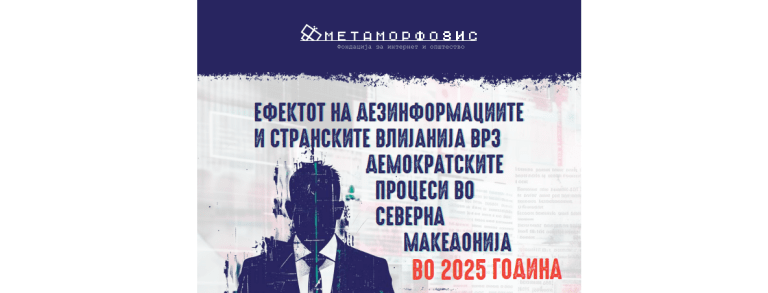
  • Metamorphosis publishes research on the effects of disinformation and foreign influence on democratic processes

    The Metamorphosis Foundation has published the research “The Effect of Disinformation and Foreign Influences on Democratic Processes in North Macedonia in 2025,” which analyzes how disinformation and propaganda narratives affect public debate, trust in institutions, and citizen participation in democratic processes. The research combines an analysis of disinformation narratives and a survey of a nationally representative […]

  • On current economic topics, Blagica Petreski in Win-Win

    https://www.facebook.com/TVTelma/videos/2347874929012206
    The post On current economic topics, Blagica Petreski in Win-Win first appeared on Finance Think.
    The post On current economic topics, Blagica Petreski in Win-Win appeared first on Finance Think.

  • AJM Calls for Measured and Professional Communication with Journalists

    The Association of Journalists of Macedonia (AJM) is monitoring the public reaction following the communication between the Minister of Interior Panče Toškovski and journalist Frosina Fakova Serafinović from the media outlet Sloboden Pechat, during yesterday’s press conference, which was also …

  • Public call for participation in the co-creation of the National Action Plan for the Open Government Partnership 2026-2028

    Based on Article 3, paragraph (2), subparagraphs (5) and (6) of the Decision on the Establishment of the Council for Coordination and Monitoring of the 2024-2026 Open Government Partnership Process, No. 16-1662/1 of 02.05.2024, and the Decision on the Amendment of the Decision on the Establishment of the Council for Coordination and Monitoring of the […]
    The post Public call for participation in the co-creation of the National Action Plan for the Open Government Partnership 2026-2028 first appeared on Metamorphosis.

  • AJM and UNDP: Awards for Best Stories on Air Pollution

    The Association of Journalists of Macedonia (AJM), in cooperation with the United Nations Development Programme (UNDP) and with financial support from Sweden, today presented the awards for the best journalistic stories of 2025 on the theme: “Tackling Air Pollution – …