

Open letter to the European Commission from EDRi: Now is the time to double down on EU tech sovereignty
Dear President von der Leyen,
Dear Executive Vice-President Ribera,
Dear Executive Vice-President Virkkunen,
We, the undersigned civil society organisations, trade unions and businesses, urge you to resist political pressure from Big Tech companies and prioritise bold action to protect our democracy and economy. If the EU wants to uphold its sovereignty it must not pause or weaken the
enforcement of its rules.
We have observed with increasing concern how the CEOs of US Big Tech companies have taken turns to ingratiate themselves with the Trump administration in part to mobilise it against EU rules such as the Digital Markets Act (DMA), competition policy and the Digital Services Act
(DSA).
The CEO of Meta, Mark Zuckerberg, has publicly stated that the company would seek to work with President Trump to undermine laws in the EU, directly targeting the DSA but also competition policy enforcement. Similarly, Apple CEO Tim Cook has reportedly petitioned Trump
directly to spare him the fines imposed by the EU following a state aid investigation.
We are relieved to hear you remain fully committed to the strict application of the DSA and DMA and to enforcing those rules wherever companies do not comply in full, following press reports that suggested the Commission was considering pausing ongoing investigations.
The undersigned organisations re-emphasise in the strongest possible terms that enforcing the DSA, DMA and competition policy is essential for protecting people from the worst abuses online, for shielding our democracies against foreign interference, for creating opportunities for
European innovators, for preserving media pluralism, and limiting the dangerous political and market power that Big Tech corporations hold today. We reiterate our support for the Commission services that do the day-to-day enforcement work and we call on you to take bold decisions based on their assessments.
Yet, this time shows more than ever before that to rein in Big Tech the EU also needs to invest in technology that enables a more diverse and decentralised digital public sphere.
Pausing enforcement would be to admit defeat in your work to make the digital sphere fair and safe
Big Tech CEOs trying to curry favour with the US administration is no surprise. In fact, Big Tech companies have achieved their immense market dominance in part by wielding their power to avoid complying with laws such as data protection and competition policy in the past. They have
all heavily lobbied against the EU’s use of competition tools and the DMA since the proposal was first discussed. Apple and Meta also tried to block DMA enforcement with legal actions against the Commission questioning their gatekeeper status.
Now Big Tech CEOs are seeking to mobilise the Trump administration to protect their ability to exploit users and businesses dependent on them, including app developers, publishers, advertisers, and others, all while continuing to stifle potential competitors. This exploitation has
not only created an unfair digital economy; it has directly impacted the dynamism and pluralism of Europe’s economy.
Re-introducing contestability, fairness and choice to the digital market will already be a difficult task. If we pause or weaken enforcement, we risk making it impossible.
Europe must not be bullied by the likes of Musk and Trump into weakening its DSA and DMA enforcement
At the same time, the actions taken by X and Meta are a stark reminder of how vulnerable Europe is in our dependency on the largest online platforms.
X in particular has been in violation of its obligations under the DSA for some time, as underlined by the Commission’s own preliminary findings. The way Musk and his oligarch allies use the platform for anti-democratic political propaganda, lies, and targeted harassment, is a serious
threat to our democracy and political discourse in Europe. We are deeply worried about the power they now wield through the algorithmic manipulation machine that underpins X’s social media feeds.
Meta recently announced a major watering down of their content moderation approach across their platforms. This change abolishes some of the most basic human rights protections, expressly allowing the targeting of marginalised communities and emboldening extremists. While
those changes have been announced to apply to US users first, Facebook, Instagram and Threads are global platforms. US-based, English-language content will inevitably be seen and shared by EEA users as well, and these users are very likely to experience the fallout of this degradation of content moderation. They will rightly ask how the DSA protects them.
Now is the time to double down on EU tech sovereignty
This is not a clash between the EU and the US, but rather an attack from Big Tech against everyone else.
That is why we ask you today for bold political leadership to not only stand up to the bullying from Big Tech firms but also to prioritise strong enforcement of the digital rulebook. In addition, we call on you to invest in a diverse and decentralised digital sphere that is part of a sovereign
digital commons and not owned and governed by proprietary technology corporations, regardless of where they reside.
Yours sincerely,
‘NEVER AGAIN’ Association, Poland
Access Now, Global
AlgorithmWatch, Germany
Aspiration, US
Avaaz, Global
Balanced Economy Project, Global
Bürgerbewegung Finanzwende, Germany
Center for Countering Digital Hate, US/UK
Corporate Europe Observatory, EU
Commons Network, the Netherlands
Cryptee, Estonia
Danes je nov dan, Slovenia
Defend Democracy, Netherlands/Belgium
Democracy Reporting International (DRI), Global
Digital Action, Global
Digitale Gesellschaft, Switzerland
Državljan D / Citizen D, Slovenia
EKŌ, US
European Public Services Union (EPSU), EU
European Digital Rights (EDRi), EU
FEMNET, Germany
Germanwatch e.V., Germany
Goliathwatch, Germany
Gong, Croatia
Homo Digitalis, Greece
Irish Council for Civil Liberties, Ireland
Lobbycontrol, Germany
Matrix.org Foundation, UK
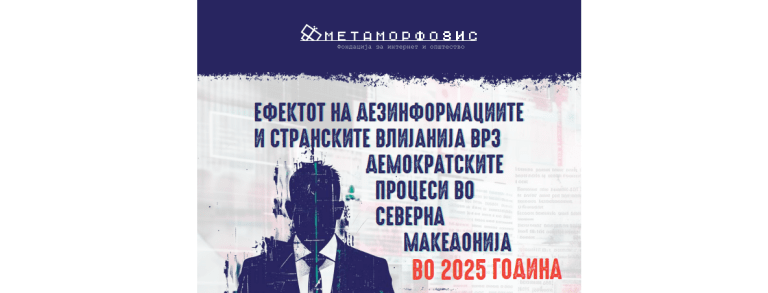
Metamorphosis Foundation, North Macedonia
Nextcloud, Germany
Open Markets Institute, US
Panoptykon Foundation, Poland
People vs Big Tech, Global
Politiscope, Croatia
Rebalance Now, Germany
SHARE Foundation, Serbia
SOMO, the Netherlands
The Good Lobby, EU
The London Story, Belgium / the Netherlands
Transnational Institute (TNI), the Netherlands
Vrijschrift.org, Netherlands
Xnet, Institute for Democratic Digitalisation, Spain
![[Aggregator] Downloaded image for imported item #46020](https://civicamobilitas.mk/wp-content/uploads/2026/03/picture4-1.jpg)

![[Aggregator] Downloaded image for imported item #45513](https://civicamobilitas.mk/wp-content/uploads/2026/03/ace_5119-1-1024x683-1-768x512.jpg)