


Fundamental Rights in 2020: Reflections and Looking Ahead
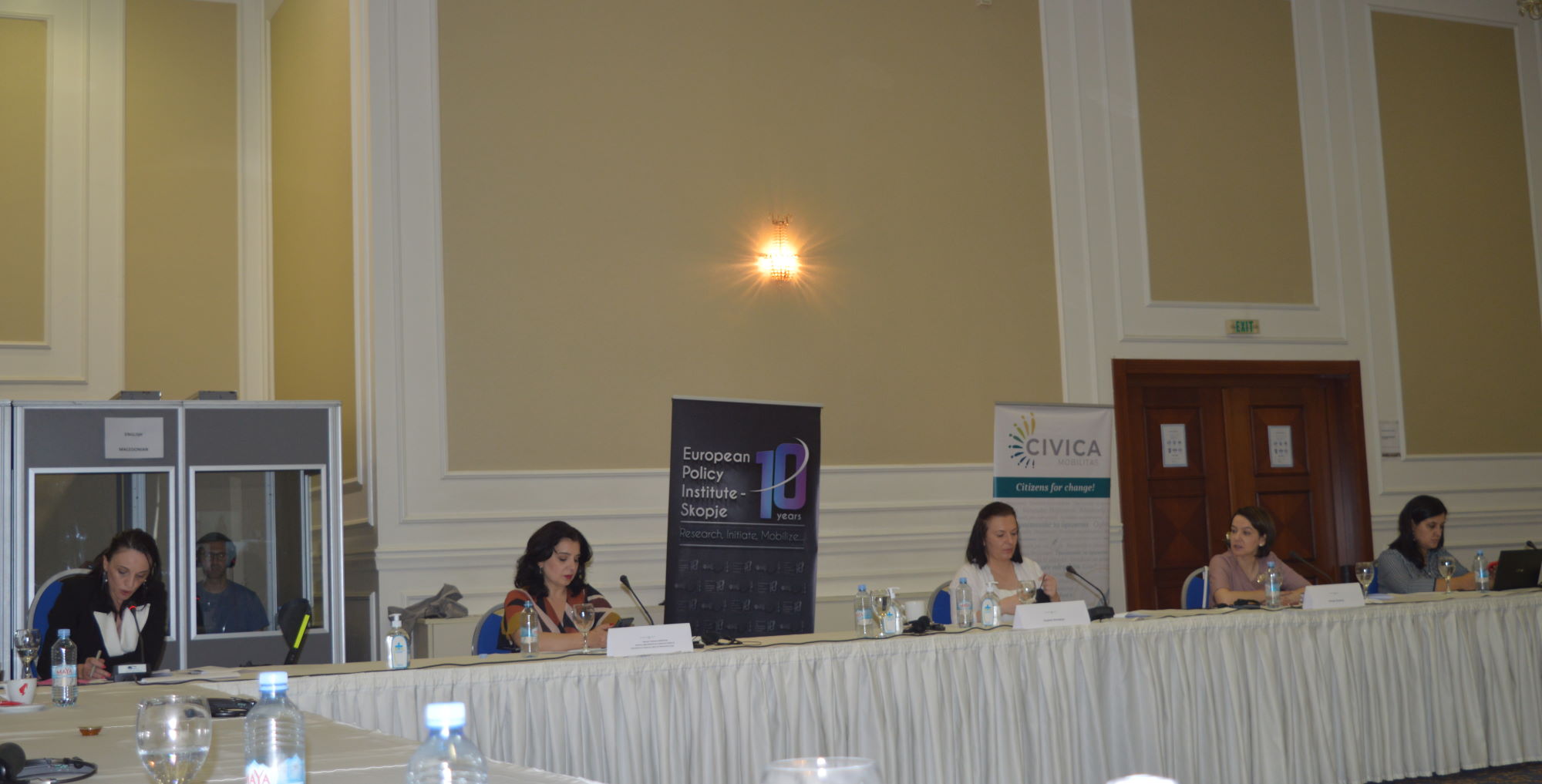
The European Policy Institute (EPI) presented the Fundamental Rights Report published by the Fundamental Rights Agency (FRA) this month. As part of FRANET, EPI is preparing the contribution on North Macedonia to this report the second year in a row. In addition to presenting findings, the panellists also discussed the main thematic focus of this report – the impact COVID-19 pandemic had on fundamental rights.
The event was officially opened by the Director of the European Policy Institute – EPI, Simonida Kacarska, who focused on the cooperation with FRA and the process of work on the report. She highlighted the importance of the FRA observer country status that our country has for a third year in a row. She also called for use of the full potential and opportunities this status offers.
The next address was that of Ombudsman Naser Ziberi, who focused on findings of his annual report, focusing on the impact of the COVID-19 pandemic on human rights, particularly highlighting findings related to education, rights of persons with disabilities and domestic violence. The Ombudsman underlined that it is key to work on finding and maintaining a balance between limitations to rights and the rights themselves.
The Minister of Justice Bojan Marichikj agreed with the previous speakers in saying that this past year was exceptionally challenging for fundamental rights. A particularly important development mentioned in his speech is that of the launch of the preparation process for the Law on State of Emergency that would help to handle similar situations in the future.
The representative of the EU Fundamental Rights Agency, Michael Weiss, presented findings from the Fundamental Rights Report, focusing on the impact of the COVID-19 pandemic. He stressed reinforcing existing inequalities as key outcome of the pandemic. In such situations, the role of national human rights institutions becomes key. Moreover, he pointed to institutions tasked with personal data protection as institutions that have faced major challenges throughout the EU in this situation. He called for wider dialogue on FRA findings and opinions and increased utilization of FRA knowledge and expertise, given the observer country status of the country in the Agency.
The next panel included a discussion on report findings and the impact of the COVID-19 pandemic on fundamental rights, and it was moderated by Uranija Pirovska. The first panellist was Tanja Kikerekova from the Ministry of Justice, who focused on the parallels between the FRA report and the activities currently conducted in North Macedonia. She stressed that the FRA report should serve as a roadmap for future steps to be taken related to the protection and promotion of fundamental rights.
This was followed by a brief presentation of the findings, given by the authors of the Report chapters. Biljana Kotevska, author of chapters “Equality and Non-Discrimination” and “Racism, Xenophobia and Related Intolerance”, spoke on the (re)adoption of the Law on Prevention and Protection Against Discrimination and the establishment of the Commission for Prevention and Protection Against Discrimination as a key development in 2020. She called for urgent implementation of the procedure for the election of the seventh member of this body and reformation of the manner of election of members in national human rights institutions, with a view to ensure they are less susceptible to partisan influence.
Nesime Salioska, the author of the chapter “Roma Equality and Inclusion”, distinguished eight elements that marked the year, those being: protruding social and economic inequality, racial profiling, the ghettoization of Roma amidst the pandemic, disregard for Roma children in planning online classes, hindered access to sanitary services for Roma, media harassment against Roma and escalation of the health crisis to an economic crisis. She highlighted that, though some of the adopted measures were positive, there is a general lack of implementation and adapting measures to suit specific vulnerabilities of Roma.
Vigjilenca Abazi, the author of the chapter “Information Society, Privacy and Data Protection “, underlined the key role of this field in the COVID-19 pandemic. She pointed to the escalation of the long-standing accumulation of problems during the pandemic and that, though several positive legal interventions were made, they should now be followed by adequate implementation thereof.
Gordana Lazhetikj, the author of the chapter “Rights of the Child“, continued previous discussions in terms of the serious impact of the pandemic on children’s right to education. She stressed the importance of faster adoption of laws related to children’s rights and to monetary compensation for victims of violence.
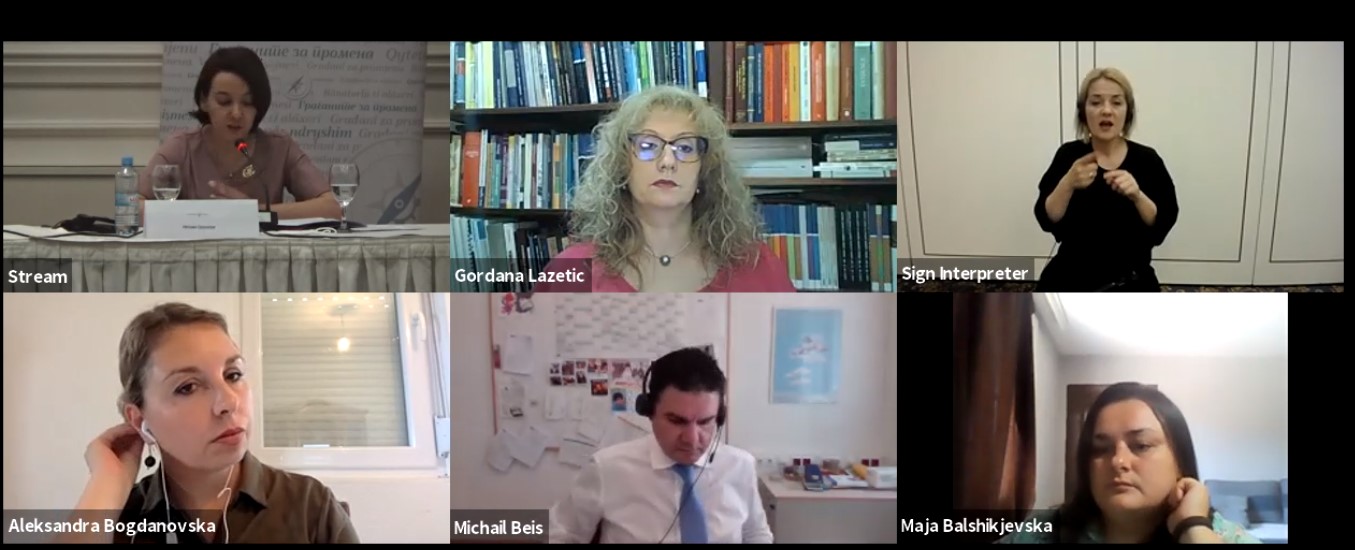
Aleksandra Bogdanovska, the author of the section “Victims’ Rights Directive “, agreed with Lazhetikj in terms of the urgency of adopting these laws. She cited several positive examples from the past year, including the work on the project related to human trafficking, developed with support from the Council of Europe Horizontal Facility.
Maja Balshikjevska, the author of the section “Violence Against Women “, stressed the numerous challenges women victims of violence have faced during the pandemic. She noted the general stalemate in reforming the domestic legal and institutional framework in accordance with the Istanbul Convention, whilst giving specific examples of how this stalemate had manifested in 2020 and called for strengthening efforts to implement this Convention.
Elena Kochoska, the author of the chapter “Developments in the Implementation of The Convention on The Rights Of Persons With Disabilities“, unequivocally stated that most of the limitations persons with disabilities have faced during this period are limitations they are also facing in “placid” times. She highlighted the disputable institutional staffing in terms of disability, focusing on the national coordination body whose members are only parent organizations of persons with disabilities, despite numerous remarks thereto. Yet another example is the Commission for Prevention and Protection Against Discrimination, wherein, despite the several applicants who met the legal requirements, no person with a disability was elected. According to Kochoska, these are clear indicators that institutions are not prepared to involve persons with disabilities. She called on the utilization of opportunities offered by the Convention on the Rights of Persons with Disabilities to handle situations such as the COVID-19 pandemic.
The video from the event is available on our Facebook page:
The post Fundamental Rights in 2020: Reflections and Looking Ahead appeared first on EPI.
![[Aggregator] Downloaded image for imported item #46020](https://civicamobilitas.mk/wp-content/uploads/2026/03/picture4-1.jpg)


![[Aggregator] Downloaded image for imported item #45513](https://civicamobilitas.mk/wp-content/uploads/2026/03/ace_5119-1-1024x683-1-768x512.jpg)