
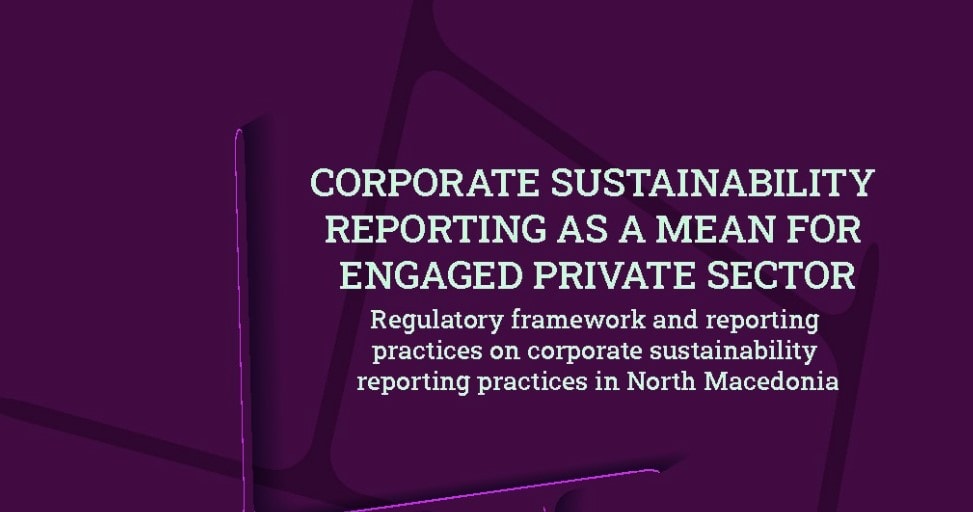
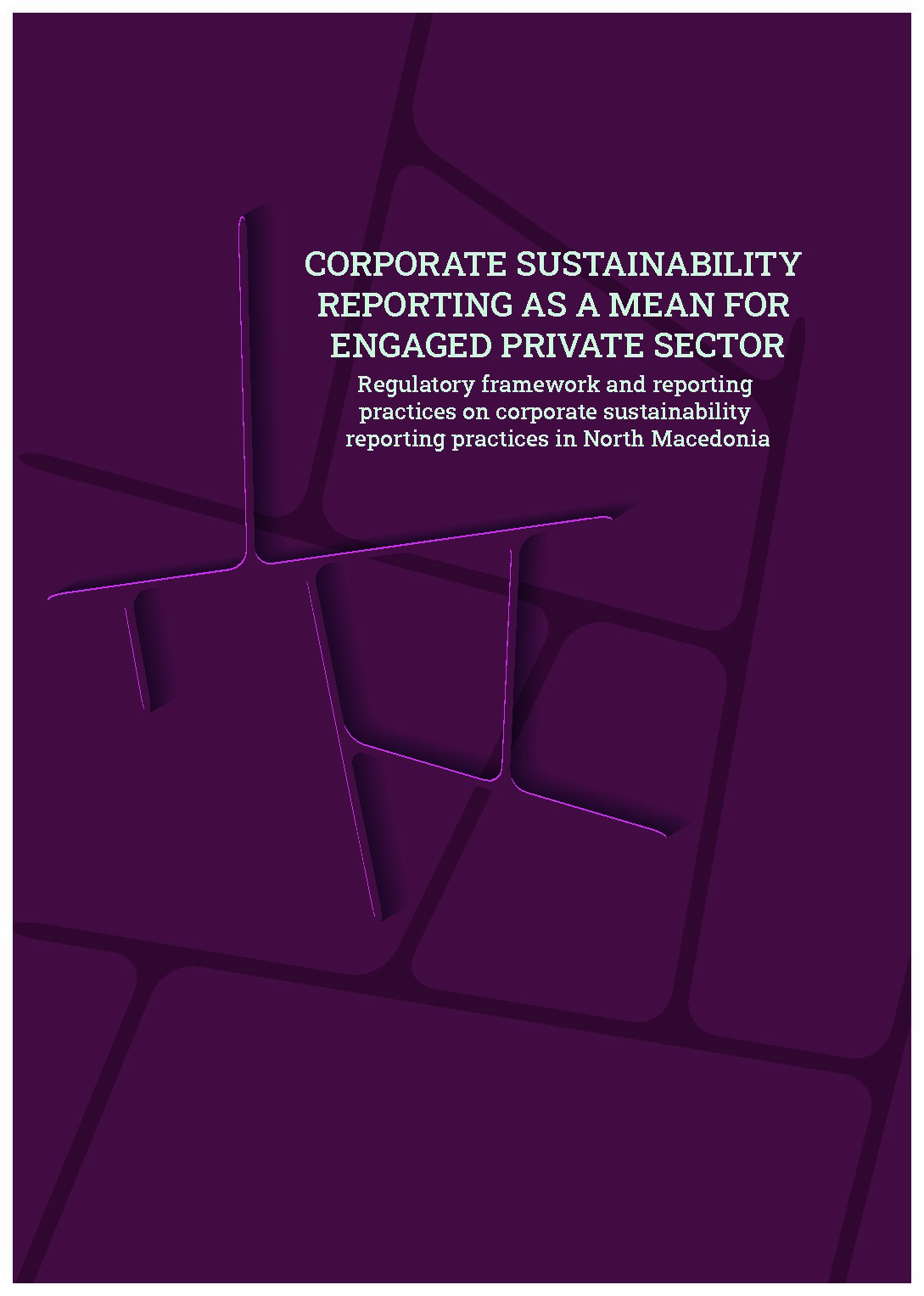
Corporate sustainability reporting as a mean for engaged private sector
Transparency of the companies’ actions and results in dealing with environmental and social issues addresses markets information asymmetries. A regulatory framework that enforces disclosure of such information ensures a level playing field while enabling informed decision-making, both by investors and consumers. The EU law requires large companies and financial institutions to disclose information on the ways they operate and manage social and environmental challenges.
The new CGC and the ESG Reporting Guidelines of the MSE are the first steps to introduce such rules for companies in North Macedonia and an effort to align with the EU and global best practices in regard to environmental social and governance reporting.
This research report presents and compares the reporting requirements in the EU and North Macedonia. The report surveys sustainability disclosure practices among Macedonian companies and presents the three best-performing companies. The analysis shows that the CGC does not reflect in full the disclosure requirements of the EU. The scope of the application has been altered to reflect the size of listed companies at the Macedonian Stock. The Code principles and provisions and the voluntary ESG Reporting guidelines allow companies to circumvent reporting requirements and may even lead to unequal treatment between companies.
Even with a lowered bar in terms of depth and breadth in the reporting requirements, only a few of the observed companies report on most of the minimum recommended disclosures. Companies disclose policies and actions they take, at least declaratively, but to a lesser extent report on the progress, outcomes, and results of those policies and actions. Further efforts in rising awareness and capacity building for companies are needed to motivate companies to practice sustainability reporting. Progressive alignment with the EU rules on this matter would not only be a necessary step for the country in the following years but would also benefit companies, particularly the ones active in European markets.

![[Aggregator] Downloaded image for imported item #52203](https://civicamobilitas.mk/wp-content/uploads/2026/10/Cover_MM-Albania-600x400-1.jpg)

![[Aggregator] Downloaded image for imported item #52158](https://civicamobilitas.mk/wp-content/uploads/2026/10/Is-Political-Interference-Addressed-in-the-Frameworks-of-the-Prosecutorial-Councils-in-North-Macedonia-and-Bosnia-and-Herzegovina-pdf-1-724x1024-1-e1792394173877.webp)
![[Aggregator] Downloaded image for imported item #52160](https://civicamobilitas.mk/wp-content/uploads/2026/10/Raising-the-Bar-on-Integrity_Aligning-North-Macedonia-and-Bosnia-and-Herzegovina-with-the-2026-EU-Anti-Corruption-Directive-pdf-1-724x1024-1-e1792393418465.webp)