

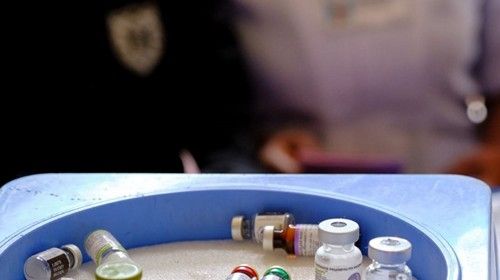
Better use of vaccines could reduce antibiotic use by 2.5 billion doses annually, says WHO
More investment in vaccines could avert deaths due to antimicrobial resistance, reduce antibiotic use and save money treating resistant infections
A new report by the World Health Organization (WHO) finds that vaccines against 23 pathogens (excluding gonorrhea) could reduce the number of antibiotics needed by 22% or 2.5 billion defined daily doses globally every year, supporting worldwide efforts to address antimicrobial resistance (AMR). While some of these vaccines are already available but underused, others would need to be developed and brought to the market as soon as possible.
AMR occurs when bacteria, viruses, fungi, and parasites no longer respond to antimicrobial medicines, making people sicker and increasing the risk of illness, death and the spread of infections that are difficult to treat. AMR is driven largely by the misuse and overuse of antimicrobials, yet, at the same time, many people around the world do not have access to essential antimicrobials. Each year, nearly 5 million deaths are associated with AMR globally.
Vaccines are an essential part of the response to reduce AMR as they prevent infections, reduce the use and overuse of antimicrobials, and slow the emergence and spread of drug-resistant pathogens.
The new report expands on a WHO study published in BMJ Global Health last year. It estimates that vaccines already in use against pneumococcus pneumonia, Haemophilus influenzae type B (Hib, a bacteria causing pneumonia and meningitis) and typhoid could avert up to 106 000 of the deaths associated with AMR each year. An additional 543 000 deaths associated with AMR could be averted annually when new vaccines for tuberculosis (TB) and Klebsiella pneumoniae, are developed and rolled out globally. While new TB vaccines are in clinical trials, one against Klebsiella pneumoniae is in early stage of development.
“Addressing antimicrobial resistance starts with preventing infections, and vaccines are among the most powerful tools for doing that,” said Dr Tedros Adhanom Ghebreyesus, WHO Director-General. “Prevention is better than cure, and increasing access to existing vaccines and developing new ones for critical diseases, like tuberculosis, is critical to saving lives and turning the tide on AMR.”
Vaccines are key to preventing infection
Vaccinated people have fewer infections and are protected against potential complications from secondary infections that may need antimicrobial medicines or require admission to hospital. The report analyzed the impact of already licensed vaccines as well as vaccines in various stages of development.
Every year, vaccines against:
- Streptococcus pneumoniae could save 33 million antibiotic doses, if the Immunization Agenda 2030 target of 90% of the world’s children were vaccinated, as well as older adults;
- Typhoid could save 45 million antibiotic doses, if their introduction was accelerated in high-burden countries;
- Malaria caused by Plasmodium falciparum could save up to 25 million antibiotic doses, which are often misused to try to treat malaria;
- TB could have the highest impact once they are developed, saving between 1.2 to 1.9 billion antibiotic doses – a significant portion of the 11.3 billion doses used annually against the diseases covered in this report.
Vaccines could significantly reduce the substantial economic costs of AMR
Globally, the hospital costs of treating resistant pathogens evaluated in the report are estimated at US$ 730 billion each year. If vaccines could be rolled out against all the evaluated pathogens, they could save a third of the hospital costs associated with AMR.
A comprehensive, people-centred approach applied across health systems is needed to prevent, diagnose and treat infections. This approach recognizes vaccination as core to preventing AMR and especially impactful when combined with other interventions.
At the 79th United Nations General Assembly High-Level Meeting on AMR on 26 September, world leaders approved a political declaration committing to a clear set of targets and actions, including reducing the estimated 4.95 million human deaths associated with bacterial AMR annually by 10% by 2030. The declaration emphasizes key aspects, including the importance of access to vaccines, medicines, treatments and diagnostics, while calling for incentives and financing mechanisms to drive multisectoral health research, innovation and development in addressing AMR.
The report, “Estimating the impact of vaccines in reducing antimicrobial resistance and antibiotic use,” evaluates the role of vaccines in reducing AMR and provides key stakeholders with recommendations for enhancing the impact of vaccines on AMR. It evaluates 44 vaccines targeting 24 pathogens: 19 bacteria, four viruses and one parasite. Infections can result in multiple syndromes and vary across age groups; thus, in several cases more than one vaccine for a pathogen was evaluated for its impact on AMR.
The pathogens include: Acinetobacter baumannii, Campylobacter jejuni, Clostridioides difficile, Enterococcus faecium, Enterotoxigenic Escherichia coli (ETEC), Extraintestinal Pathogenic Escherichia coli (ExPEC), Group A Streptococcus (GAS), Haemophilus influenzae type B (Hib), Helicobacter pylori, Klebsiella pneumoniae, Mycobacterium tuberculosis, Neisseria gonorrhoeae, Nontyphoidal Salmonella, Pseudomonas aeruginosa, Salmonella Paratyphi A, Salmonella typhi, Shigella, Staphylococcus aureus, Streptococcus pneumoniae, Plasmodium falciparum (malaria), influenza, norovirus, rotavirus, respiratory syncytial virus (RSV).
A defined daily dose is the assumed average maintenance dose per day for an antibiotic used for its main indication in adults.
Notes to editors:
On 24 October 2024, a correction was made to the opening sentence of this news release as noted below.
The sentence in the original news release read:
A new report by the World Health Organization (WHO) finds that vaccines against 24 pathogens could reduce the number of antibiotics needed by 22% or 2.5 billion defined daily doses globally every year, supporting worldwide efforts to address antimicrobial resistance (AMR).
This was changed to:
A new report by the World Health Organization (WHO) finds that vaccines against 23 pathogens (excluding gonorrhea) could reduce the number of antibiotics needed by 22% or 2.5 billion defined daily doses globally every year, supporting worldwide efforts to address antimicrobial resistance (AMR).

![[Aggregator] Downloaded image for imported item #51694](https://civicamobilitas.mk/wp-content/uploads/2026/10/1_cover-600x400-1.jpg)

![[Aggregator] Downloaded image for imported item #51442](https://civicamobilitas.mk/wp-content/uploads/2026/10/VACANCY_Comms-officer-600x400-1.png)
![[Aggregator] Downloaded image for imported item #51393](https://civicamobilitas.mk/wp-content/uploads/2026/10/share-default-768x403.jpg)