
Access to safe abortion is а health right for every woman
Access to safe abortion is a fundamental health right and crucial for achieving reproductive freedom. This was one of the key messages shared in observance of the International Day for Access to Safe and Legal Abortion, celebrated annually on September 28th.
Although the 2019 Law on Termination of Pregnancy grants women greater reproductive freedom, significant challenges remain. There is still no contraceptive included on the country’s positive list of approved drugs, and medical abortion services are available only in Skopje, which excludes women from rural areas. Additionally, the medications used for medical abortion have yet to be registered.
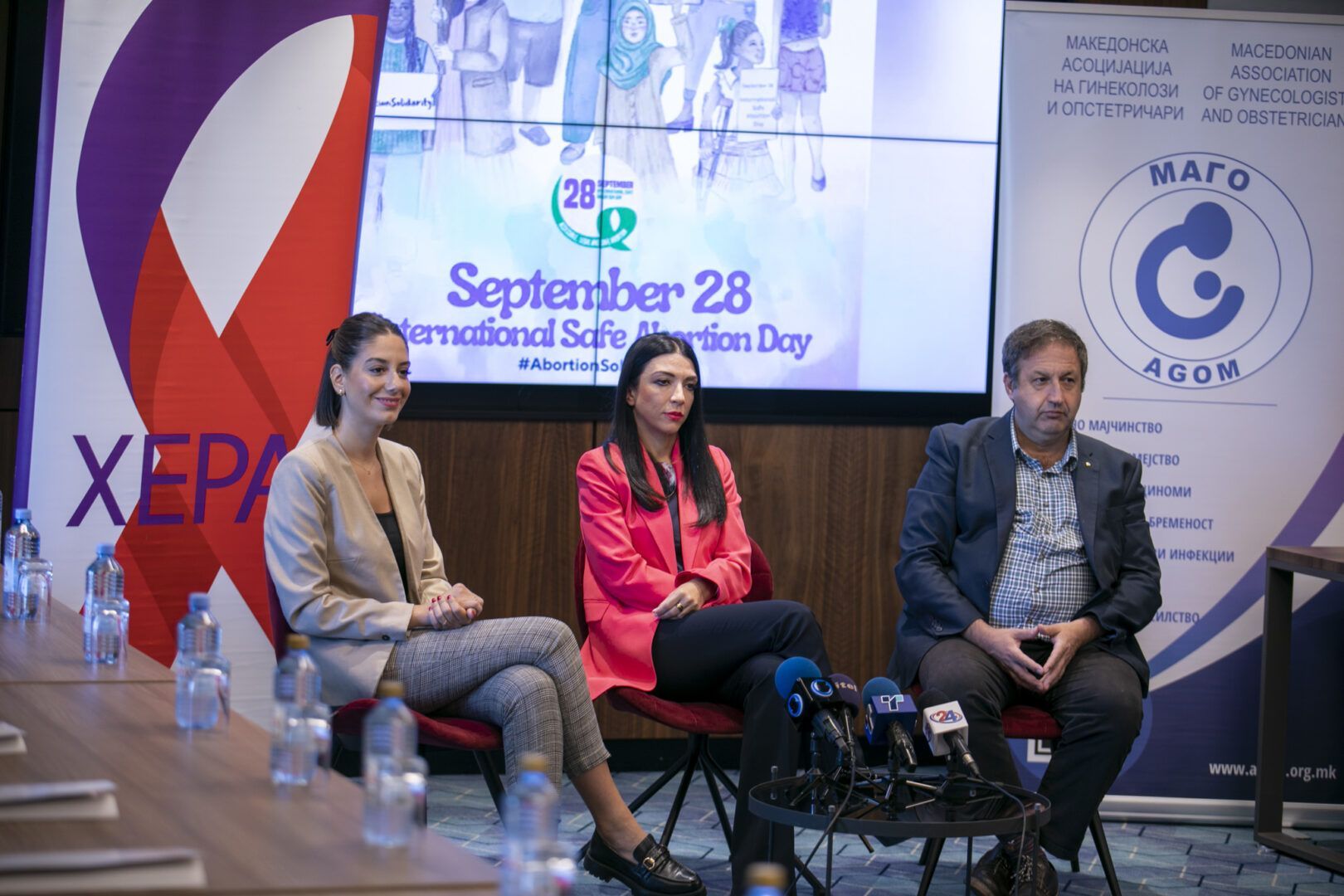
At a press conference dedicated to the International Day of Access to Safe and Legal Abortion, several experts in the country shared important messages. Prof. Dr. Irena Aleksioska-Papestiev, Director of the University Clinic for Gynecology and Obstetrics (UGAC) in Skopje, emphasized that for the fourth consecutive year, the clinic has been successfully implementing and using medical abortion as the safest method for terminating a pregnancy, in line with World Health Organization standards.
She highlighted that the clinic, with support from the Ministry of Health and HERA, prioritizes a woman’s inviolable right to make her own choice. They provide quality resources and conditions, enabling medical abortion to be the choice for over 80% of women seeking pregnancy termination at the clinic
Dr. Aleksioska-Papestiev also noted that complications from unsafe, illegal procedures to stop pregnancy remain one of the leading causes of maternal death globally. For this reason, she stressed the importance of making medical abortion widely accessible and ensuring that it is performed according.
Prof. Dr. Gligor Tofoski, gynecology specialist at the PHI University Clinic for Gynecology and Obstetrics and President of the Macedonian Association of Gynecologists and Obstetricians (MAGO), emphasized that the legality of abortion is one of the most crucial factors. He highlighted that since 2019, the Republic of North Macedonia has had a Termination of Pregnancy Act that advances women’s rights.
As of 2020, North Macedonia also has Clinical Guidelines for Termination of Pregnancy, prepared by experts in gynecology and obstetrics, outlining the proper application of the procedure. Dr. Tofoski added that safety is another key aspect—knowing how to apply the method effectively to achieve positive outcomes. However, what remains missing is the formal registration of drugs for medical abortion, which is necessary to fully implement the advanced legal framework on this matter.
Eva Spasevska, program manager for sexual and reproductive care at HERA, emphasized that although abortion is legal and accessible in North Macedonia, abortions requested for social and economic reasons are still not covered by the state health protection system. High costs pose a barrier to safe abortion access, which is why illegal procedures continue to occur.
International recommendations indicate that the state should ensure universal coverage for all sexual and reproductive health services, including modern contraceptive methods, as outlined in the Government Program 2022-2024. However, no contraceptives are currently covered by the Health Insurance Fund, and the country has one of the lowest rates of modern contraception usage in Europe, at only 14%. Reproductive justice extends beyond the right to choose—it includes equal access to health protection services, information, and support, as well as every woman’s right to make informed decisions about her body, free from fear or discrimination.
HERA, as an organization dedicated to health education, has been actively working for years to raise public awareness, improve services, and advocate for women’s right to access modern contraception in North Macedonia. In line with this mission, and in observance of the International Day for Access to Safe and Legal Abortion, HERA organized training for gynecologists from primary health protection on the topic of “Medical Abortion and Modern Contraception.”
This is the second accredited training this year for primary care gynecologists on the topic of “Medical Abortion and Modern Contraception,” conducted in cooperation with MAGO and accredited by the Medical Chamber. During this training, gynecologists had the opportunity to familiarize themselves in greater detail with the legal framework surrounding medical abortion in the country, learn about its implementation methods, and review practical examples from the lecturers’ experiences. Additionally, they received key information regarding psycho-social counseling during this procedure.

![[Aggregator] Downloaded image for imported item #51694](https://civicamobilitas.mk/wp-content/uploads/2026/10/1_cover-600x400-1.jpg)

![[Aggregator] Downloaded image for imported item #51442](https://civicamobilitas.mk/wp-content/uploads/2026/10/VACANCY_Comms-officer-600x400-1.png)
![[Aggregator] Downloaded image for imported item #51393](https://civicamobilitas.mk/wp-content/uploads/2026/10/share-default-768x403.jpg)