
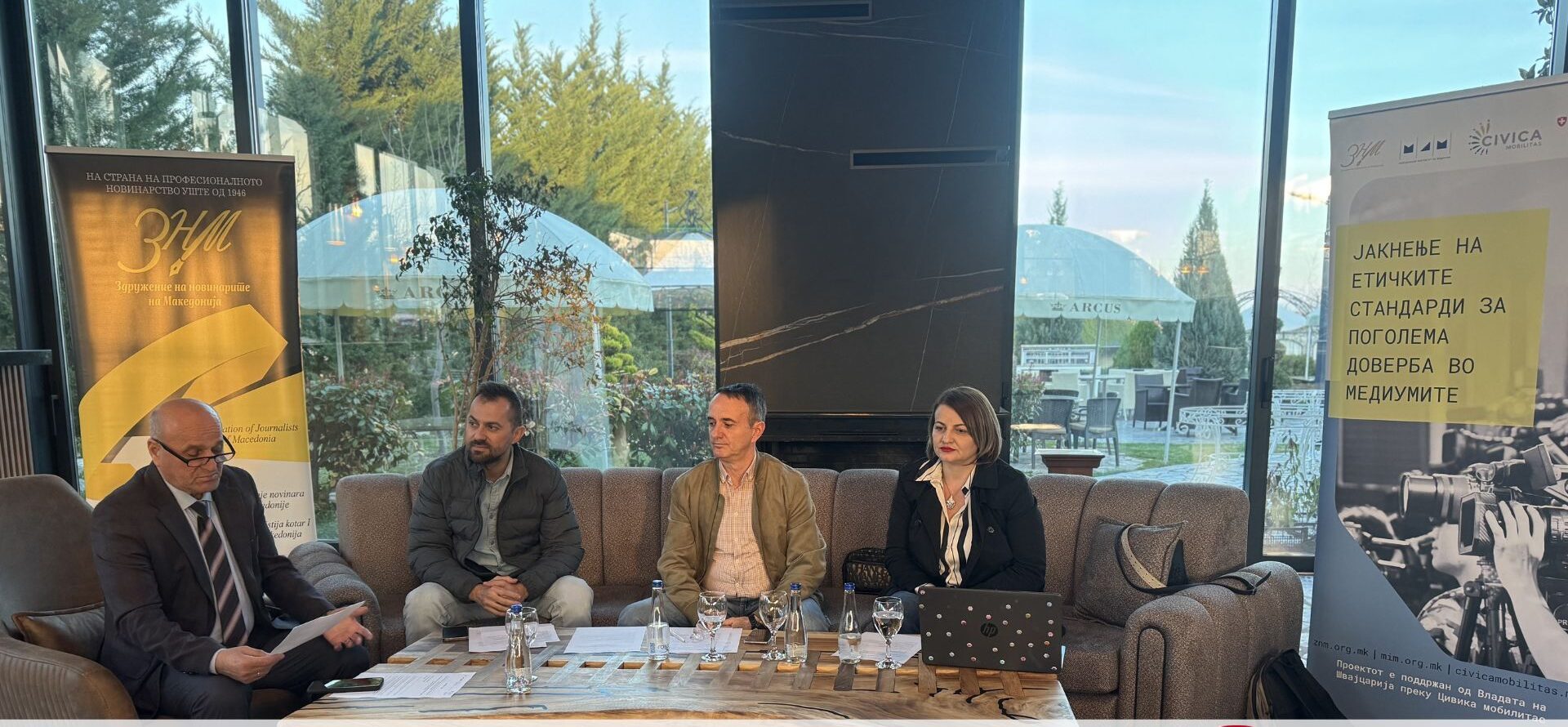
New Code of Ethics for Journalists: Process that Returns Trust in the Media
At the time when information is spread with enormous speed, and the boundaries between checked news and misinformation have become less and less visible, the topic of ethical journalism has become crucial for the society. Journalism, as voice of the public, has the responsibility that is nowadays bigger than ever, especially at times when media space is flooded by various sources that do not always follow professional standards.
The first Code of Ethical Journalism was adopted in 2001 and since then it has not been changes which stresses the need of it being adapted to new conditions of reporting.
In this context, the Association of Journalists of Macedonia (AJM) in partnership with the Macedonian Institute for Media (MIM) implements the project “Strengthening the Ethical Standards for Bigger Trust in Media” supported by Civica Mobilitas. The project aims to stimulate higher standards of professionality and responsibility via a process that is not only formal updating, but also essential rethinking and adapting of journalism ethics to modern conditions.
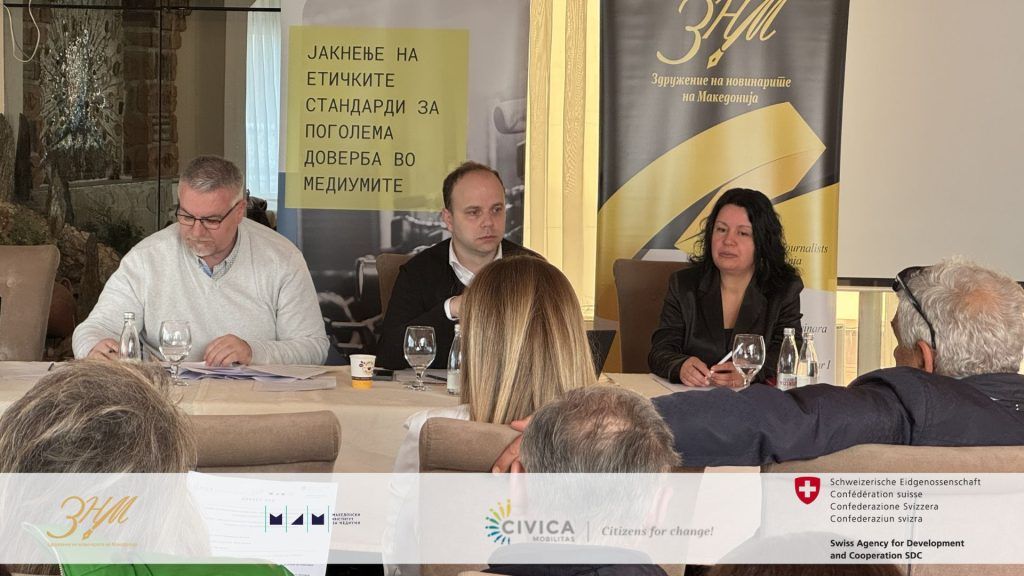
It is especially important that the process of creation of the new Code of Ethics take place in an inclusive manner, with active participation of the journalist community. The work group made of AJM, Macedonian Institute for Media and Council of Media Ethics representatives has included more than 200 journalists since 2024, to contribute with proposals and comments to the creation of the draft version. The consultations are still going on, and during this time, the work group has been holding meetings, implementing proposals and changes by using experience from regional and European ethical practices.
“The process of changing the Code is based on an analysis of the existing practices and challenges in the media space. The involvement of the journalistic community provides legitimacy and practical applicability of the changes. The changes are significant because the Code is approximated to the modern media conditions and the digital environment. They strengthen the self-regulation and set clearer ethical standards for reporting. In this way, there is a contribution to bigger public trust and more responsible journalism”, says Ognen Janeski, coordinator of the working group for changes to the Code of Journalists.
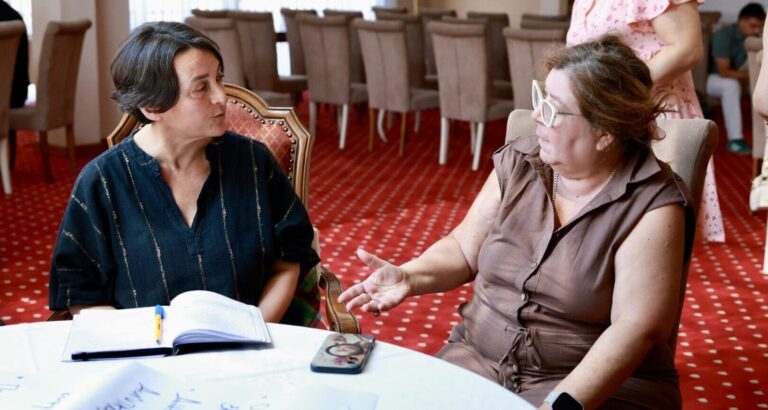
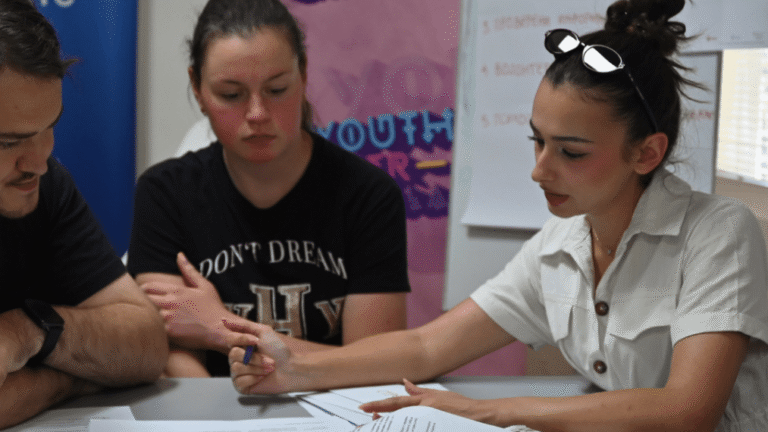
The field experience, via the workshops with local media have additionally stressed the need for such a process. The meetings in the regional centres, among which Bitola and Kumanovo, show that the journalists face real challenges that directly impact the quality of reporting.
The financial instability and limited resources, as well as the increased influence of unchecked digital sources and social networks make their work more difficult and undermine the trust of the public. At the same time, the journalists state that it is important to keep the crucial values of the existing Code, especially those that concern the culture of speaking, ethics and preservation of the respect and dignity of journalistic profession.
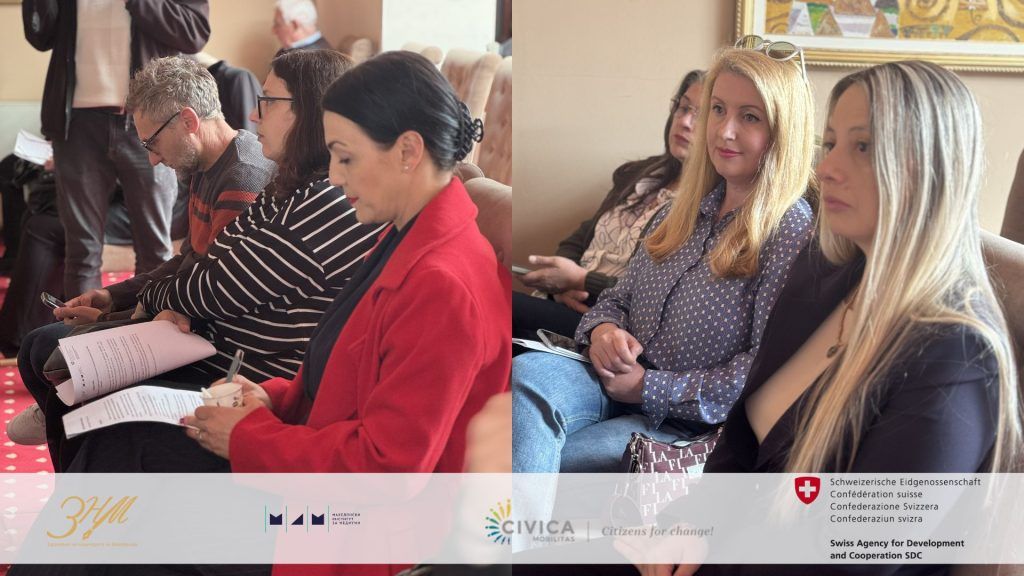
In these discussions, the journalists stress that there is a pressing need of clear, practical and applicable guidelines that will help them in their daily work, but that the basic values should also be preserved – culture of speaking and ethics, as well as response to new challenges, including the use of artificial intelligence, which brings additional ethical dilemmas.
Because of this, the changes of the Code take place in two phases – by changing the existing articles and by adding new articles to code, in line with the new reporting trends. In practice, this means that there have been changes made to the Preamble, as well as to articles 1, 4, 6, 8, 10, 12, 14 and 17, while there are two new articles added on using AI tools, as well as secret data collection. The process is on-going and it remains open to additional proposals of the journalists.
As a support to the process, there have been two analytical documents prepared that provide the basis for promoting of ethical standards. The first one, “Thorough Revision of Current Ethnical Practices in Journalism” analyses the existing challenges, especially with respect to disinformation, hate speech and use of artificial intelligence, while the second one “From Global Experience to Local Standards: Ethical Challenges and Solutions in Journalism” provides a comparative analysis of European practices and possible solutions applicable in domestic context.
For the journalists, the new Code is not only a document, but rather a practical tool or a “right hand” in their daily work. The expectations are that it provides clear and specific rules that will be able to be applied in different situations. Such a Code will help in making decisions that are in accordance with the professional and ethical standards, that protect vulnerable groups, maintain the independence and credibility of their work, but also deal with modern challenges such as AI or fast spreading of unchecked information.


“It is expected that there will be increased trust of the public in the media via more quality, balanced and checked information, as well as strengthening of the capacities of the journalists to deal with new challenges, including digital transformation. Because of this, the support of Civica Mobilitas is really important so that we can implement all set goals and activities and have the final product, more specially the Code of Journalists, which is a crucial tool in the work of the journalists”, says Biljana Nasteska Kalanoska from AJM.
Apart from the process of revising the Code, which is expected to be promoted in the second half of 2026, the project also includes a broader set of activities, such as trainings for journalists and editors from local media and MRT, a national media campaign with video contents for public awareness raising on the meaning of ethical journalism, as well as preparation of analytical studies that provide specific recommendations for improving the ethical standards in the public broadcaster.
In this way, this process does not end with adopting a new document, but it is rather a step towards a broader change in the media community. At the time when the trust in media has been seriously challenged, these initiatives show that journalism has the capacity to adapt, learn and develop, all of this in service of the public interest.