Hera
|

World Health Day: What Is the Reality for Women, Girls and Vulnerable Groups in the Field?

The World Health Day this year is under the topic “Healthy Beginnings, Hopeful Future” – a message that reminds us that health is the foundation of each story of development and dignified life. However, what does this mean in reality for the women, girls and vulnerable groups?

For many people, access to preventive health care is still not a guaranteed right, but rather a privilege depending on the socioeconomic status, place of living or personal circumstances. Women and girls face a lack of accessible and quality services, especially when it comes to reproductive health, screening programmes and preventive check-ups. With the vulnerable communities, this reality is even harder, as lack of appropriate information, financial barriers and discrimination often make the health care services unreachable.

The investments in health, especially in the preventive programmes, are of key importance for long-term improvement of the public health; nevertheless, investments in this sector remain limited. Since 2019, the state has allocated on average only 10% of the Ministry of Health budget for prevention programmes, with the exception of 2021, when this percent was temporarily increased to 18%. Instead of a continuous growth, the prevention programmes budget has decreased in the course of the last years, especially in the area such as malignant diseases screening and prevention from contagious diseases. For example, the HIV prevention budget was MKD 49,100,000 in 2019, while it has been decreased for more than 60% in 2023 and amounted to MKD 19,469,000, which has significantly limited the availability of these services for real prevention.
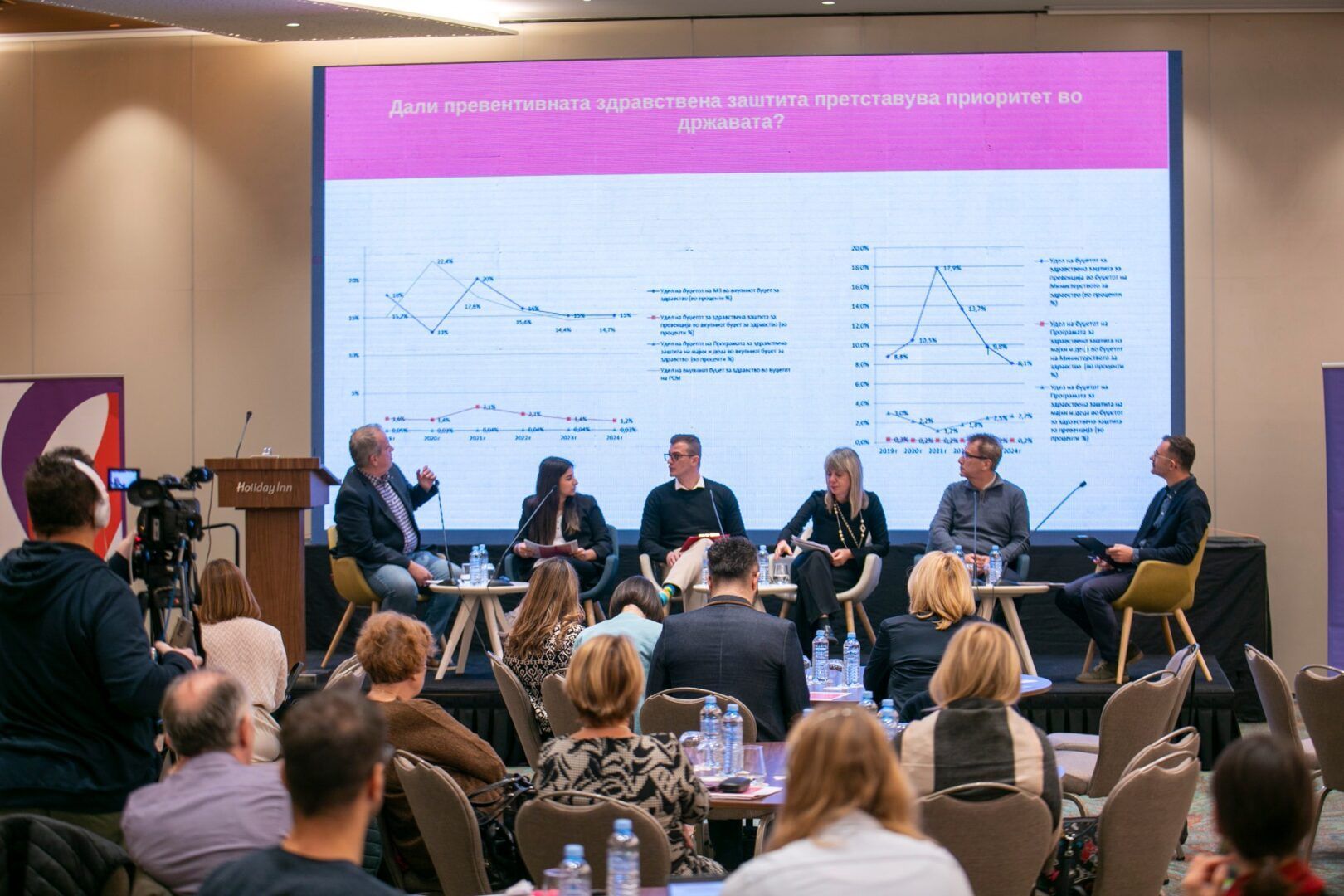
Women, girls and vulnerable groups most often face the biggest challenges when it comes to access to quality health services. Although the goal of the National Programme for Early Detection of Cervical Cancer is to cover 75% of the women aged 21 to 59, according to the Analysis of the Programme for Early Detection and Screening of Malignant Diseases conducted by the civil sector, in reality, only 15% were tested in the last three years. With breast cancer screening, the figures are even lower – less than 10% of the women aged 50 to 69 have been covered by a mammographic check-up.

Although the infant mortality rate has been decreasing, women, especially in rural areas and vulnerable communities, such as the Roma ones still face serious obstacles. In the country, there are only around 160 gynaecologists in the primary care, unequally distributed which means that many women do not have access to regular check-ups during their pregnancy. The preventive gynaecological health care is late, thus endangering not only the reproductive health, but also the general health of women. There is an inappropriate coverage of women by patronage nurses during their pregnancy and after the delivery, first of all because of the existing problems that this service faces. 

The situation with the children is similar; there are only 110 paediatricians in the primary care and a decreasing vaccination rate, especially with the MRP vaccine, making the danger of epidemics real. At the same time, the Ministry of Health has cancelled the key educational and promotional activities of the Programme for Active Protection of Mothers and Children, the campaigns for vaccination promotion, as well as the activities for supporting the work of the patronage nurses.

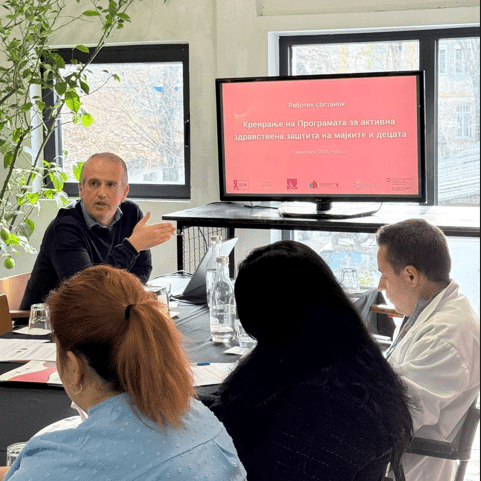
Additionally, the analyses have shown that 46% of the pregnant women in the rural areas have not made a single checkup in the first three months of their pregnancies, although the timely health care during the pregnancy is crucial for the health of the mothers and new-borns. As many as 30% of the mothers have not received any information about the importance of the screening tests for hearing and sight with the new-borns, according to our Analysis of the Programme for Active Health Care of Mothers and Children.

Therefore, we have been advocating for changes with the institutions at all times, so that they provide: available gynaecological and paediatric care at primary level at the complete territory; strengthening the work of the patronage services and teams for preschool and school-age health care; return and promotion of health education, support to breastfeeding and increased coverage of vaccination; increased budget funds for prevention programmes – Programme for Active Health Care of Mothers and Children and Programme for Cervical Cancer Screening; active involvement of the citizens and CSOs in the creation and monitoring of health policies.
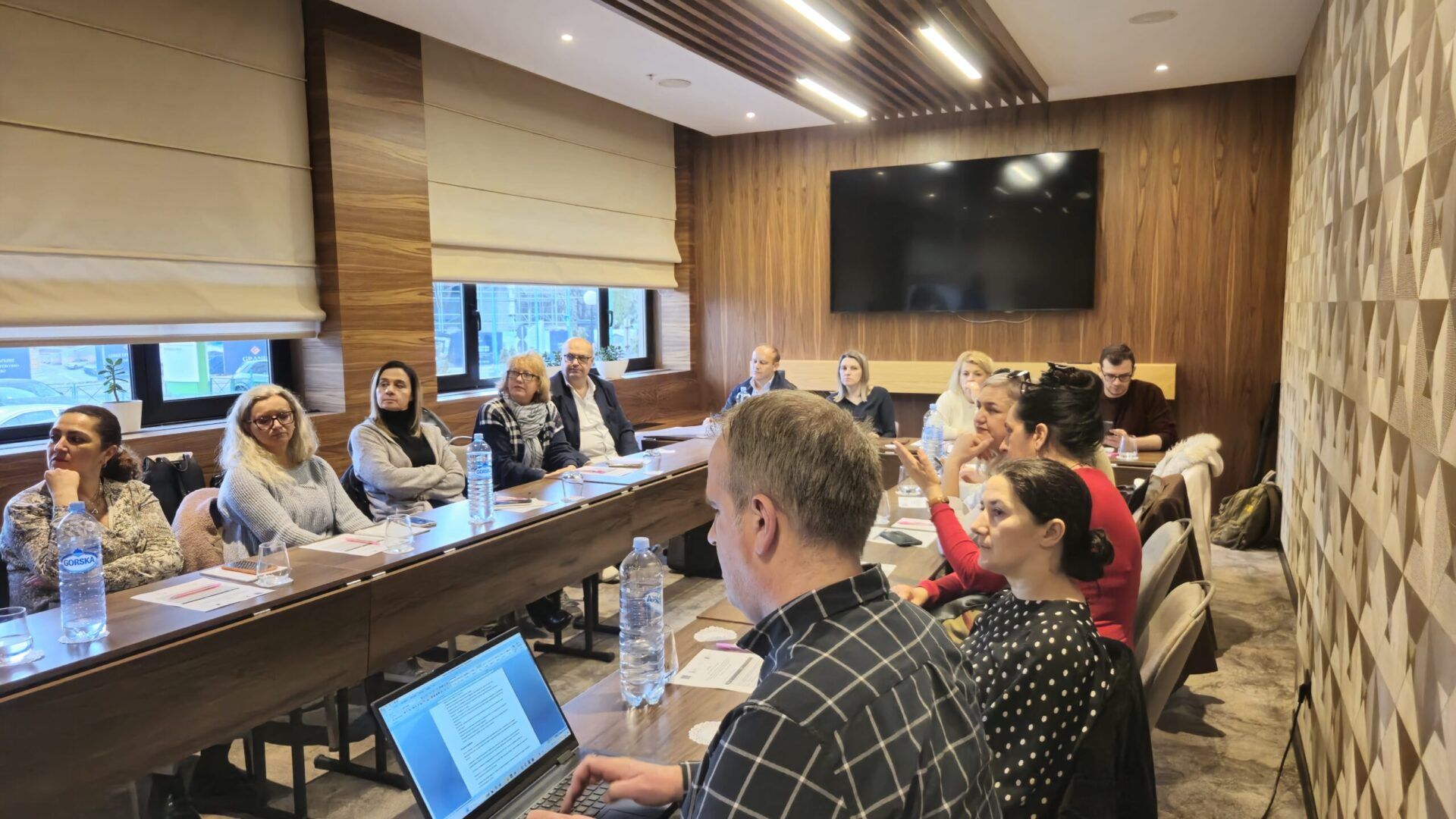
The World Health Days is not only an occasion for discussion, but also a reminder that health has to be a priority every day. The healthy beginning is not a privilege – it is a right. This right has to be guaranteed for every woman and every child. Therefore, ESE, HERA and the Women’s Initiative from Shuto Orizari stress the need for the state to provide equal and available access to health care for women, mothers and children in Macedonia. Only in this way can be build a hopeful future for all.

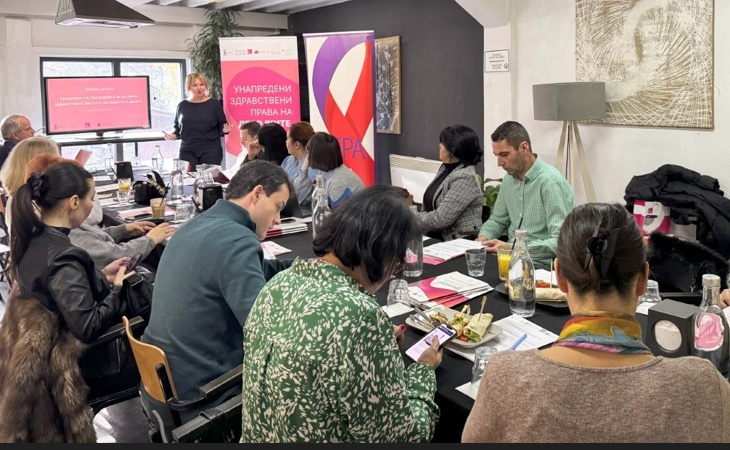
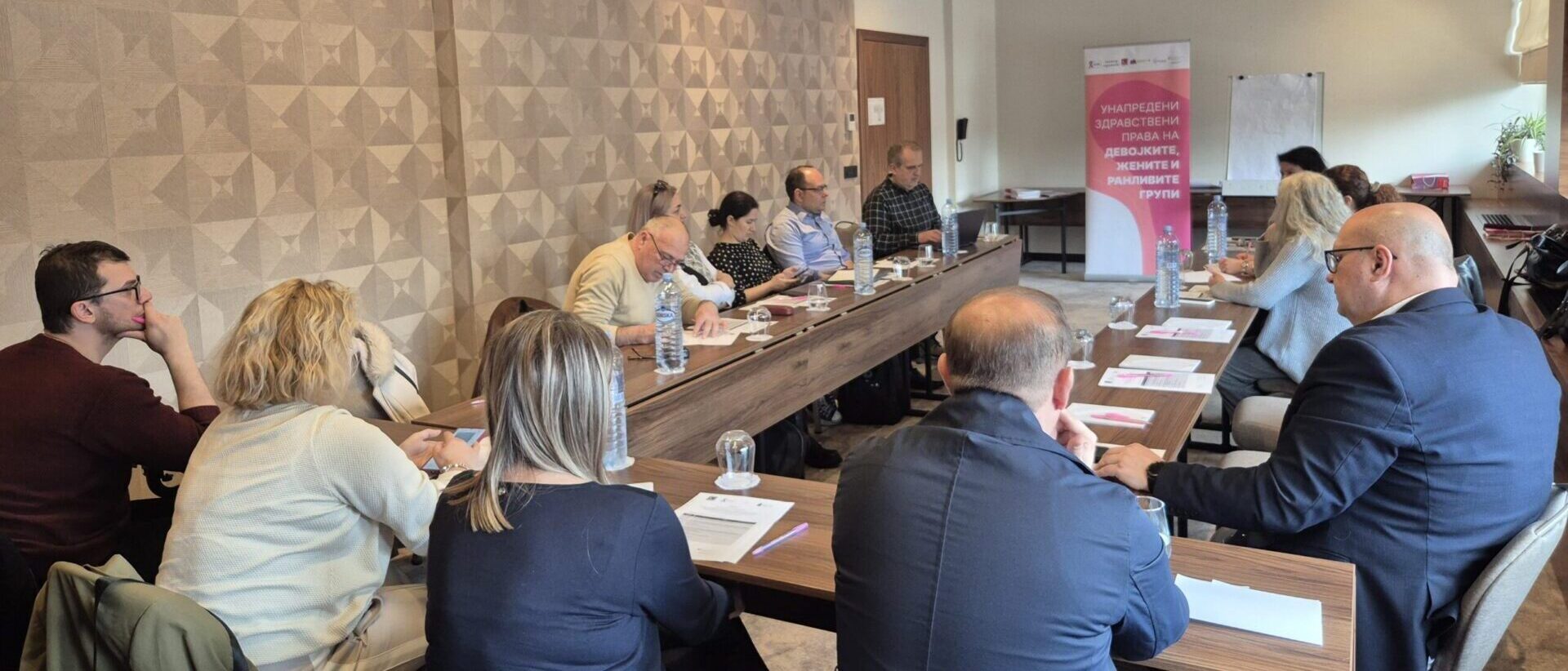
The activities are part of the project “Advancing the Health Rights of Women, Girls and Vulnerable Groups” that is implemented by HERA – Association for Health Education and Research, in partnership with the Association for Emancipation, Solidarity and Equality of Women – ESE, the Association Initiative for Women’s Rights from Shuto Orizari and the Association for Support to People Living with HIV – Stronger Together Skopje. The project is supported by the Swiss Government via Civica Mobilitas.

Продолжи со читање

  • Promotion of Minorities’ Participation in Multilevel Governance

    The PACT project officially started in Brussels with a 2-day international conference and workshop
    On 10 and 11 March 2026, Brussels hosted an International Conference and Workshop entitled “Promotion of Minorities’ Participation in Multilevel Governance”.
    It brought together experts coming from different realities, with a common goal: sharing good practices on how to promote inclusive participation of under-represented minorities, people with migratory background, refugees, Roma and other marginalised communities in local decision-making processes.
    The Conference
    The event opened on the morning of Tuesday 10 March with 2 panels.
    The first one – entitled “Minority Participation in Multilevel Governance: EU perspectives” – was moderated by Mohammed Mustafa (ALDA – European Association for Local Democracy) who introduced the main EU policy developments in the areas of anti-poverty and anti-discrimination, and migration, setting the tune of the conversation with the speakers:
    Julie Pascoet (European Network Against Racism – ENAR) focused on the European Anti-Discrimination Strategy,  highlighting how much this tool is necessary (but also how far it is to address the needs of the moment), and how civil society networks  play a crucial role to bridge the gap between EU policy intentions and the lived experiences of marginalised communities.
    Fernando Vasco Chironda (European Anti Poverty Network – EAPN) tackled the EU Anti-Poverty Strategy, underlying that – by excluding migrant people from vulnerability frameworks – the strategy risks deepening marginalisation of those most affected, and that local authorities are those with the responsibility to ensure inclusive participation spaces and adequate resources for people.
    Mojib Atal (Migration Policy Group – MPG) focused on the Migrant Integration Policy Index, reporting a concerning stagnation in political participation across the EU, and highlighting how multilingual education could serve as a democratic tool by recognising linguistic diversity rather than privileging a single dominant language.
     

    The second panel – “From Welcoming to Active Participation: Challenges, Practices and Power” – was moderated by Maddalena Alberti (ADL Zavidovici) and had the goal to hear from experts who exchanged ideas, perspectives and best practices for the inclusion of underrepresented minorities at a local level.
    Anna Coulibaly (International Catholic Migration Commission – ICMC Europe) introduced the Community Sponsorship, a community‑led integration model where volunteers, supported by civil society and approved by governments, commit to hosting and supporting refugees for at least a year.
    Loubna Reguig (European Forum for Youth with Lived Migration Experience – VOICIFY) urged how self‑led organisations are essential to defend the political participation rights of young people with migrant backgrounds, since they create spaces where youth feel included, exchange knowledge and pool resources.
    Queenie Kessie (IOM Diaspora Advisory Board – DAB) showed how diaspora advisory structures can move beyond consultation and concretely ensure fair policies are good for migrant people and societies.
    Ismail Alkhateeb (PLACE Network) brought the organisation’s extensive experience to show that the inclusion of migrant people in local participatory processes can happen only when institutions and local communities jointly define problems, design solutions and test them at micro‑level.

    Conclusion
    Hosted by Amazone asbl (Brussels) and co-organised by ALDA (France), ADL Zavidovici (Italy), KMOP (Greece), Center for Intercultural Dialogue (North Macedonia), PLACE Network (France), Fons Català (Spain) and Konkáv Alapítvány (Hungary), the event saw the participation of public authorities, policy makers, organisations, media, underrepresented minorities united by the wish to learn on how working together is possible for a fair and equal European policy system.
    The initiative was part of the European-funded project PACT (Participatory Action for Transforming Communities) whose aim is empowering under-represented minorities in local communities in Europe.

  • Metamorphosis publishes research on the effects of disinformation and foreign influence on democratic processes

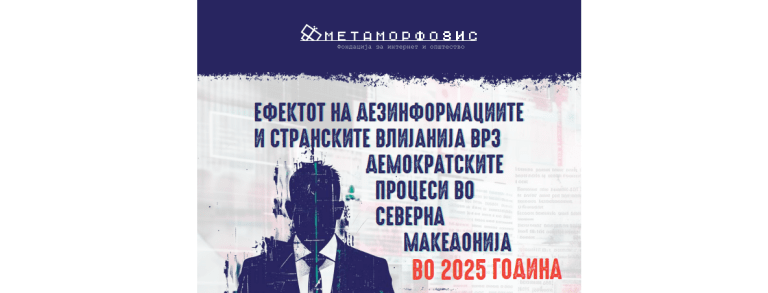
    The Metamorphosis Foundation has published the research “The Effect of Disinformation and Foreign Influences on Democratic Processes in North Macedonia in 2025,” which analyzes how disinformation and propaganda narratives affect public debate, trust in institutions, and citizen participation in democratic processes. The research combines an analysis of disinformation narratives and a survey of a nationally representative […]

  • On current economic topics, Blagica Petreski in Win-Win

    https://www.facebook.com/TVTelma/videos/2347874929012206
    The post On current economic topics, Blagica Petreski in Win-Win first appeared on Finance Think.
    The post On current economic topics, Blagica Petreski in Win-Win appeared first on Finance Think.

  • AJM Calls for Measured and Professional Communication with Journalists

    The Association of Journalists of Macedonia (AJM) is monitoring the public reaction following the communication between the Minister of Interior Panče Toškovski and journalist Frosina Fakova Serafinović from the media outlet Sloboden Pechat, during yesterday’s press conference, which was also …

  • Public call for participation in the co-creation of the National Action Plan for the Open Government Partnership 2026-2028

    Based on Article 3, paragraph (2), subparagraphs (5) and (6) of the Decision on the Establishment of the Council for Coordination and Monitoring of the 2024-2026 Open Government Partnership Process, No. 16-1662/1 of 02.05.2024, and the Decision on the Amendment of the Decision on the Establishment of the Council for Coordination and Monitoring of the […]
    The post Public call for participation in the co-creation of the National Action Plan for the Open Government Partnership 2026-2028 first appeared on Metamorphosis.