

Thematic Forum on the Use of Beneficial Ownership Data in the Fight Against Corruption
WITHIN JUST TWO MONTHS, 3,000 COMPANIES THAT WON TENDERS DISCLOSED THEIR BENEFICIAL OWNERS ON THE ELECTRONIC PUBLIC PROCUREMENT SYSTEM
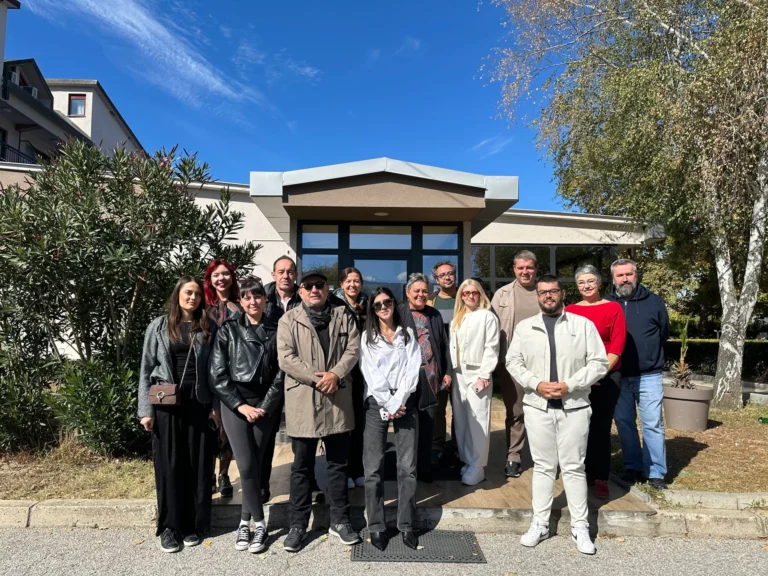
More than 30 representatives of key public institutions, civil society organizations, media, and international organizations today discussed opportunities and methods for using data from the Register of Beneficial Owners of Legal Entities as a tool in the fight against corruption.
The Swiss Ambassador to the country, H.E. Christoph Sommer, highlighted examples of detecting and recovering significant assets obtained through illegal financing, precisely through international exchange of beneficial ownership data. He also emphasized the particular role of civil society organizations and investigative journalists in uncovering corruption, and the importance of ensuring they have timely and sufficient data on beneficial owners. Ambassador Sommer also spoke about the significance of beneficial ownership data for supporting a fair and open market.
According to the Deputy Prime Minister for Good Governance, Arben Fetai, transparency of beneficial ownership data is not merely a regulatory requirement, but a cornerstone of ethical governance and fair competition. He called on all stakeholders to collaborate on improving data quality, interoperability between institutions such as the Central Registry, the Financial Intelligence Office, the Public Procurement Bureau, and the State Commission for the Prevention of Corruption (SCPC), as well as strengthening verification processes to ensure the accuracy and reliability of this data.
Particular emphasis was placed on the fulfillment of the commitment under the National Open Government Partnership Action Plan, whereby since mid-November last year, companies participating in public procurement have been voluntarily disclosing their beneficial owners on the Electronic Public Procurement System (EPPS). More than 3,000 companies have done so to date. In this regard, the Director of the Public Procurement Bureau, Mare Bogeva Micovska, underscored the central role of the Electronic Public Procurement System — the single platform for conducting public procurement, which is continuously being developed and upgraded with new functionalities to enhance transparency and integrity in public procurement.
The Director of the Central Registry, Aneta Stamnova, presented the current state of use of data from the Beneficial Owners Register, noting that banks are the most frequent users, and among institutions, the Financial Intelligence Agency within the framework of its legal obligations for the prevention of money laundering and terrorism financing. She noted that the Central Registry remains available going forward to assist in efforts to combat the grey economy and corruption in general, above all in full compliance with applicable legal norms.
The President of the State Commission for the Prevention of Corruption, Adem Čučulj, announced that work is underway on directly linking data from several institutions — including the Central Registry, the Cadastre of Real Estate, the Ministry of Interior, and the Public Revenue Office — for direct verification and use of data that would also be accessible to the public.
Journalist Frosina Dimovska from the Balkan Investigative Reporting Network – BIRN Macedonia cited examples of using beneficial ownership data to uncover abuses, as well as specific obstacles investigative journalists face in obtaining, verifying, and cross-referencing this data.
Two studies conducted by the civil sector, presented by Sabina Fakić from the Center for Civic Communications, showed that despite the formal establishment of the Beneficial Owners Register in the country exactly five years ago, its potential remains largely untapped within the anti-corruption system. Limited access, data inconsistencies, weak verification mechanisms, lack of institutional interoperability, and insufficient public oversight significantly reduce the preventive and investigative value of beneficial ownership data.
Based on the findings of the studies, the stated plans and commitments of the institutions involved, and European and global practices in the use of Beneficial Owners Register data, a public policy document with recommendations for improving the use of beneficial ownership information in the fight against corruption in North Macedonia will be developed.
The project “Using Beneficial Ownership Data to Reduce Corruption” is supported by the Government of Switzerland through Civica Mobilitas. The views expressed herein do not necessarily reflect the positions of the Swiss Government, Civica Mobilitas, or the implementing organizations.
![[Aggregator] Downloaded image for imported item #52203](https://civicamobilitas.mk/wp-content/uploads/2026/10/Cover_MM-Albania-600x400-1.jpg)
![[Aggregator] Downloaded image for imported item #52158](https://civicamobilitas.mk/wp-content/uploads/2026/10/Is-Political-Interference-Addressed-in-the-Frameworks-of-the-Prosecutorial-Councils-in-North-Macedonia-and-Bosnia-and-Herzegovina-pdf-1-724x1024-1-e1792394173877.webp)
![[Aggregator] Downloaded image for imported item #52160](https://civicamobilitas.mk/wp-content/uploads/2026/10/Raising-the-Bar-on-Integrity_Aligning-North-Macedonia-and-Bosnia-and-Herzegovina-with-the-2026-EU-Anti-Corruption-Directive-pdf-1-724x1024-1-e1792393418465.webp)