Will Macedonia Finally Know Where Its Scholarship Users Are?
Every year, Macedonia loses a young people potential of one small town. Only in Slovenia, in the last several years, there have been on average around 1,000 Macedonian students. While the best minds of our high schools conquer the classrooms in Vienna, Berlin, Ljubljana or Amsterdam, the country has been facing an institutional gap for years: there has been no precise answer on how many scholarship users we have abroad, where they are and what they do after they graduate?
This administrative “black hole” for decades meant lost contact with part of the most valuable capital that we have – the human one. The state has invested millions of Euros in scholarships (covering up to USD 40,000 per scholarship only); however, without a monitoring system, this money has often turned into a one-way ticket for leaving the country. The students felt invisible for their own system, and the domestic economy has remained deprived of the expertise that it paid for.
“Thick Weaving” against the Institutional Silence
It was this “painful spot” that was the motive to start the project ”Advocacy for Inclusive Development”, which, with the support of the Swiss Government via Civica Mobilitas programme started to essentially change the reality. The project is implemented by three partner organizations: Forum for Reasonable Policies (FRP), Institute for Social Sciences and Humanities – Skopje (ISSH-S) and the Balkan Institute for Regional Cooperation (BIRC).
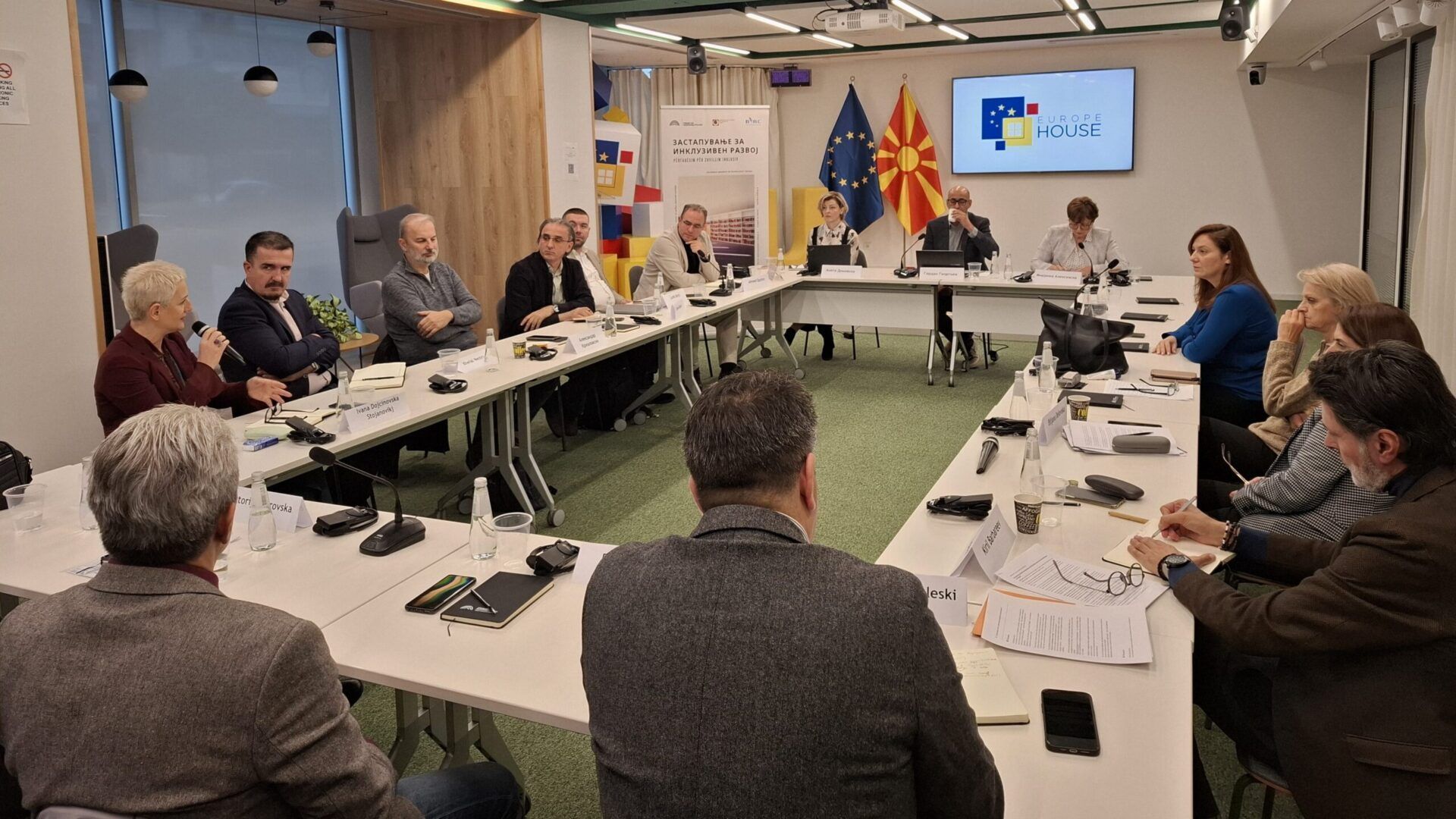
Their analysis, entitled ”Interweaving Education, Science and Innovation-Based Economy”, has noted in detail the lack of legal and institutional framework for systemic monitoring of the professionals abroad. With this document, the organizations asked for urgent changes in the Law on Higher Education to create an information system that would cover the complete academic profile of our students abroad.
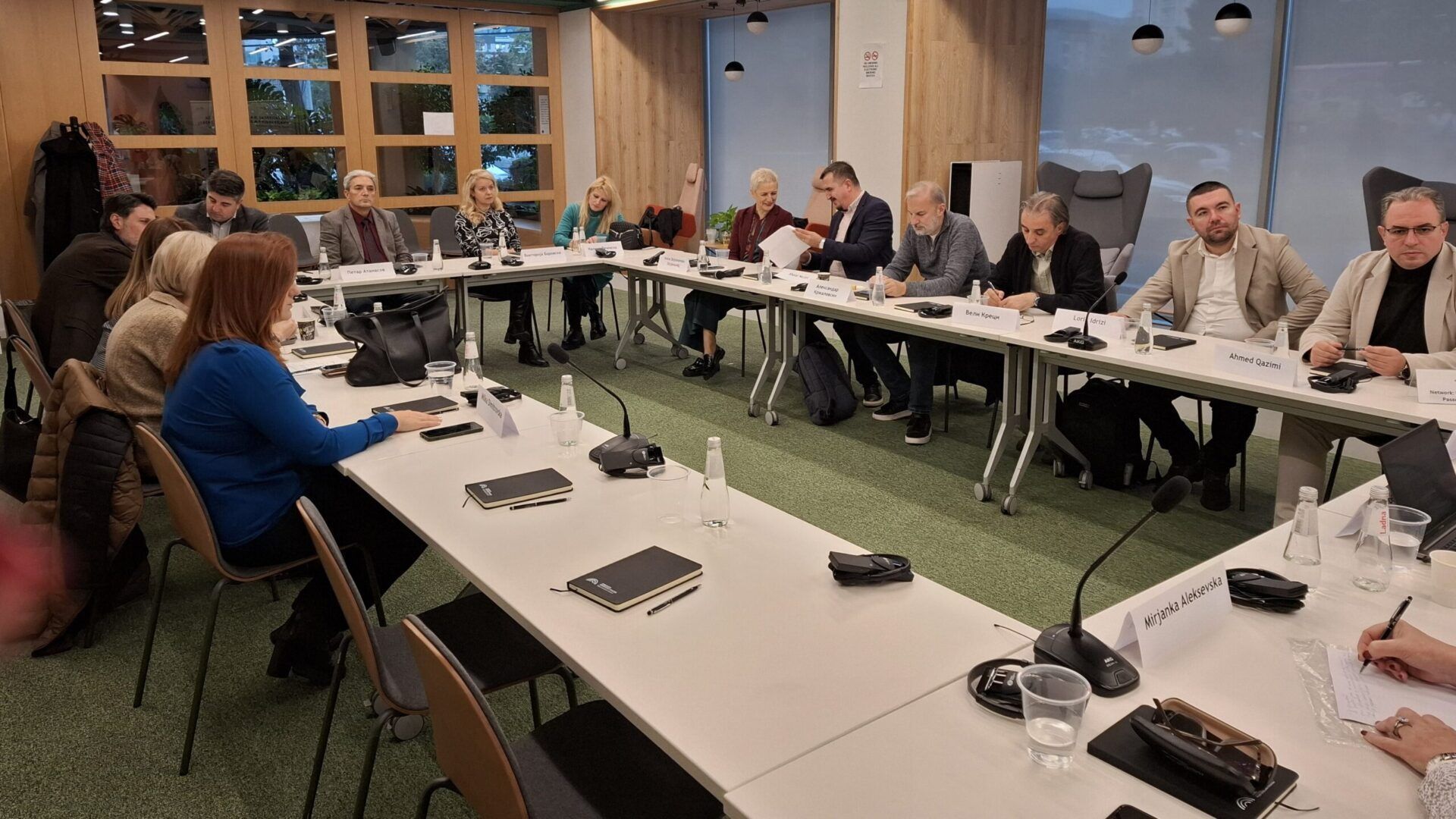
The road to change led via a series of separate meetings with key institutions, which culminated with the event “Interweaving: Networking 2.0”. Institutions, civil sector and economic stakeholders sat at the same table, creating a coordinated approach to reforms. Parallelly, the debate has also been publicized, via the series of podcasts “What Turns the World?” implemented in cooperation with the Association “ZMAI”. In this way, the themes such as “Cluster 3 – Competitiveness and Inclusive Development” have become accessible for the broader public. The podcast was used as a space for public advocacy where there were debates on how education and innovations have to be in the service of economy, setting the field for the institutional change that followed.
The Register: Digital Bridge between Science and Economy
It is these activities, from the field meetings up to the digital space that have created a critical mass of information and pressure that led to a specific result. On today’s date, 24th January, a date that the world celebrates as an International Day of Education, Macedonia can boast with a step to success.
The Ministry of Education and Science (MES) and the Minister Vesna Janevska recognized the value of the initiative resulting from the project. By accepting the proposal to establish a Central Digital Register of Scholarship Users, the state has finally started to build the digital infrastructure that it lacked for years.
“The goal was to use their potential and connect them to the companies and universities in the country. With this register we will know if the students have returned, if they have graduated and where they have been engaged”, stated Janevska.
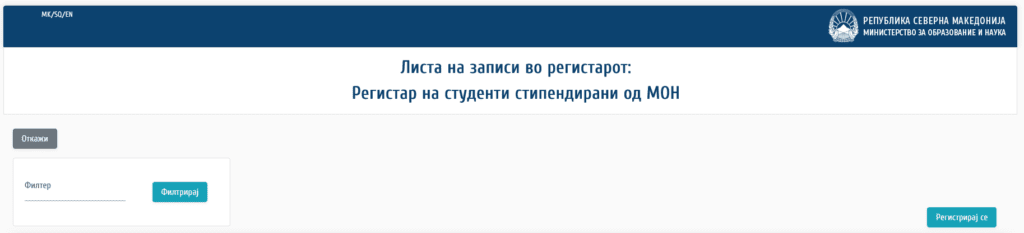
According to Janevska, the students will themselves decide if their profiles will be public, which will enable them to be recognized by interested institutions, including universities, chambers of commerce and research centres. The register is not only a database, but it is rather a networking tool. It contains information on the type of studies, work status and contact data.
However, despite digitalization, the state also introduces clearer rules. The obligation for the scholarship users after their graduation is to work in the country double the length of the studies. Still, the rules are fair: if they are not offered an appropriate job within six months after their return, their obligation ends. For those who will temporarily remain abroad for professional development, it is allowed to remain there up to three years.
“If they decide not to return to the country, they will give to return the funds that the Ministry has transferred them. In the past, there was an obligation to repay an amount ten times more, which was not applicable,” explained Janevska, adding that around 50% of the users so far have returned and have been engaged in the private sector.
Subsidies and Economic Growth
The vision of FRP and the partners goes a step further. The analysis “Interweaving” proposed introduction of subsidies for companies that will employ returnees from abroad with qualifications that are lacking. This implies involvement of the ministries of economy and labour, as well as finance, in creating measures that will motivate the young experts, be it from the diaspora or foreign professionals who choose Macedonia as their professional home.
Today, at the International Day of Education, we dedicate this successful story of civic advocacy which shows that changes are possible when there is substantiated analysis and constructive dialogue.
Instead of “hostile criticism”, these organizations offered an expert analysis and a ready-made model for digitalization which is in accordance with the European values and the principle of “double transition” of EU – both the digital and the green one.

![Sre]ni praznici(2)](https://civicamobilitas.mk/wp-content/uploads/2025/12/sreni-praznici2-768x432.jpg)